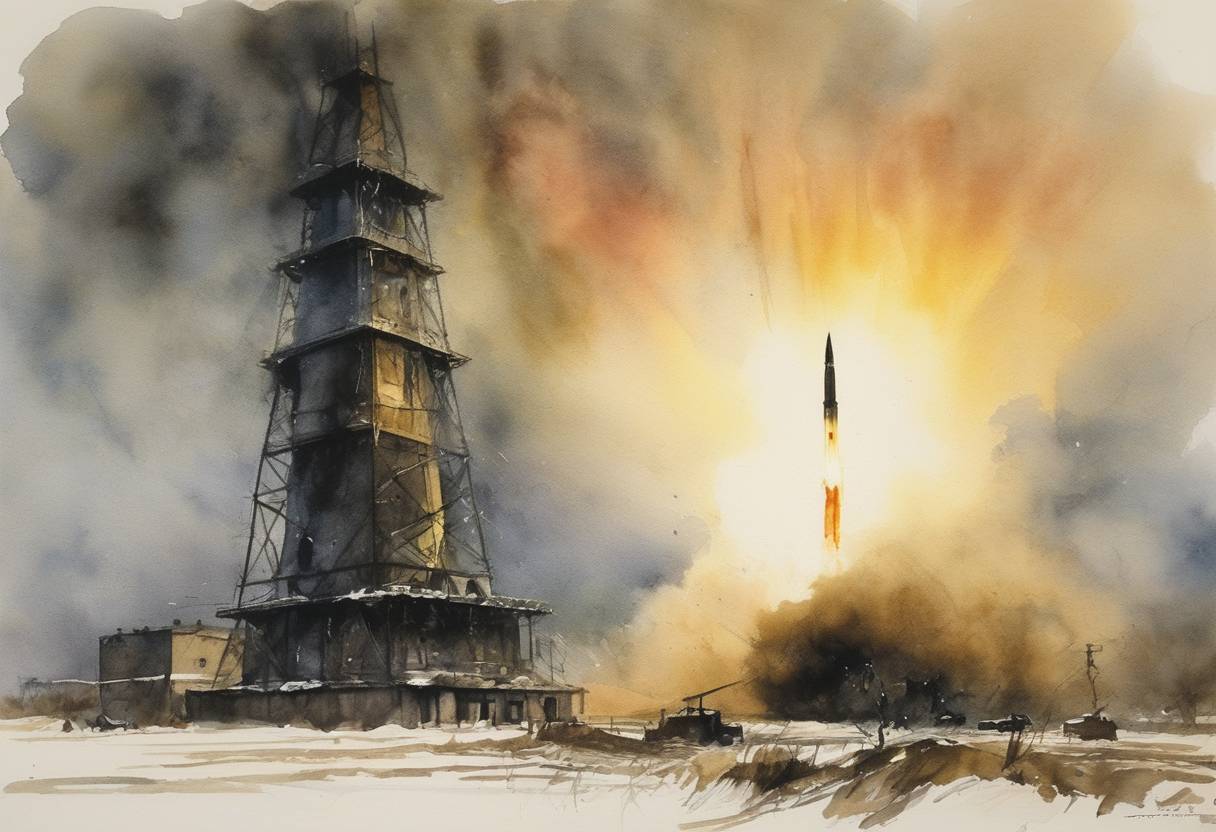
The Soviet Union's Successful ICBM Test on August 26, 1957
1957 · Moscow, Soviet Union
The Soviet Union announced the successful test of an intercontinental ballistic missile (ICBM).
September 25, 1983
The Soviet Union's nuclear early warning system falsely detected an incoming missile strike from the United States, but Stanislav Petrov, a Soviet Air Defence Forces officer, correctly assessed the situation as a false alarm.
Moscow, Soviet Union | Soviet Air Defence Forces
On September 26, 1983, one of the most critical incidents of the Cold War unfolded when a potentially catastrophic nuclear confrontation between the United States and the Soviet Union was narrowly avoided due to the decisive actions of Lieutenant Colonel Stanislav Petrov of the Soviet Air Defence Forces.
The Cold War era was marked by intense tension and mutual distrust between the two nuclear superpowers. Just weeks before this incident, the Soviet military had shot down Korean Air Lines Flight 007, exacerbating international tensions and leaving room for heightened expectations of possible retaliatory actions.
Petrov was on duty at the command center of the Soviet Union’s Oko satellite-based nuclear early warning system. During his shift, the system reported that a missile had been launched from the United States, followed by reports of multiple missile launches. Under standard military protocol, this would have prompted a Soviet retaliatory strike, potentially leading to full-scale nuclear war.
Faced with immense pressure, Petrov had to make a critical decision quickly. Despite the serious indications from the warning system, he assessed that the alerts were likely to be false alarms. His rationale was based on the perceived improbability that the United States would launch only a small number of missiles, which did not align with a full-scale nuclear assault strategy. Petrov’s judgment was informed by both his own skepticism about the reliability of the early warning systems and the absence of corroborating data from ground radar.
Petrov’s decision to report the alert as a false alarm prevented a hasty and potentially catastrophic retaliation. Subsequent investigations revealed that the Oko satellite had indeed malfunctioned, triggered by sunlight reflecting off clouds which the system mistakenly identified as missile launches.
While Petrov was initially praised for his actions, he faced scrutiny within the Soviet military hierarchy and did not receive official commendation for many years. His actions were only publicly recognized later, though they are credited with averting a possible nuclear disaster.
The incident highlighted the fallibility of nuclear early warning systems and the critical role that human judgment plays in decision-making processes, especially in matters of global security. It serves as a poignant reminder of the fragile nature of peace during the Cold War and underscores the ongoing importance of cautious diplomacy and reliable communication channels in preventing nuclear conflict.
Source: en.wikipedia.org