Edward III Declared King of France
1340 · Ghent, Kingdom of France
King Edward III of England was declared King of France, claiming the French throne as a grandson of Philip IV, sparking the Hundred Years' War.
January 26, 1324
The death of Theobald II, Duke of Lorraine, which initiated a succession crisis, as descendents of the earlier ducal lineage laid claim to the title, affecting regional politics.
Nancy, Duchy of Lorraine
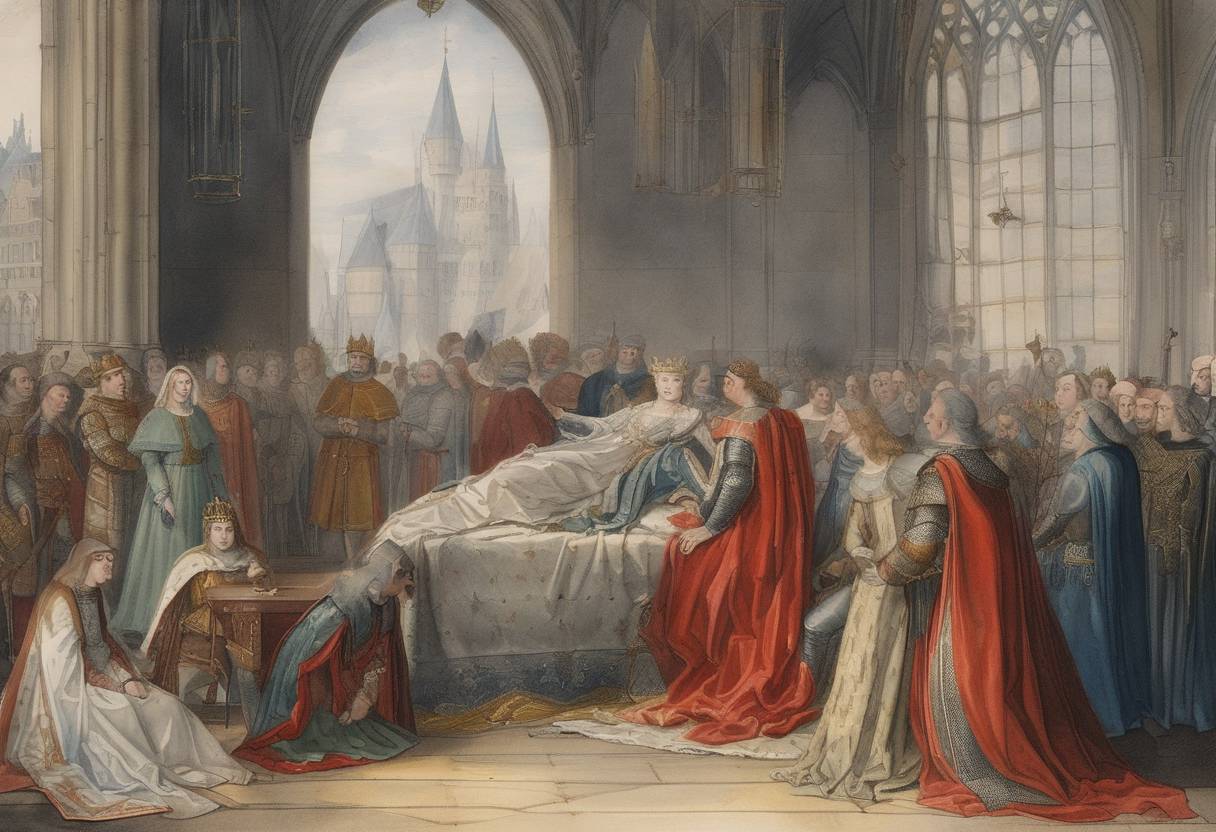
On January 26, 1324, Theobald II, Duke of Lorraine, passed away, leaving a significant power vacuum and igniting a succession crisis with far-reaching implications for the region’s political landscape. Theobald II, who had been Duke from 1303 until his death, was part of a line of rulers overseeing the strategic territory of Lorraine, which was situated between the Holy Roman Empire and the Kingdom of France.
Lorraine, during the early 14th century, was a key duchy in western Europe. Its geographical position made it a coveted area for influence by neighboring realms. The ducal lineage, represented by Theobald II, was tasked with maintaining the autonomy and sovereignty of Lorraine amidst external pressures.
Theobald II died without a direct male heir, triggering a succession dispute. The crisis saw multiple claimants emerge, particularly descendents of earlier ducal lines who saw an opportunity to assert their rights to the title and lands of Lorraine. The claimants included relatives from Theobald’s broader family network, each presenting their lineage’s historical rights to the duchy.
The succession dispute disrupted the stability in Lorraine and heightened tensions between neighboring powers. The competing interests in Lorraine’s leadership drew in external influence from the Kingdom of France and the Holy Roman Empire, both of whom sought to sway the outcome to favor their interests. This involvement pointed to Lorraine’s significant strategic value and its potential to shift the balance of power in the region.
The resolution of the succession crisis shaped Lorraine’s future governance and its relational dynamics with larger powers. Ultimately, the conflict over the rightful heir emphasized the delicate balance of sovereignty and influence in feudal Europe, illustrating the continual interplay of internal claims and external interventions.
The plight of Lorraine’s succession underscores the complex nature of feudal inheritance and the often tumultuous politics of medieval Europe. The power struggles following Theobald II’s death highlight the fragility and volatility intrinsic to noble titles and the far-reaching impacts these crises could exert on diplomatic and military affairs during this era.
Source: en.wikipedia.org