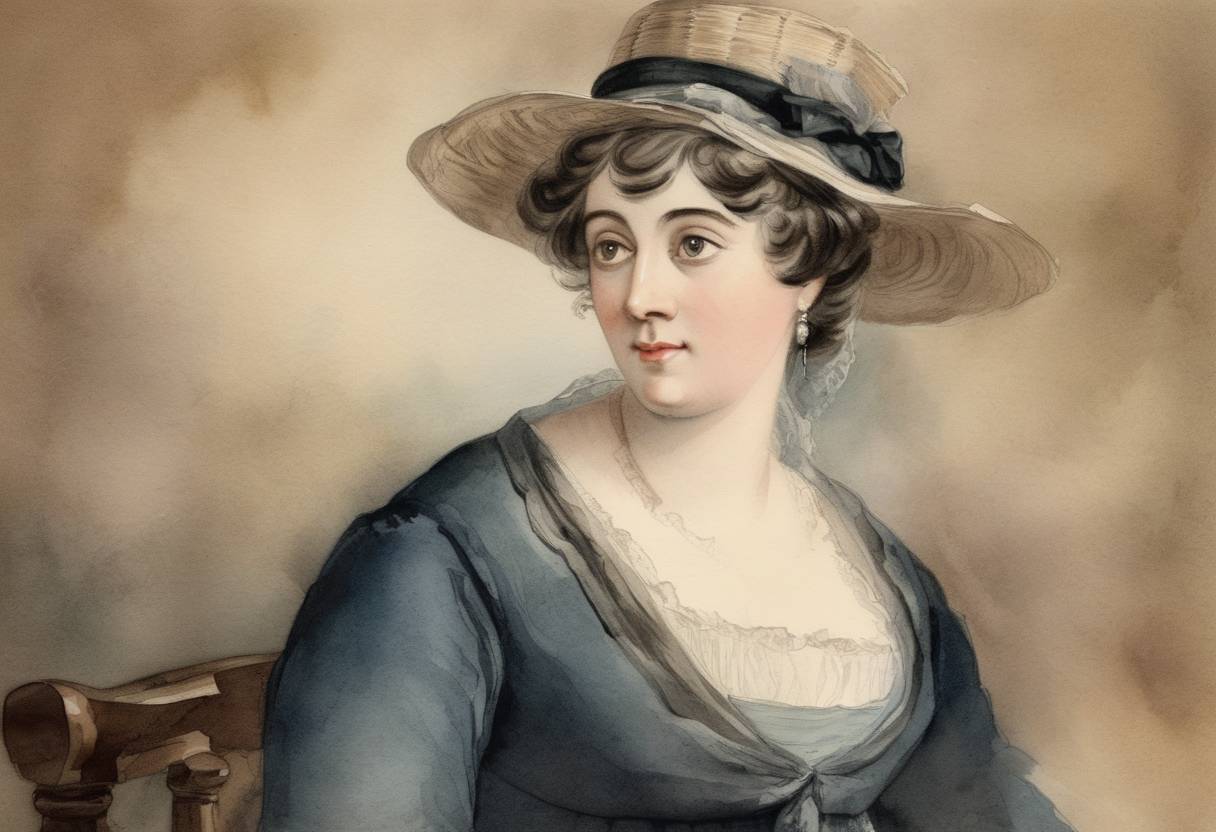
The Death of Jane Austen
On July 18, 1817, Jane Austen, the acclaimed English novelist known for her incisive depictions of British middle and upper-class life, passed away at the age of 41. Her death occurred in Winchester, Hampshire, England.
Context and Background
Jane Austen was born on December 16, 1775, in Steventon, Hampshire. She was the seventh of eight children in a family that valued education and the arts, which influenced her literary pursuits. Throughout her life, Austen contributed significantly to English literature, writing novels that combined keen social commentary with complex characters and compelling narratives.
Illness and Final Days
In the final years of her life, Austen’s health began to decline. She likely suffered from Addison’s disease, though some modern scholars suggest the possibility of Hodgkin’s lymphoma. Despite her illness, Austen continued to write, completing her final novels, “Persuasion” and “Northanger Abbey,” while coping with deteriorating health.
In May 1817, she moved to Winchester to be closer to her doctor, hoping for better medical care. Unfortunately, her condition worsened, leading to her passing on July 18.
Legacy and Impact
Austen’s novels, including “Pride and Prejudice,” “Sense and Sensibility,” and “Emma,” have left a lasting impact on literature and popular culture, celebrated for their exploration of themes such as the constraints of class and the pursuit of individual happiness. Her work has inspired countless adaptations and continues to be studied for its wit, formal elegance, and insight into human nature.
Following her death, she was buried in the north aisle of Winchester Cathedral on July 24, 1817, where her grave can still be visited today.
Austen’s literary influence endures, cementing her status as one of the most beloved authors in English literature. She is commemorated for her contribution to the novel as a literary form and for her enduring ability to speak to the complexities of human relationships and societal norms.