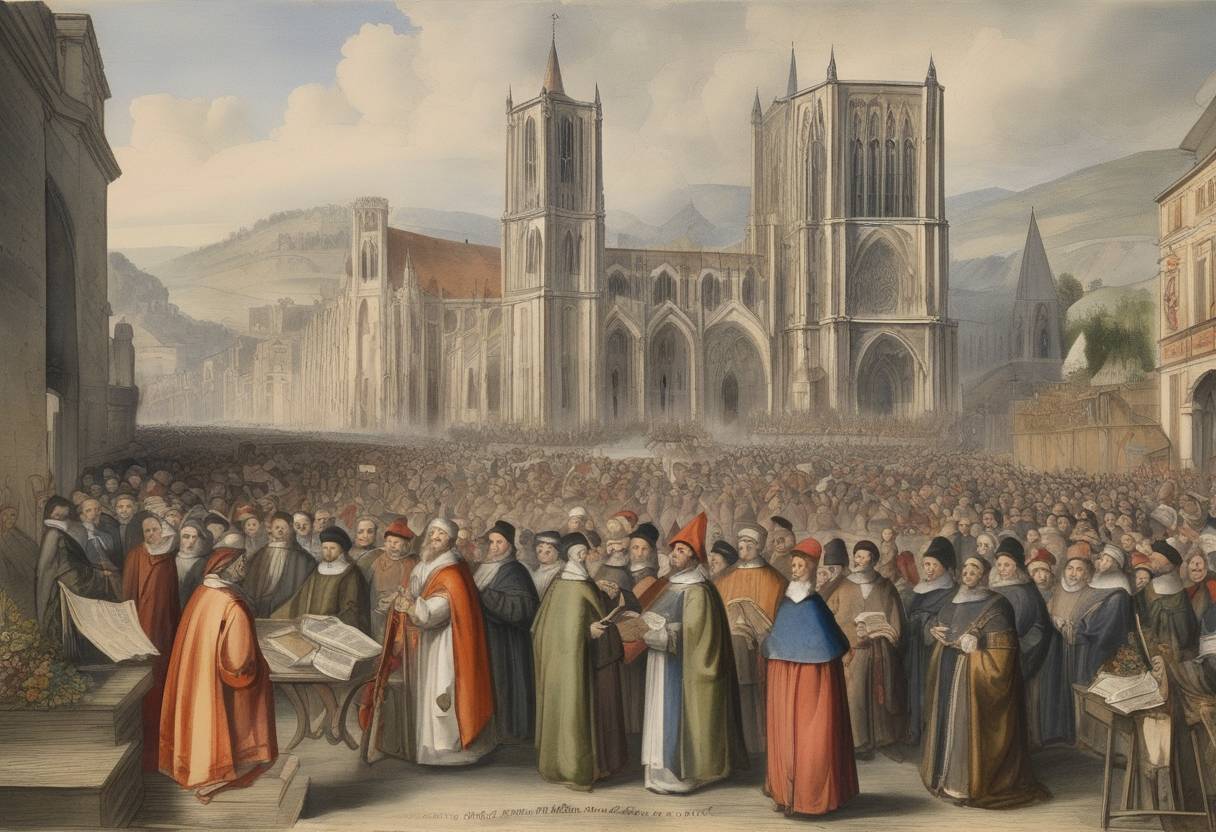
First National Synod of French Protestants in Grenoble - September 11, 1562
On September 11, 1562, a critical moment in the history of Protestantism in France unfolded with the convening of the first national synod of French Protestants in Grenoble. This event marked a significant organizational step for the Protestant Reformation within France, which sought to assert its presence and unify its followers against the backdrop of deep religious and political tensions.
Historical Context
- Reformation in France: By the mid-16th century, the Protestant Reformation, which had originated in Germany under Martin Luther, had spread across Europe, reaching France and leading to the formation of Reformed churches. These churches were influenced predominantly by the teachings of John Calvin, who advocated for a systematic organization of religious practices distinct from the Catholic Church.
- Conflicts and Tensions: The French Wars of Religion, a series of civil wars in France between Catholics and Huguenots (French Protestants), started in 1562. This period was characterized by severe persecution of Protestants, leading to heightened demands for formalized structures within their communities to maintain coherence and resilience.
Key Features of the Grenoble Synod
- Objectives: The synod aimed to create a unified organizational structure for the French Reformed churches and to establish foundational policies and practices. This was crucial for the survival and growth of Protestantism amid hostility and fragmented allegiances.
- Governance and Structure: The synod focused on setting up a presbyterial-synodal structure, which allowed for a collective form of church governance involving representatives from both clergy and laity. This model was inspired by Calvinist principles ensuring local church autonomy while upholding collective accountability.
- Doctrinal Unity: Ensuring theological consistency across various Protestant communities was a core goal. The synod sought to solidify a shared doctrinal platform within the framework of Reformation teachings and address pertinent issues like maintaining faith under persecution.
Consequences and Significance
- Strengthening Protestantism: By establishing a national synod, French Protestants developed a unified entity with greater capacity to negotiate and defend their rights within the broader socio-political context of France.
- Legacy and Development: The framework established at Grenoble enabled further synods and consolidate the Huguenot community, which subsequently influenced the Edict of Nantes in 1598, allowing for a degree of religious tolerance in France.
- Enduring Influence: The synod represented a foundational moment for Protestant organizational development, influencing not only religious but also social and political dynamics in France until the revocation of the Edict of Nantes in 1685.
The first national synod in Grenoble was a pivotal step in the formal establishment of Protestant structures in France. It provided French Protestants with a resilient and unified identity, essential for withstanding the challenges they faced in a predominantly Catholic society.