Texas Declaration of Independence: March 2, 1836
1836 · Washington-on-the-Brazos, United States
Texas declared its independence from Mexico, forming the Republic of Texas.
January 3, 1823
Stephen F. Austin received a grant from the Mexican government which allowed him to begin colonization in the region of the Brazos River in Texas, marking an important moment in the settlement and development of the region that would become a key part of the Republic of Texas and later the U.S. state of Texas.
Brazos Valley, Mexico | Mexican government
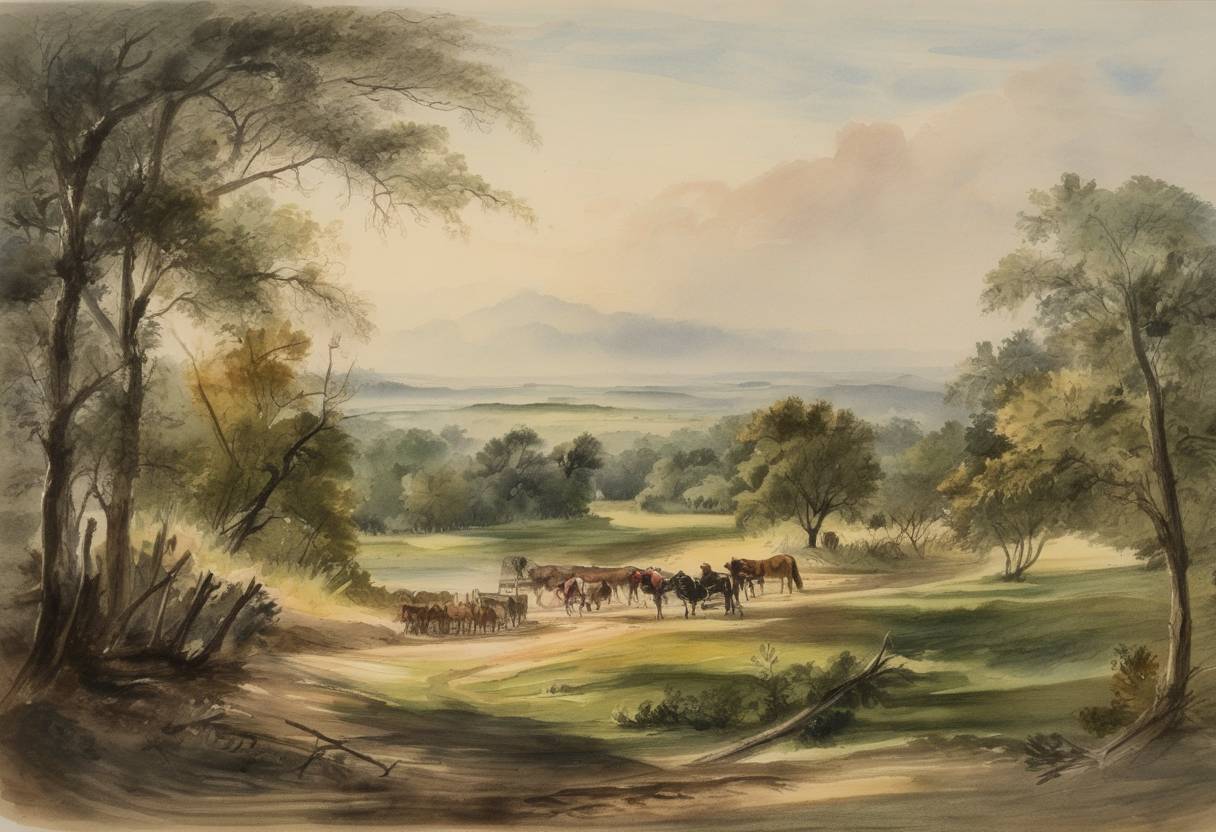
On January 3, 1823, Stephen F. Austin received a formal grant from the Mexican government, which allowed him to continue his father’s plan to colonize the region along the Brazos River in what is now Texas. This event is a significant milestone in the history of Texas, marking the beginning of Anglo-American colonization in the area that would eventually form the eastern part of the Republic of Texas and, later, the U.S. state of Texas.
The colonization project initially began with Stephen’s father, Moses Austin, who had secured an agreement with the Spanish authorities to settle 300 families in Texas, then a part of New Spain. Moses Austin, however, passed away in June 1821, prompting Stephen F. Austin to take up the endeavor. Following Mexico’s independence from Spain in 1821, Austin had to renegotiate the terms with the new Mexican government.
The Mexican government, under the Imperial Colonization Law, officially allowed Austin to settle 300 Catholic families, known as the “Old Three Hundred,” in the area between the Colorado River and the Brazos River. The grant specified that the settlers would receive land allotments and that they should align with the Mexican legal and cultural practices, including Catholicism.
Austin’s successful settlement kickstarted a wave of immigration to Texas. By adhering to Mexican laws, Austin became a crucial intermediary, maintaining peaceful relations between the settlers and the Mexican authorities. The colony’s establishment not only paved the way for future settlers but also became a template for subsequent colonization contracts awarded to empresarios, encouraging further Anglo-American immigration.
The influx of settlers and eventual demographic changes in Texas contributed to tensions with the Mexican government over issues such as governance, legal systems, and slavery. These tensions eventually played a role in the Texas Revolution and the push for Texan independence.
As a pivotal figure in Texas history, Stephen F. Austin is often referred to as the “Father of Texas” for his role in establishing an American presence in the region. His efforts set the foundation for the Republic of Texas’s eventual emergence in 1836 and its subsequent annexation to the United States in 1845, which would have lasting implications on the history and development of the region.
This event on January 3, 1823, thus reflects a crucial turning point, demonstrating the beginnings of organized settlement in Texas, which would significantly alter its demographic and political landscape.