The Duke of Wellington Ascends the Valdemaqueda Pass - October 23, 1812
1812 · Valdemaqueda, Spain
The Duke of Wellington ascends the Valdemaqueda Pass during the Peninsular War.
June 22, 1813
During the Peninsular War, the Battle of Vitoria took place, where Anglo-Portuguese and Spanish forces under the Duke of Wellington defeated the French army led by Joseph Bonaparte.
Vitoria, Spain | British Army
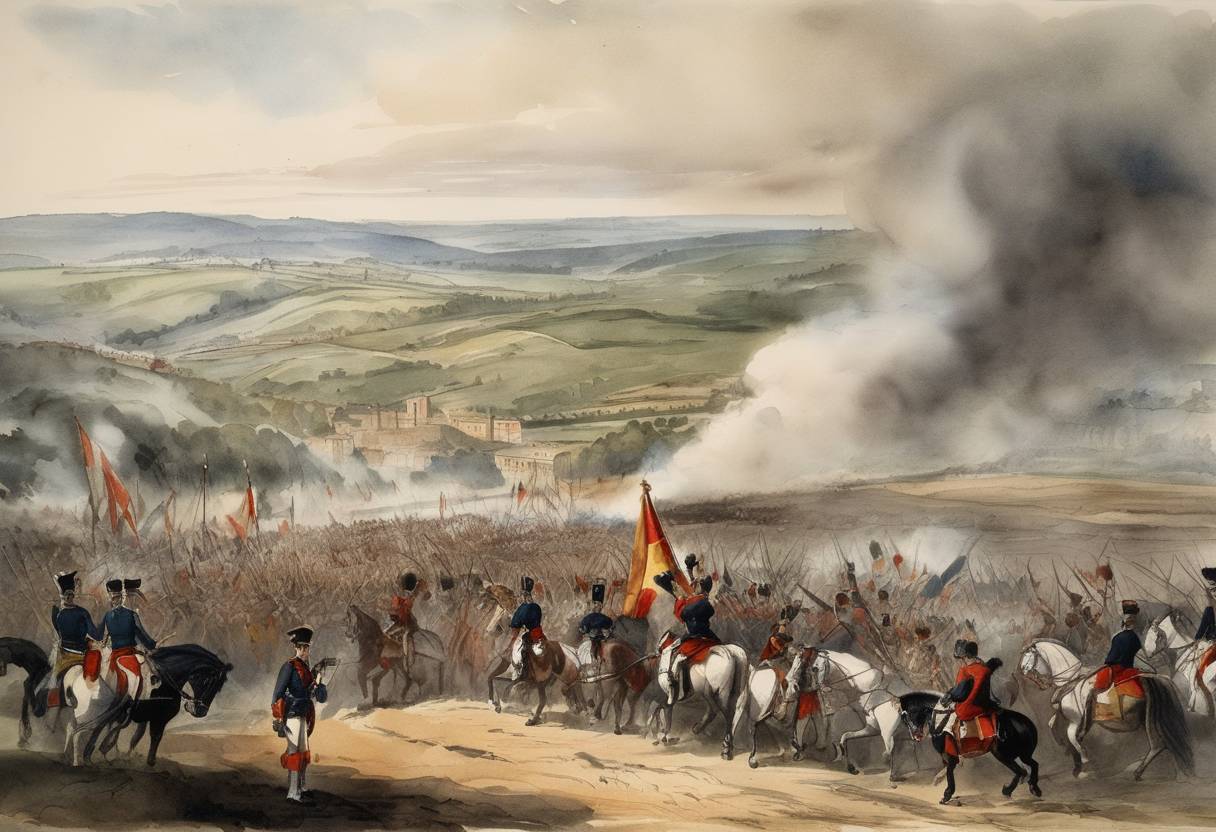
The Battle of Vitoria was a pivotal engagement during the Peninsular War, a theater of the Napoleonic Wars where Spanish, Portuguese, and British forces sought to expel the French army from the Iberian Peninsula. The war itself was part of Napoleon Bonaparte’s broader strategy for European domination, facing resistance from established monarchies and emerging coalitions.
After a series of defeats, the French forces under King Joseph Bonaparte, who was installed as the monarch of Spain by his brother Napoleon Bonaparte, were retreating from Madrid towards France. The Anglo-Portuguese and Spanish forces, commanded by the Duke of Wellington, sought to exploit the French vulnerabilities and prevent their escape.
On June 21, 1813, Wellington’s forces, numbering approximately 80,000, confronted Joseph’s army of around 57,000 men near Vitoria, a town located in the Basque region of northern Spain. The battle unfolded across a broad frontline, with Wellington executing a comprehensive plan that involved attacking from multiple directions.
The Anglo-Portuguese force launched a four-pronged attack. This maneuver, coupled with Wellington’s strategic use of the terrain, overwhelmed the French defensive positions. Key crossings and heights were secured, which allowed his forces to outflank the French, culminating in significant pressure on their lines of retreat.
The battle concluded on June 21 with a decisive victory for the Anglo-Portuguese and Spanish coalition. Joseph Bonaparte’s forces were forced into a chaotic retreat towards the Pyrenees, abandoning massive amounts of matériel and personal possessions. The victory effectively shattered French control in Spain, marking a turning point in the Peninsular War by paving the way for the eventual liberation of the Iberian Peninsula from French occupation.
The outcome at Vitoria weakened Napoleon’s military might in Europe, contributing to his overstretched resources and diminishing influence. It emboldened the Sixth Coalition, which saw an opportunity for renewed offensives against Napoleonic France. Additionally, the battle significantly elevated Wellington’s reputation as one of Great Britain’s leading military commanders.
The victory at Vitoria not only signaled the collapse of French hegemony in Spain but also had repercussions for the Napoleonic Wars’ broader strategic landscape. It facilitated subsequent allied invasions of France and contributed to the downfall of Napoleon, who abdicated for the first time in 1814.
With the Peninsular War shifting decisively in favor of the coalition, the campaign underscored the importance of joint military efforts among nations resisting Napoleonic ambitions, demonstrating the effectiveness of multinational cooperation in warfare.
Source: www.britannica.com