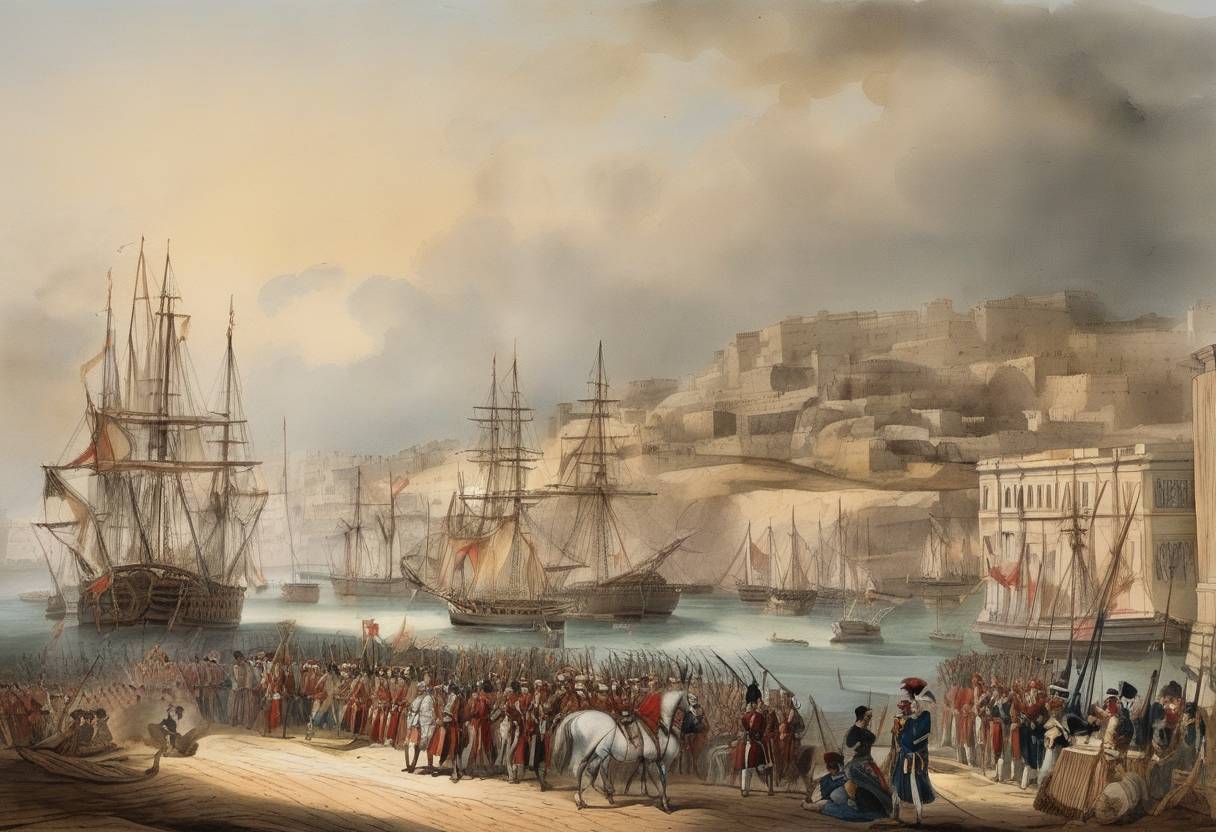
The First Barbary War Begins: May 10, 1801
On May 10, 1801, the First Barbary War was sparked when Yusuf Karamanli, the Pasha of Tripoli, declared war on the United States. This declaration was signified by the symbolic act of chopping down the flagpole in front of the U.S. consulate in Tripoli. This conflict arose from growing tensions between the Barbary States of North Africa and the United States over issues of piracy and tributes.
Background
- Barbary States: Comprised of the North African Ottoman provinces, including Tripoli, Tunis, Algiers, and the independent Sultanate of Morocco, the Barbary States were known for sponsoring piracy against vessels in the Mediterranean Sea.
- U.S. Merchant Shipping: Post-American Revolution, U.S. merchant ships had enjoyed protection under British treaties. However, with independence, they lost this protection and became easy targets for Barbary pirates.
- Tribute Demands: The Barbary States demanded tributes from nations to ensure safe passage for their merchant ships. The U.S., initially paying these tributes, found them increasingly burdensome and sought to negotiate or eliminate these payments.
Events Leading Up to War
- Diplomatic Struggles: Efforts to negotiate a lower tribute with Yusuf Karamanli were unsuccessful. Dissatisfaction with the U.S. response and its payments led to heightened tensions.
- Demand for Tribute: The Pasha demanded a larger tribute than what the United States was willing to pay, heightening the conflict’s inevitability.
The War Declaration
- Symbolic Act: On May 10, 1801, in a dramatic gesture, Yusuf Karamanli ordered the flagpole at the U.S. consulate in Tripoli to be cut down. This act was a traditional symbol marking the onset of hostilities.
Significance and Aftermath
- War Duration: The First Barbary War lasted until 1805, leading to significant naval engagements and eventual American victory.
- Treaty of Peace: The war concluded with a treaty that required a lower tribute payment, though issues of piracy persisted for years, leading to further conflicts.
- American Naval Strength: This war marked the first significant military engagement for the newly independent United States and showcased the growing strength and capability of the American Navy.
This conflict emphasized the challenges faced by the young American nation in asserting its sovereignty and protecting its commercial interests on the international stage.