Foundation of the Republic of Ecuador: May 13, 1830
1830 · Quito, Ecuador
The Republic of Ecuador is founded, marking its independence from Gran Colombia.
August 6, 1825
Bolivia declared independence from Spain with Simón Bolívar playing a significant role in its liberation.
Sucre, Bolivia | Republic of Bolivia
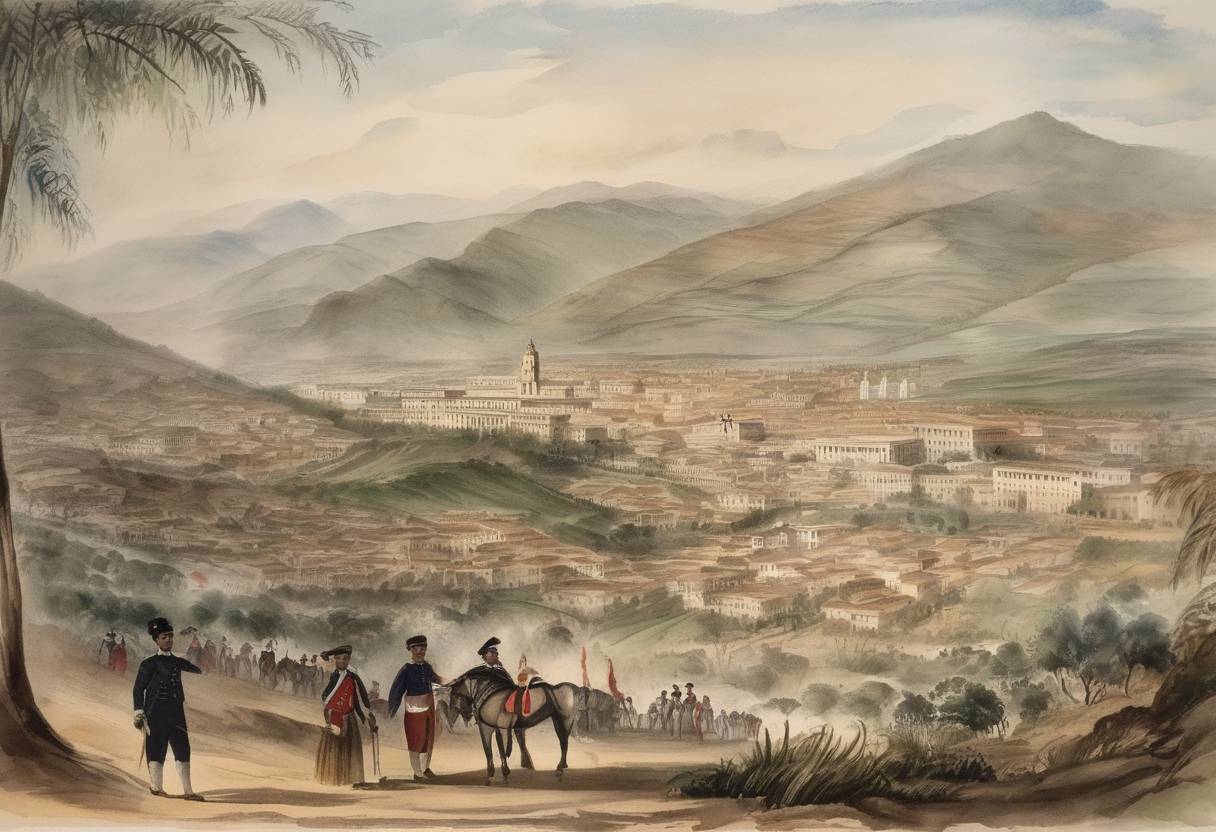
On August 6, 1825, the region now known as Bolivia declared its independence from Spanish colonial rule. This day marked a pivotal moment in the South American wars of independence, characterized by the influence and military efforts of Simón Bolívar, a key figure in the liberation of several Latin American countries.
The path to Bolivian independence was shaped by a larger context of colonial unrest throughout the Spanish Empire in the early 19th century. The spread of Enlightenment ideas, combined with local dissatisfaction with Spanish authorities and the impact of the Napoleonic Wars in Europe, fostered an environment ripe for rebellion.
Simón Bolívar, often hailed as “El Libertador,” played an instrumental role in the independence movements across northern South America. Although Bolívar himself was not present in Bolivia when independence was declared, his military campaigns against the Spanish were crucial in weakening colonial control over the region.
Bolívar’s trusted general, Antonio José de Sucre, led the decisive battles that resulted in the liberation of Upper Peru, the territory that would become Bolivia. Sucre’s victory at the Battle of Ayacucho in December 1824 effectively dismantled Spanish military power in Peru and its surrounding territories.
The formal declaration of Bolivia’s independence occurred at the Congress of Chuquisaca (modern-day Sucre), where delegates convened to determine the future of the region previously known as Upper Peru. This congress not only declared independence on August 6, 1825, but also named the new republic in honor of Bolívar, acknowledging his immense contributions to their freedom.
The establishment of Bolivia marked an important chapter in the broader struggle for independence in Latin America. While Bolívar’s vision was for a united federation of states, the political realities and diverse interests in the region eventually led to the formation of individual nation-states.
Bolivia’s independence inspired further movements across the continent and contributed to the decline of Spanish colonial influence in the Americas. The new Bolivian nation embarked on its own path, facing challenges of nation-building and political consolidation in the years following independence.
Source: www.britannica.com