The Sixth Ecumenical Council (Third Council of Constantinople) Closes - January 12, 681
681 · Constantinople, Byzantine Empire
The Sixth Ecumenical Council (Third Council of Constantinople) closes, having condemned Monothelitism.
February 6, 0731
The Venerable Bede begins compiling his 'Ecclesiastical History of the English People,' which would later provide a crucial source for understanding early English history and the spread of Christianity.
Monkwearmouth-Jarrow Abbey, Northumbria (modern-day England) | The Abbey of Saint Peter and Saint Paul
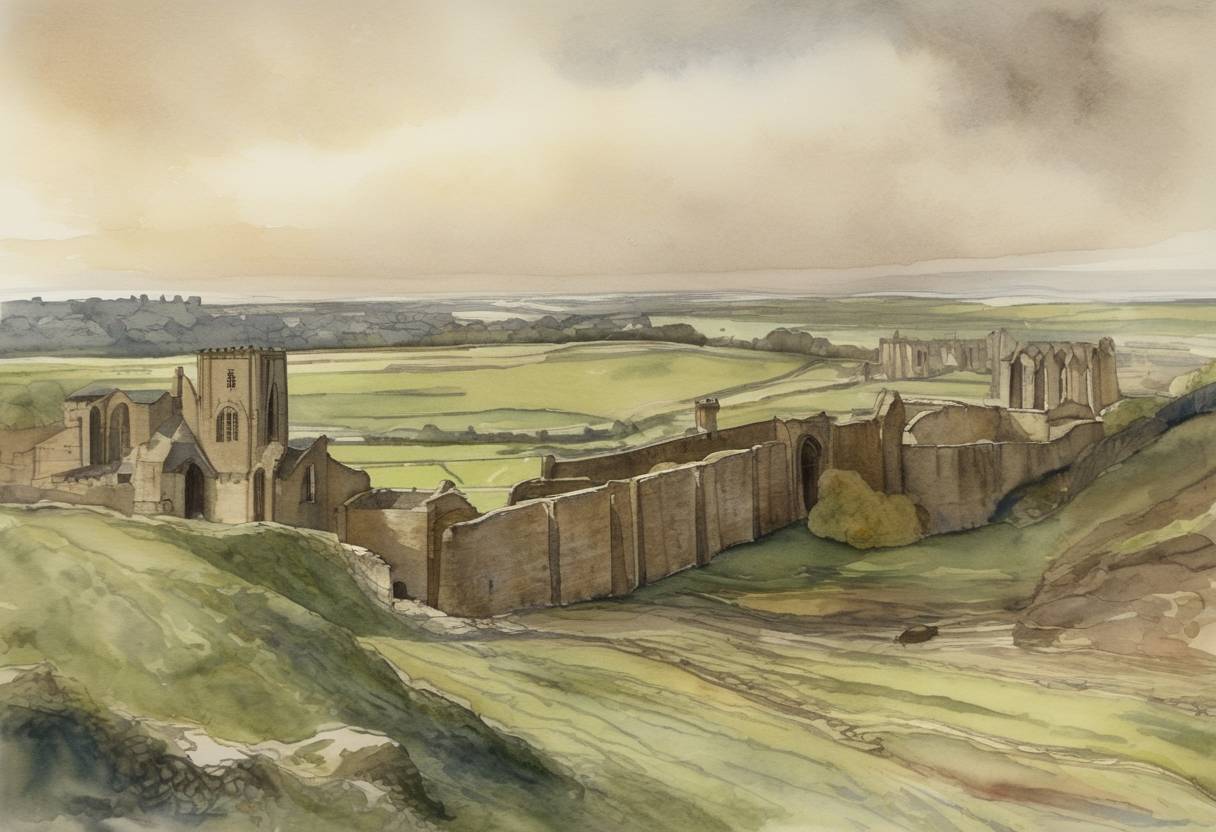
On June 2, 731, the monk known as the Venerable Bede began compiling his seminal work, “Ecclesiastical History of the English People” (Historia Ecclesiastica Gentis Anglorum). This historical and theological work remains one of the most important sources for understanding early English history and the spread of Christianity in Britain.
Bede was born in 672⁄673 in the Anglo-Saxon kingdom of Northumbria, in what is now North East England. He entered monastic life as a young boy at the monastery of Monkwearmouth, later moving to the monastery at Jarrow. There, he spent his life in scholarship and teaching. Bede was an accomplished writer, theologian, and historian, and he contributed significantly to the intellectual life of the period.
The Ecclesiastical History is composed of five books, covering the history of England from the Roman occupation to Bede’s own day. The text documents key events in British history, including:
Bede’s narrative combines historical fact with hagiography, offering accounts of saints and miracles alongside more conventional historical events.
Bede’s work is crucial for several reasons:
Primary Source: It serves as the primary source of early English history, offering insight into the lives, politics, and religious practices of the time.
Christian Influence: It details the role of Christianity in unifying the disparate Anglo-Saxon kingdoms, illustrating the church’s growing influence across the region.
Historical Methodology: Bede’s meticulous use of sources, including oral tradition, documents, and his observations, exemplifies an early form of historical methodology that sets a precedent for future historians.
Linguistic Contribution: By choosing to write in Latin, Bede ensured his work was accessible to the broader European scholarly community, aiding in the transmission of ideas through the medieval period.
Completed in 731, the Ecclesiastical History of the English People quickly became influential and widely distributed. Over time, it shaped the medieval conception of English history and identity. The work continues to inform modern understandings of the period.
Bede himself was later recognized as a Doctor of the Church in 1899, and his feast day is celebrated on May 25. His contributions laid the groundwork for future historians and established an enduring legacy within both religious and secular scholarship.
Source: www.britannica.com