Richard III Declared King of England
1483 · London, England
Richard III was declared King of England after the deposition of his nephew, Edward V.
June 12, 1442
Henry VI of England instates the title of Duke of Suffolk, bestowing it upon William de la Pole, a significant political figure during his reign. William was a key ally and counselor to the king, while the title further solidified his power and influence within the English court.
London, England | English Monarchy
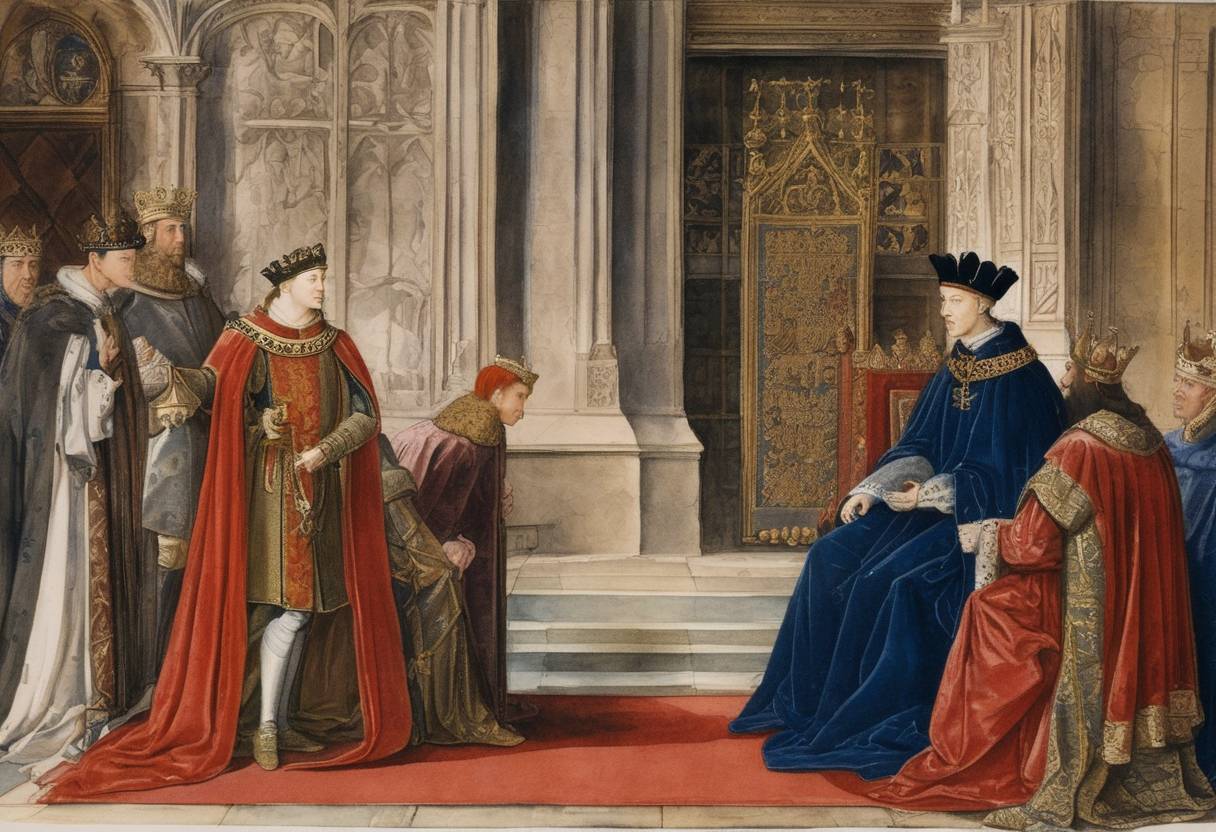
On June 12, 1448, William de la Pole was instated with the title of Duke of Suffolk by King Henry VI of England. This elevation marked a critical point in the political landscape of 15th-century England, positioning William as a figure of considerable influence in the court of Henry VI.
Before his elevation, William de la Pole had already established himself as a crucial ally and advisor to King Henry VI. A member of the influential de la Pole family, William had steadily risen through ranks, having previously been titled as the Earl of Suffolk. His ascent to power was largely thanks to his strategic political acumen, enabling him to effectively serve as a counselor to the king during a period marked by political and social unrest.
The creation of the dukedom was significant for several reasons. It not only reinforced William’s position as a leading noble within English nobility but also as a central figure within the royal court. As Duke of Suffolk, William wielded substantial authority, allowing him to manage vast estates and exert influence over national policies.
His close relationship with King Henry VI also positioned him at the intersection of English politics during the pivotal years leading up to the Wars of the Roses. His advice and decisions in matters of state often shaped the policies of the king, impacting political dynamics within England and beyond.
At the time of William’s elevation to a duke, England was experiencing ongoing conflicts with France known as the Hundred Years’ War. The instability attributed to these external threats compounded internal pressures, which figures like William attempted to navigate. His efforts to negotiate peace with France, notably the controversial Treaty of Tours, provoked significant political backlash and controversy.
William’s expanding influence and his role in the deteriorating military situation in France would eventually lead to his downfall, becoming a scapegoat amid rising tensions between noble factions. In 1450, he was accused of treasonous activities and eventually murdered, reflecting the fraught and dangerous nature of political life during Henry VI’s reign.
William de la Pole’s tenure as Duke of Suffolk exemplified the intricate web of loyalty, power, and conflict characterizing England’s nobility in the 15th century. His life and death illustrate the volatile nature of medieval politics, where fortunes could rise and fall swiftly depending upon courtly favor and broader socio-political currents.