Queen Victoria Marries Prince Albert
1840 · London, United Kingdom
Queen Victoria of the United Kingdom marries Prince Albert of Saxe-Coburg and Gotha.
May 2, 1843
The Catholic Apostolic Church was formed following a significant event known as the "Great Manifestation," marking its official organization based on revelations and theological tenets deemed from apostolic beliefs.
London, United Kingdom | Catholic Apostolic Church
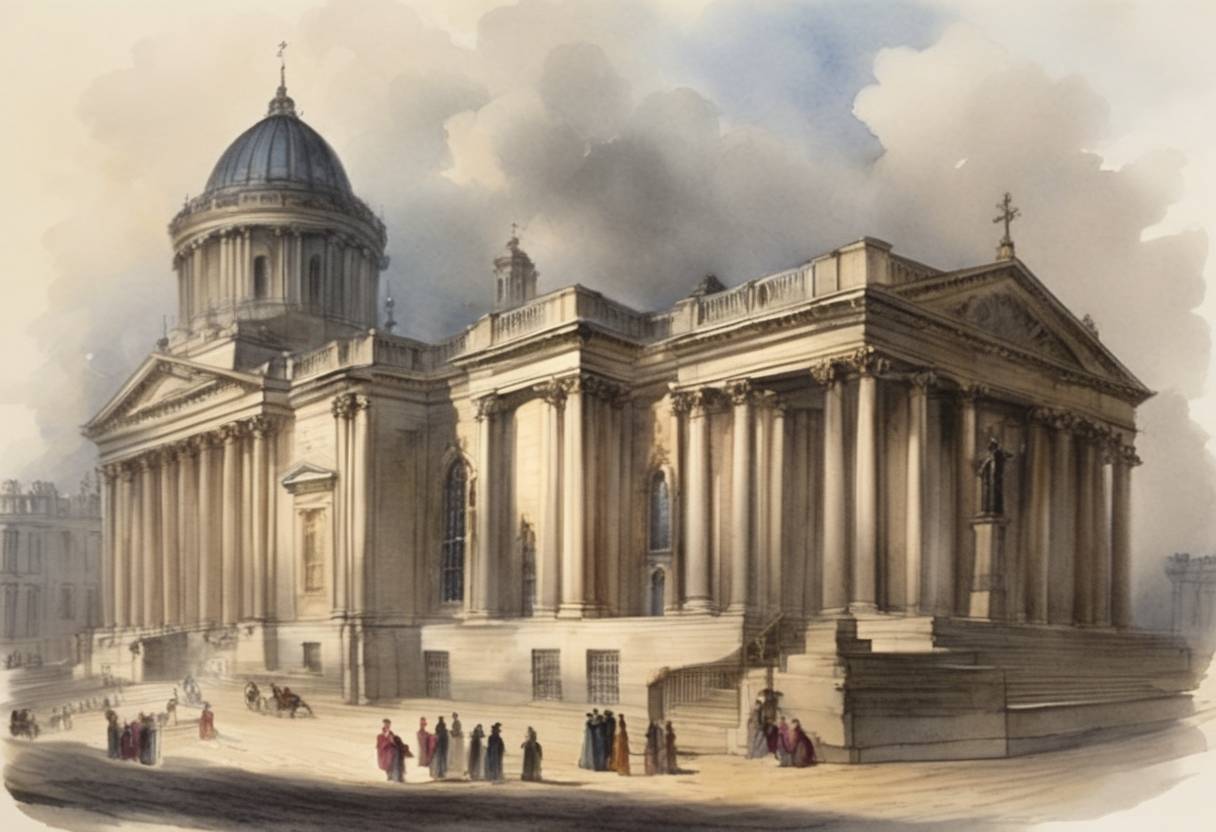
On May 2, 1843, the Catholic Apostolic Church was officially organized following what was known as the “Great Manifestation.” This event marked the culmination of a religious movement that began in the early 19th century, influenced by a series of spiritual revivals and prophetic experiences within various Protestant communities, primarily in Britain.
The movement that would lead to the formation of the Catholic Apostolic Church can be traced back to the 1820s and 1830s, a period marked by widespread religious enthusiasm and expectation of apocalyptic events influenced by interpretations of biblical prophecy. A key figure in this revival was Edward Irving, a Scottish minister and theologian, who drew attention to the charismatic gifts described in the New Testament, such as prophecy and speaking in tongues, which resurfaced within his congregation.
Irving and his followers believed in the imminent Second Coming of Christ and emphasized the need for apostles to prepare the Church. This belief was reinforced by purported prophetic utterances and manifestations of spiritual gifts within congregations. The movement gradually formalized around the belief that new apostles needed to be appointed to restore the early Church’s structure in preparation for Christ’s return.
The “Great Manifestation” on May 2, 1843, marked the formal organization of the Catholic Apostolic Church. It was characterized by a series of divine revelations and inspired utterances, which the adherents believed constituted a direct divine mandate for the establishment of the church. This event led to the appointment of twelve apostles, perceived as necessary to oversee the Church and guide it according to divine will.
The Catholic Apostolic Church developed a unique ecclesiastical structure, incorporating elements of both Protestant and Catholic traditions. It practiced a liturgy resembling that of the early Christian Church and emphasized the sacraments and apostolic succession through the newly appointed apostles.
At its core, the Catholic Apostolic Church was centered on preparedness for the Second Coming of Christ. It sought to restore what it considered essential components of the apostolic Church, including authority vested in living apostles, emphasis on the Holy Spirit’s active role, and the practice of spiritual gifts. The church adopted a comprehensive theological framework that integrated these beliefs, which distinguished it from other contemporary Christian movements.
Although the Catholic Apostolic Church never grew to be a large denomination, it had a lasting impact on Christian liturgical practices and inspired subsequent religious movements, notably influencing the New Apostolic Church. Today, its community is much reduced, and the original apostles’ passing in the late 19th and early 20th centuries led to a decline, as no successors were appointed.
The formation of the Catholic Apostolic Church on May 2, 1843, remains a notable example of the 19th-century religious revival movements aimed at restoring early Christian principles in anticipation of an eschatological future.
Source: en.wikipedia.org