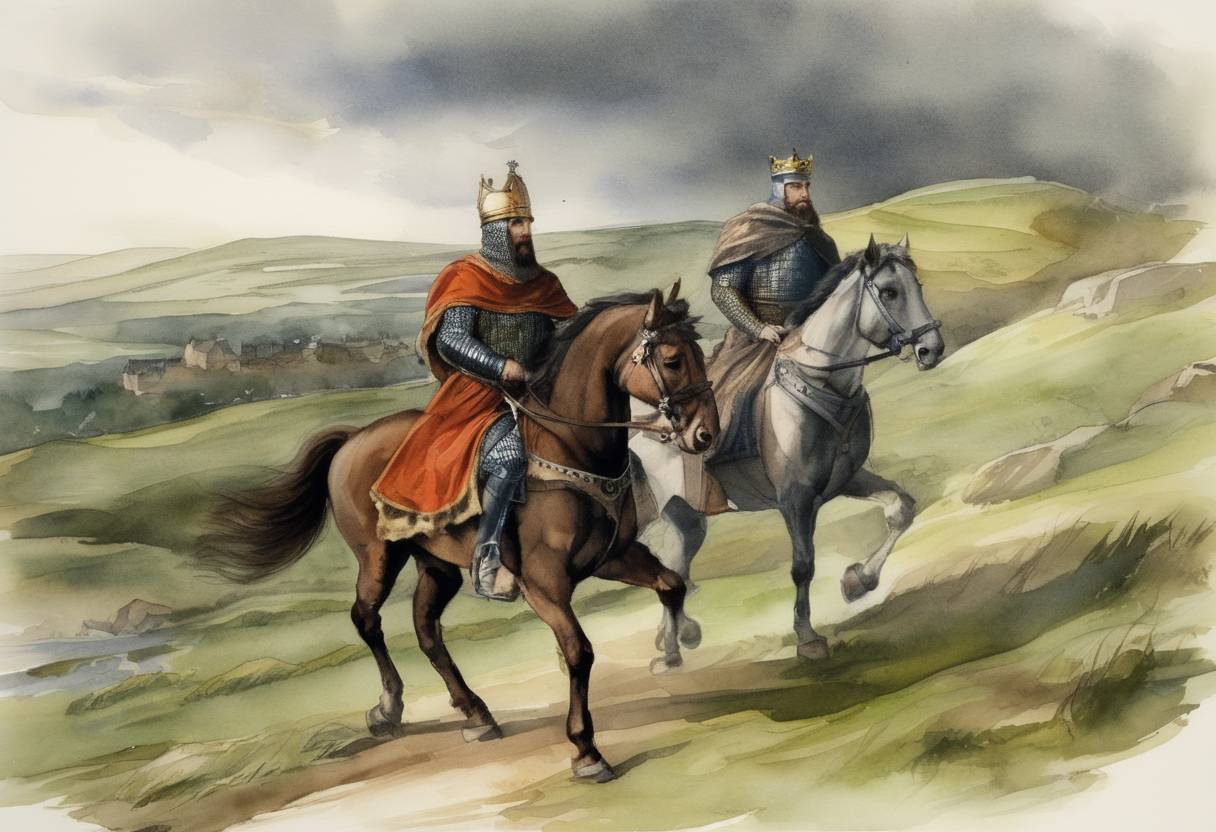
Robert the Bruce and His Path to the Scottish Throne: February 11, 1306
By February 11, 1306, Robert the Bruce was deeply entrenched in his efforts to solidify his claim to the throne of Scotland. This period followed years of turmoil sparked by the death of King Alexander III in 1286, which left a void of leadership. The subsequent interregnum saw competing claims and the pivotal Wars of Scottish Independence, creating a chaotic political landscape.
Context and Historical Background
- Death of Alexander III: The unexpected demise of Alexander III led to a crisis of succession. The heir, Margaret, Maid of Norway, died en route to Scotland, sparking a struggle for the crown.
- Great Cause and Interregnum: The nobility’s inability to resolve the succession led to Edward I of England’s intervention, casting Scotland into turmoil and eventually inciting resistance.
Robert the Bruce’s Moves
Robert the Bruce, originally involved in the conflict between English and Scottish forces, was determined to claim his heritage and the Scottish crown:
- Strategic Alliances: In the months leading to February 1306, Bruce engaged in political maneuvering, forging alliances to bolster his position.
- Assassination and Consequences: Notably, on February 10, 1306, a day before this significant date, Bruce was involved in the killing of John Comyn, a rival claimant, at Greyfriars Church in Dumfries. This act was a pivotal, albeit violent, assertion of his claim and clearly demonstrated his determination to reign.
Implications and Subsequent Developments
- Coronation: Following the actions of February 1306, Robert the Bruce intensified his quest for the throne, leading to his coronation as King of Scots on March 25, 1306, at Scone.
- Long-term Struggle: This marked the beginning of a renewed phase of conflict against England, specifically Edward I, as Bruce committed to freeing Scotland from English overlordship.
Historical Significance
Bruce’s actions on and around February 11, 1306, catalyzed significant change in Scotland’s political landscape. His determination and tactical boldness were instrumental in eventually securing Scottish independence, paving the way for Scotland to remain a sovereign kingdom until its later unification with England under the Treaty of Union in 1707.