Jan Palach’s Self-Immolation: A Turning Point in Czechoslovakia’s History
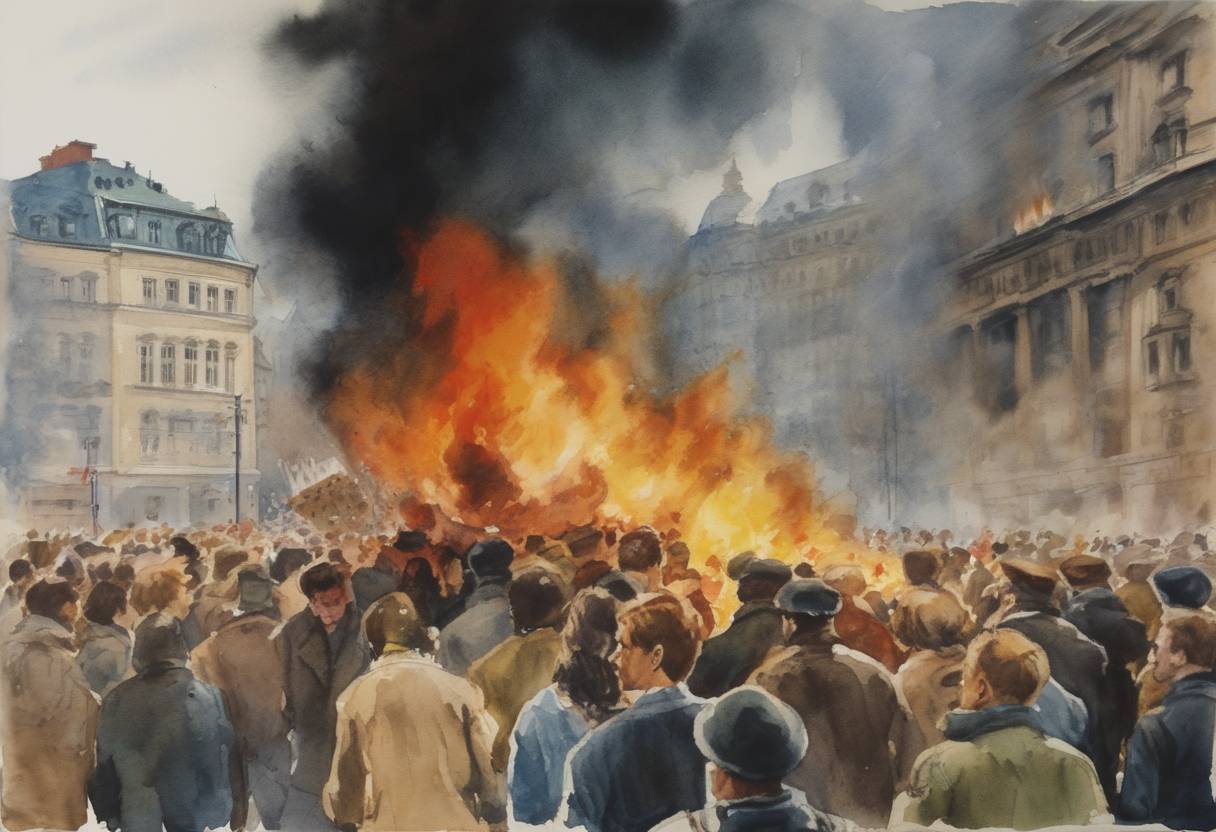
On January 16, 1969, a tragedy unfolded in Wenceslas Square, Prague, which marked a pivotal moment in Czechoslovakia’s struggle for political freedom and reform. Jan Palach, a 20-year-old Czech student, set himself on fire in protest against the suppression of the Prague Spring. His self-immolation was a profound act aimed at awakening public consciousness and resistance against the Communist regime’s repression of burgeoning democratic reforms.
Background
The Prague Spring of 1968 was a period of political liberalization in Czechoslovakia led by Alexander Dubček, the First Secretary of the Communist Party of Czechoslovakia. This movement sought “socialism with a human face,” introducing reforms such as increased freedom of speech, press, and movement, along with an attempt to decentralize the economy. However, these changes were short-lived as the Warsaw Pact invasion in August 1968, led by the Soviet Union, quashed the reforms, reinstating a hardline Communist regime.
The Event
Jan Palach, deeply disheartened by the rollback of these democratic efforts, chose to self-immolate as a form of protest. This drastic action took place in the heart of Prague, Wenceslas Square, drawing immediate and significant attention both locally and internationally. Palach left behind a letter in which he expressed hopes that his sacrifice would serve as a catalyst to reignite resistance against political oppression.
Aftermath and Legacy
Palach succumbed to his injuries three days later, on January 19, 1969. His funeral became a massive public demonstration, attended by thousands, signifying the widespread impact of his protest. Although the immediate political situation in Czechoslovakia remained unchanged, Palach’s sacrifice became a powerful symbol of resistance against tyranny. His act prompted further acts of self-immolation and inspired future dissidents during the Velvet Revolution two decades later.
Jan Palach remains an enduring symbol of courage and the quest for freedom in Czechoslovakian history. Each January, he is commemorated in the Czech Republic and Slovakia as a reminder of the human spirit’s resilience in the face of repression.