The Opening of the First Underground New York City Subway Line
1904 · New York City, United States
The first underground New York City Subway line opened, running from City Hall to 145th Street.
November 14, 1832
The first regular horse-drawn streetcar service commenced operations from New York City to Harlem. This marked a significant advancement in urban transportation, paving the way for future developments in mass transit systems.
New York City, United States | New York and Harlem Railroad
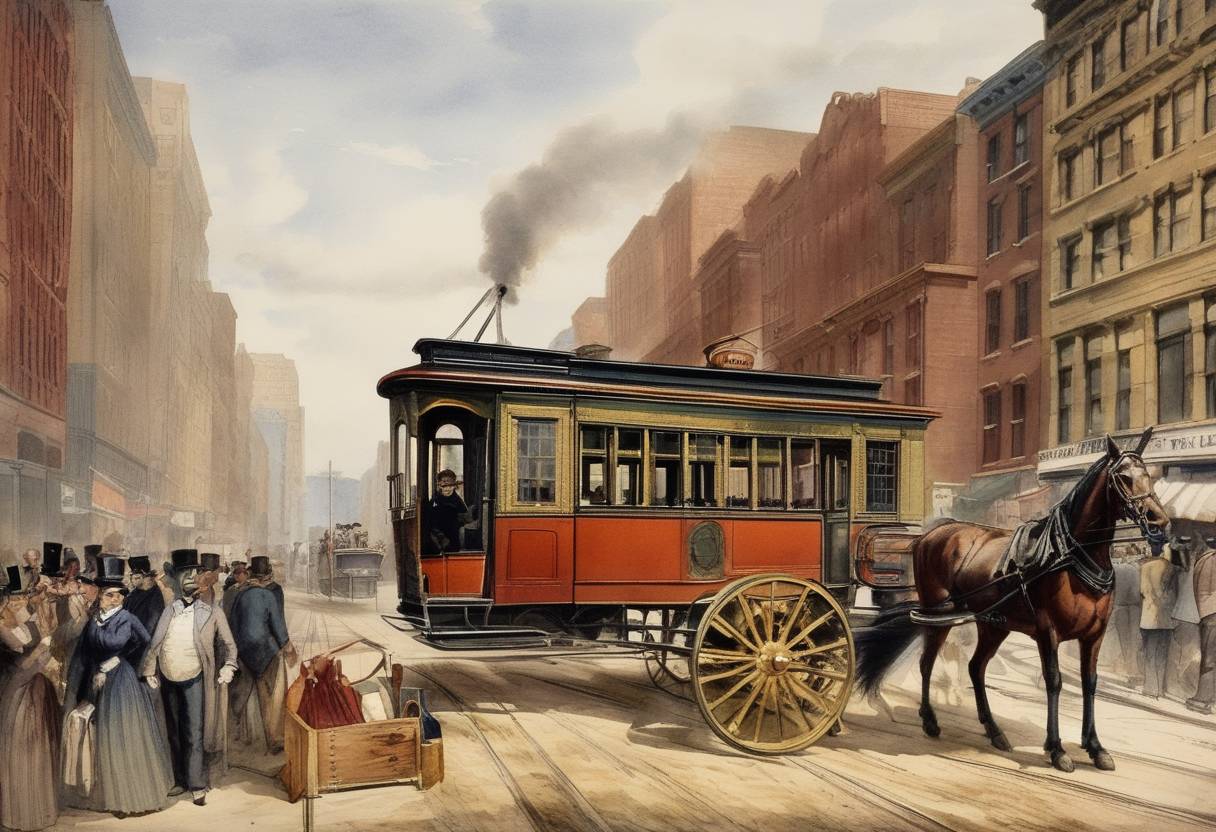
On November 14, 1832, New York City witnessed a pivotal advancement in urban transportation technology with the commencement of the first regular horse-drawn streetcar service. This innovation laid foundational principles for future developments in mass transit systems not only in New York but across the world.
By the early 19th century, as New York City experienced rapid population growth and urban expansion, the need for more efficient public transportation solutions became evident. The existing modes, primarily horse-drawn omnibuses, were limited by their capacity and speed, often struggling to navigate the increasingly congested streets.
The new service, known as the New York and Harlem Railroad, was spearheaded by John Mason, who was a banker and a major early investor in the city. The streetcar line began its operation with a route stretching approximately 4.75 miles from Prince Street in Lower Manhattan to the then-rural community of Harlem. The vehicle used for these trips was a horse-drawn streetcar, running along metal rail tracks laid into the existing roadways—improving the ease and speed of travel significantly over traditional horse-drawn carriages by reducing friction.
This streetcar system ran on iron tracks, which represented a significant technological advancement over the previous gravel and cobblestone roads. The smoothness of the ride provided by these tracks made the journey more efficient and comfortable, thereby enhancing the appeal of public transportation. Each car, drawn typically by two horses, could carry more passengers than the horse-drawn omnibuses and at a faster speed.
The horse-drawn streetcar service was a considerable success and served as a model that would be emulated in other cities in the United States and Europe. It demonstrated the feasibility and benefits of fixed-track urban transit systems, a precursor to modern mass trolley and light rail systems. This marked the beginning of an era of infrastructural evolution that would transform the economy and layout of urban centers.
The success of the streetcar line prompted rapid adoption and expansion of streetcar services within other parts of New York City and beyond. This initiative paved the way for eventual transitions to electrically powered street railways that would dominate cityscapes in the late 19th and early 20th centuries. The development of these urban transit systems catalyzed growth, allowing cities to expand and commuter populations to flourish, forever altering the dynamics of urban life.