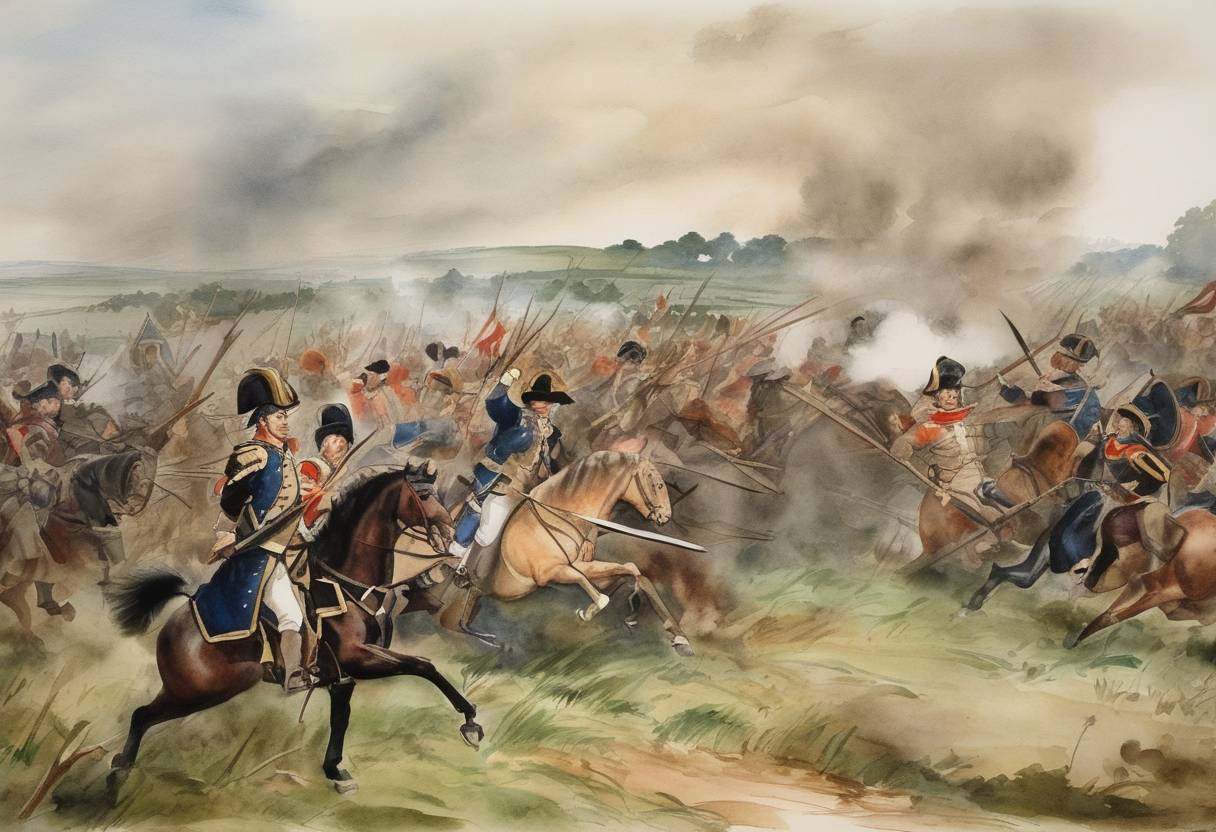
The Battle of Sedgemoor: July 6, 1685
The Battle of Sedgemoor, fought on July 6, 1685, marks the final confrontation of the Monmouth Rebellion. This battle took place near the village of Westonzoyland in Somerset, England. It resulted in a decisive defeat for the rebel forces led by James Scott, the 1st Duke of Monmouth, against the royal troops loyal to King James II.
Context
The Monmouth Rebellion was an attempt by James Scott, an illegitimate son of Charles II, to overthrow his uncle, King James II, who had acceded to the throne earlier in 1685. James II’s Catholic faith was controversial in predominantly Protestant England, and this dissatisfaction fueled the rebellion. Monmouth, claiming his legitimacy as a Protestant claimant to the throne, landed in southwest England from the Dutch Republic in June 1685, gathering support from various local factions.
Key Events Leading to the Battle
After landing, Monmouth quickly amassed an army composed mainly of non-professional soldiers, including farmers and artisans. Despite initial success in rallying support, the rebel forces struggled to gain momentum against the well-trained and equipped royal army.
Monmouth’s strategy involved a surprise nighttime attack on the royal encampment at Sedgemoor. However, the planning was undermined by poor reconnaissance and the ineffective leadership of his commanders. Communication failures and misunderstandings among the rebel ranks further complicated the assault.
The Battle
The battle commenced in the early hours of July 6. The rebel army, lacking in both artillery and tactical discipline, found themselves at a disadvantage. The royals, led by Lord Feversham and John Churchill (later Duke of Marlborough), were well-prepared, having fortified their position and established strong defensive lines.
As Monmouth’s forces approached, they were met with fierce resistance. The royal army, utilizing their superior training and artillery, quickly broke the rebels’ advance. The ensuing melee turned chaotic, with many rebels inadequately armed and poorly organized. Monmouth attempted to rally his diminished forces but quickly realized the futility against the professional royal troops.
Outcome and Aftermath
The Battle of Sedgemoor ended with a catastrophic defeat for the rebels. Significant casualties were inflicted on Monmouth’s forces, and many of his soldiers were captured or killed during and after the battle. Monmouth himself fled the battlefield but was captured shortly thereafter. He was executed for treason on July 15, 1685.
The defeat at Sedgemoor marked the end of the Monmouth Rebellion. It confirmed the strength of James II’s reign, although his harsh reprisals following the battle—most notably the “Bloody Assizes” presided over by Judge Jeffreys—left lasting scars in the affected regions and contributed to the growing discontent against his rule, eventually leading to the Glorious Revolution in 1688.
Historical Significance
The Battle of Sedgemoor was the last pitched battle fought on English soil. It highlighted the stark contrasts between more organized, professional armies and rebellious militias. It underscored the tensions surrounding succession and religious affiliation in England and set the stage for subsequent political and social upheaval.