The Ash Wednesday Bushfires: February 16, 1983
1983 · Victoria, Australia
The Ash Wednesday bushfires in Victoria and South Australia killed 75 people and destroyed thousands of homes.
February 15, 1851
On February 15, 1851, Black Thursday bushfires swept across Victoria, Australia. These bushfires are considered one of the largest in the region's history, burning approximately five million hectares of land and resulting in significant loss of livestock and property.
Greater Victoria region, Australia | N/A
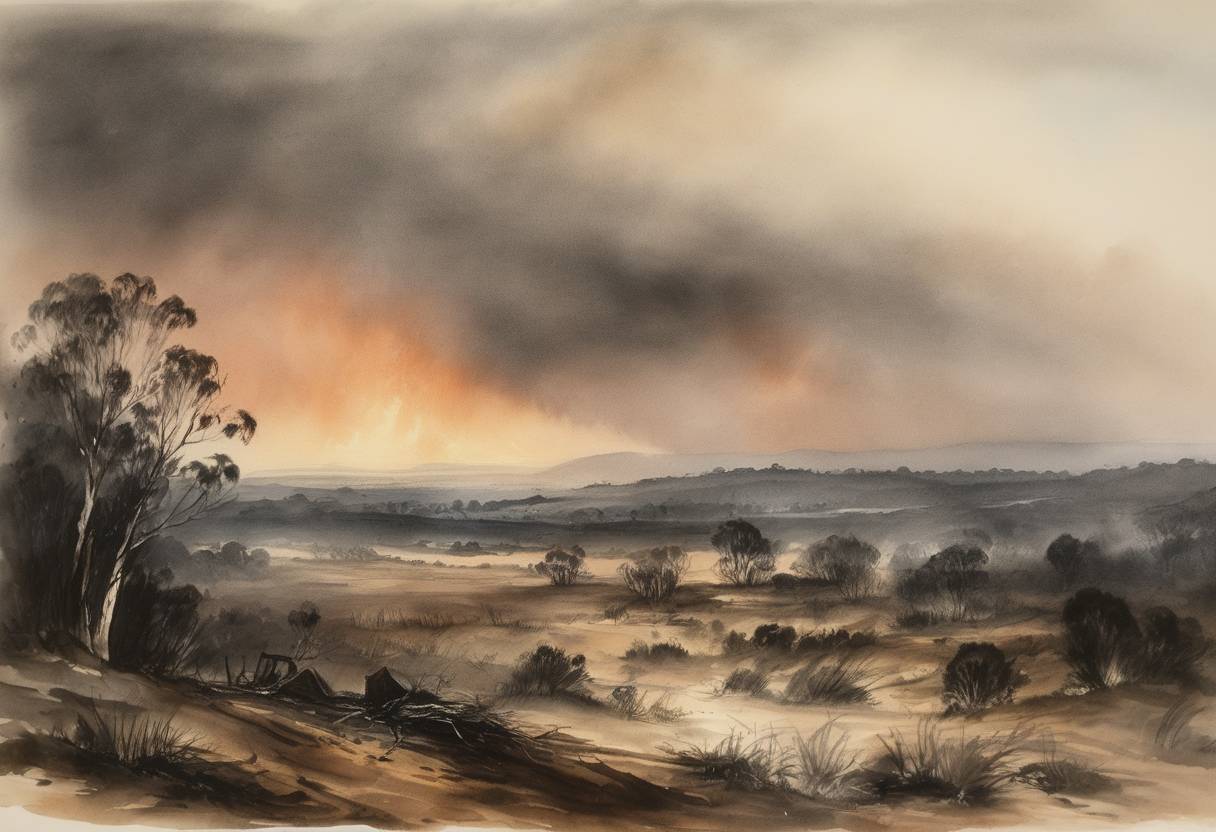
On February 15, 1851, a catastrophic natural disaster struck the colony of Victoria in Australia, known as the Black Thursday bushfires. This event is remembered as one of the largest and most devastating bushfires in Australia’s recorded history.
In the lead-up to February 1851, Victoria experienced a prolonged drought period coupled with a summer that brought extremely high temperatures. The environmental conditions were ripe for the ignition and spread of bushfires. Settlements and agricultural practices had expanded into bushland regions, increasing both the risk of fires and the potential for human and economic loss.
On February 15, 1851, bushfires spread rapidly across Victoria. Hot northerly winds fanned the flames, with temperatures reportedly reaching up to 47 degrees Celsius (116 degrees Fahrenheit). The fires ravaged approximately five million hectares (more than twelve million acres), a swath of destruction that covered a quarter of Victoria’s area.
The bushfires consumed large tracts of forest land, agricultural farms, residential properties, and vital livestock. Eyewitness accounts described walls of flames, the roar of the fire, and skies darkened by smoke and ash.
Loss of Life and Property: The fires resulted in twelve confirmed human fatalities. However, they caused incalculable loss in property and significant hardship among settlers and indigenous communities. Thousands of sheep and cattle perished, crops were destroyed, and hundreds of buildings were reduced to ashes.
Environmental and Economic Impact: The fires led to severe environmental damage, including destruction of timber resources and changes in wildlife habitats. The economic toll was profound, impacting agriculture and livelihoods in the mostly rural and farming communities.
Response and Legacy: The catastrophe prompted discussions on bush management and land-clearing practices. Though wildfire management was nascent at this time, Black Thursday left an enduring impact on policies related to land use and sparked growing awareness of the need for fire preparedness.
Black Thursday remains a key historical event in Australia’s environmental history, highlighting the vulnerability of human settlements to natural disasters. It also marked an early instance of collective consciousness around bushfire management, which continues to shape policies and community awareness in modern Australia.
The event underscores the challenges faced in balancing development with environmental and fire management, lessons that remain relevant as bushfires continue to affect Australia into the 21st century.
Source: en.wikipedia.org