Adolf Hitler's Decision to Remain in Berlin: April 22, 1945
1945 · Berlin, Germany
Adolf Hitler admits defeat in his underground bunker and decides to remain in Berlin until the end of the war.
March 13, 1943
A failed assassination attempt on Adolf Hitler occurred when a bomb placed on his plane by Colonel Henning von Tresckow failed to detonate.
Smolensk, Russia | German Resistance
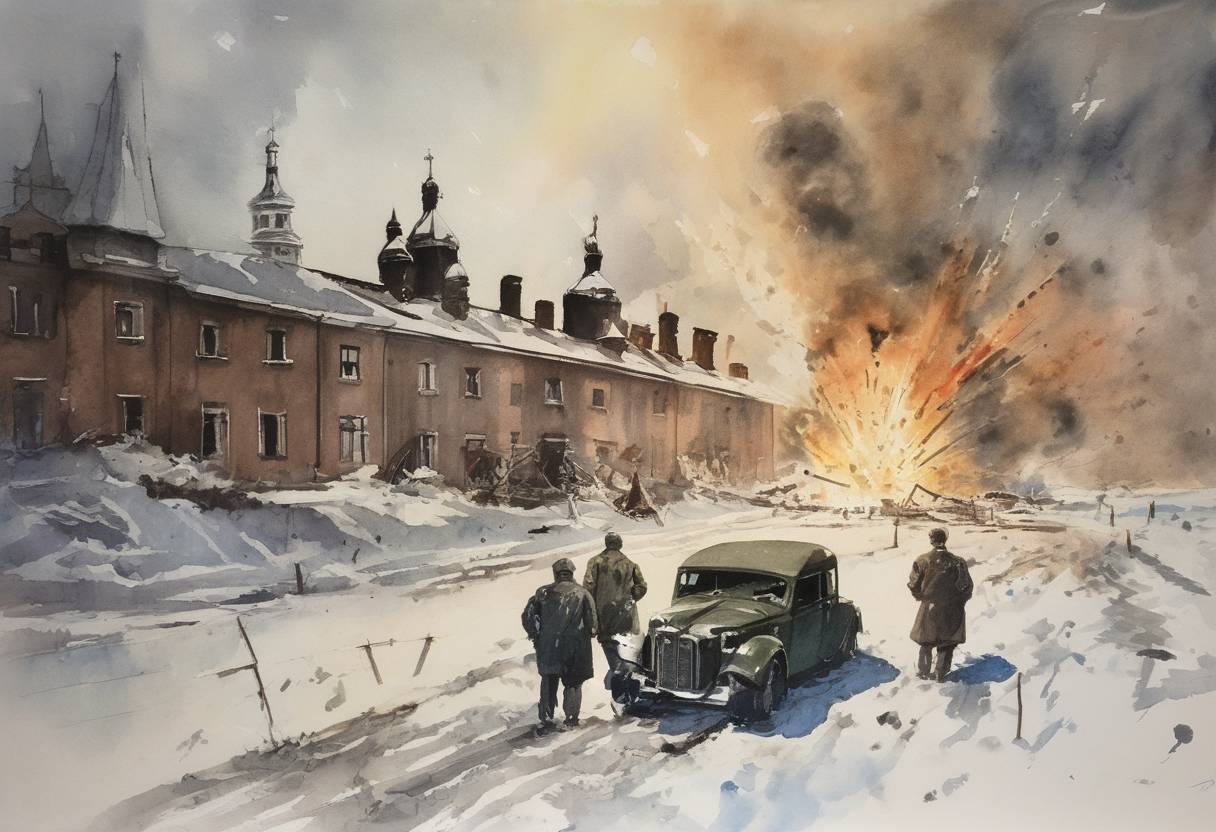
On March 13, 1943, a significant but ultimately unsuccessful attempt to assassinate Adolf Hitler took place. This plot was orchestrated by Colonel Henning von Tresckow, a member of the German Army and a key figure in the German resistance against the Nazi regime.
By 1943, disillusionment with Hitler’s leadership and the direction of Nazi Germany had grown among certain military officers and civilians. The disastrous outcomes of battles such as Stalingrad had intensified opposition within the German military. Colonel Henning von Tresckow, along with other conspirators, believed that removing Hitler was essential to ending the war and saving Germany from further destruction.
The plan was to assassinate Hitler by placing a bomb on his plane. On March 13, 1943, Hitler visited Army Group Center’s headquarters in Smolensk, Russia. Tresckow and his co-conspirators saw this as an opportunity to execute their plan. They managed to smuggle a bomb onto Hitler’s plane disguised as a gift package containing two bottles of Cointreau, a type of liqueur.
The bomb was equipped with a timed fuse, designed to detonate during the flight back to Germany. However, the bomb failed to explode. It is believed that the cold temperatures in the cargo hold may have prevented the fuse from igniting.
The failure of the bomb to detonate was a significant setback for the German resistance. Tresckow and his associates had to act quickly to retrieve the package to avoid detection. They successfully retrieved the bomb without arousing suspicion, allowing them to continue their resistance activities.
This failed attempt was one of several plots against Hitler, highlighting the internal opposition he faced within Germany. Tresckow continued to be involved in resistance efforts, including the more famous July 20, 1944, plot led by Claus von Stauffenberg, which also ultimately failed.
The March 13, 1943, assassination attempt underscores the existence of organized resistance within Nazi Germany, even among high-ranking military officers. It reflects the desperation and determination of those who opposed Hitler’s regime and sought to change the course of history. Although the plot failed, it contributed to the broader narrative of resistance against tyranny during World War II.
The courage and actions of individuals like Henning von Tresckow remain significant in understanding the complexities of resistance within totalitarian regimes and the moral dilemmas faced by those who choose to oppose them from within.
Source: en.wikipedia.org