The Act of Supremacy: October 30, 1534
1534 · London, England
English Parliament passes the Act of Supremacy, establishing King Henry VIII as the Supreme Head of the Church of England.
July 27, 1663
The English Parliament passed the Second Navigation Act, which aimed to tighten the control over colonial trade by requiring that goods imported to England or its colonies be transported on English ships.
London, England | English Parliament
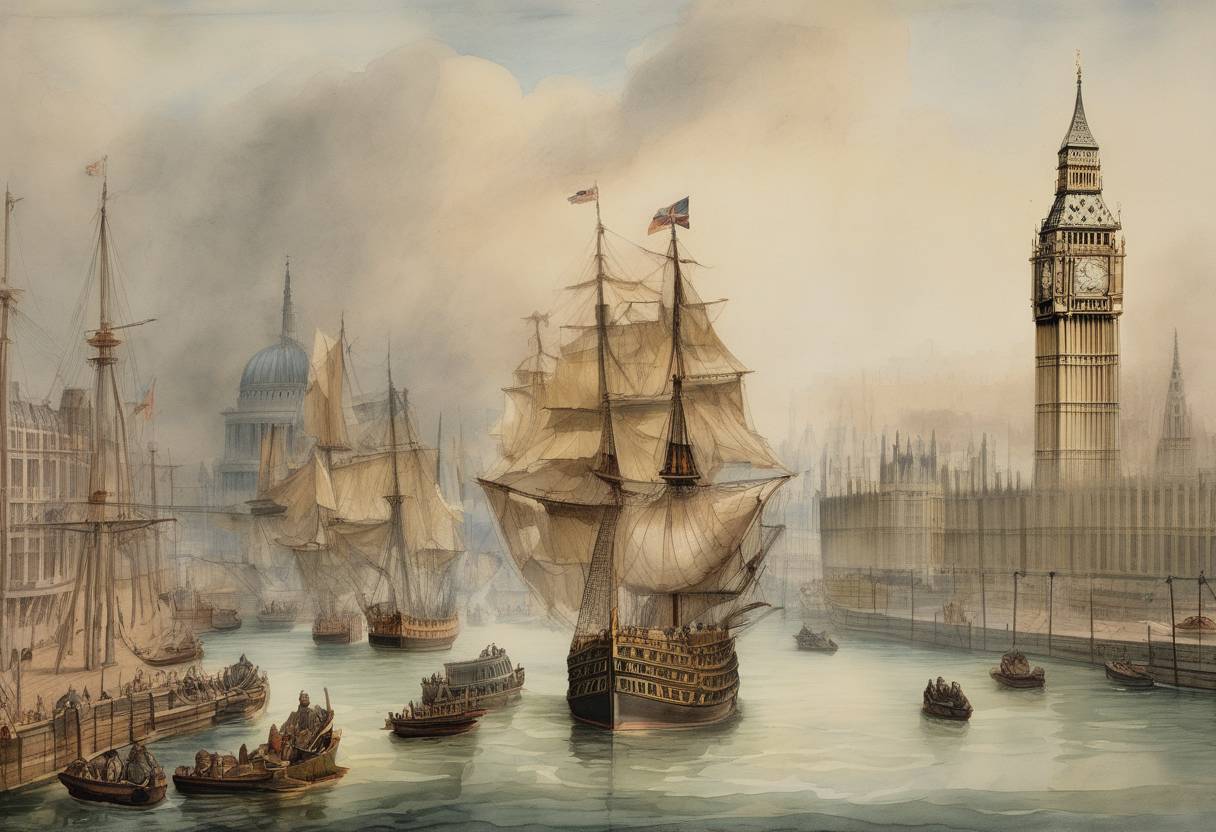
On July 27, 1663, the English Parliament passed the Second Navigation Act, a significant piece of legislation aimed at strengthening England’s control over colonial trade. This act was part of a broader series of laws known as the Navigation Acts, which were designed to regulate trade between England and its colonies, ensuring that the economic benefits of colonial commerce were retained within the English realm.
The Navigation Acts were rooted in the mercantilist economic theory, which posited that national strength could be maximized by limiting imports and maximizing exports. The first Navigation Act was enacted in 1651 under the Commonwealth government, primarily targeting the Dutch, who were dominant in maritime trade. This initial act required that goods imported into England or its colonies be carried on English ships or ships from the producing country.
The Second Navigation Act of 1663, also known as the Staple Act, expanded upon the earlier legislation with more stringent requirements:
English Ships Requirement: It mandated that all goods imported into England or its colonies had to be transported on English ships. This was intended to boost the English shipping industry and reduce reliance on foreign vessels.
Colonial Trade Restrictions: The act required that certain “enumerated” goods produced in the colonies, such as tobacco and sugar, could only be shipped to England or other English colonies. This ensured that these valuable commodities would benefit English merchants and the Crown.
Staple Ports: The act established that goods from Europe destined for the colonies had to first pass through England, where they would be unloaded and taxed before being re-exported. This created a system where England acted as a central hub for colonial trade, further enriching English merchants and the treasury.
The Second Navigation Act had several significant impacts:
Economic Control: It tightened England’s economic control over its colonies, ensuring that the wealth generated from colonial resources flowed back to the mother country.
Colonial Discontent: The restrictions imposed by the Navigation Acts were a source of growing resentment in the colonies. Colonists were often forced to pay higher prices for goods due to the added costs of shipping and taxation, which contributed to the economic grievances that would later fuel colonial unrest.
Maritime Dominance: By bolstering the English shipping industry, the act helped England establish itself as a dominant maritime power, which was crucial for its global trade ambitions.
The Navigation Acts, including the Second Navigation Act of 1663, played a critical role in shaping the economic relationship between England and its colonies. They laid the groundwork for the mercantile system that would dominate English colonial policy for much of the 17th and 18th centuries. While they succeeded in strengthening England’s economic position, they also sowed the seeds of discontent that would eventually lead to calls for greater autonomy and, ultimately, the American Revolution.
Source: en.wikipedia.org