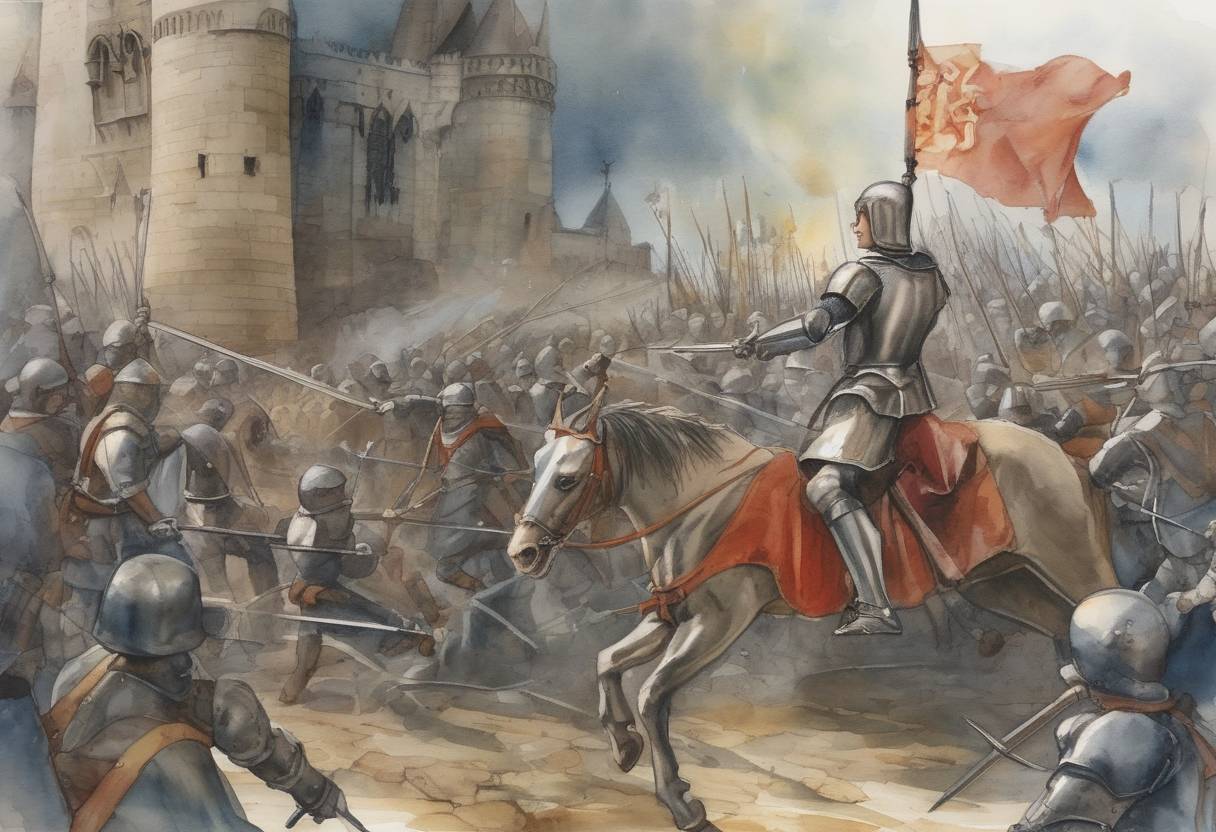
Joan of Arc Lifts the Siege of Orléans - May 8, 1429
The lifting of the Siege of Orléans on May 8, 1429, marks a pivotal moment in the Hundred Years’ War, a protracted conflict between England and France over territorial claims and the French throne. This event is particularly significant due to the role played by Joan of Arc, a young peasant girl whose leadership and vision inspired the French forces to a crucial victory.
Background
- Hundred Years’ War Context: The war began in 1337 and was characterized by intermittent battles and shifting alliances. By the early 15th century, the English had gained significant control over French territories, including Paris, and had crowned Henry VI as the King of France in 1422.
- Siege of Orléans: Orléans was a strategic city on the Loire River, vital for controlling the surrounding region. The siege began in October 1428, with English forces led by the Earl of Salisbury and later the Earl of Suffolk. The city’s fall would have further solidified English dominance in France.
Joan of Arc’s Involvement
- Divine Inspiration: Joan of Arc, a 17-year-old peasant from Domrémy, claimed to have received visions from saints instructing her to support Charles VII, the uncrowned French Dauphin, and help drive the English from France.
- Royal Audience: In March 1429, Joan convinced Charles VII to allow her to accompany a relief army to Orléans. Her presence was seen as a divine endorsement of Charles’s claim to the throne.
The Siege and Its Lifting
- Arrival at Orléans: Joan arrived at Orléans on April 29, 1429, bringing much-needed supplies and morale to the besieged city. Her presence galvanized the French troops and citizens.
- Military Engagements: Over the next few days, Joan led several successful assaults against English fortifications surrounding the city. Her leadership and the strategic acumen of French commanders, such as Jean de Dunois, played crucial roles in these victories.
- End of the Siege: On May 8, 1429, the English forces, demoralized and weakened, lifted the siege and retreated. This victory was a turning point in the war, boosting French morale and leading to further successes.
Aftermath and Significance
- Joan’s Rising Influence: The victory at Orléans elevated Joan’s status as a national heroine and a symbol of divine favor. She continued to play a key role in subsequent campaigns, including the coronation of Charles VII at Reims.
- Turning Point in the War: The lifting of the siege marked the beginning of a French resurgence. Over the next two decades, the French gradually reclaimed territories, culminating in the end of the war in 1453 with the Treaty of Picquigny.
- Legacy: Joan of Arc’s role in the siege and her subsequent martyrdom in 1431 left a lasting legacy, contributing to her canonization as a saint in 1920 and her enduring status as a symbol of French unity and resistance.
The lifting of the Siege of Orléans not only marked a strategic victory but also a profound shift in the momentum of the Hundred Years’ War, underscoring the impact of individual leadership and the power of national identity.