The Last Executions of the Salem Witch Trials: September 22, 1692
1692 · Salem, United States
The last executions of the Salem witch trials took place, with eight people hanged for witchcraft in Salem, Massachusetts.
June 10, 1692
Bridget Bishop became the first person executed for witchcraft during the Salem witch trials.
Salem, United States | Massachusetts Bay Colony
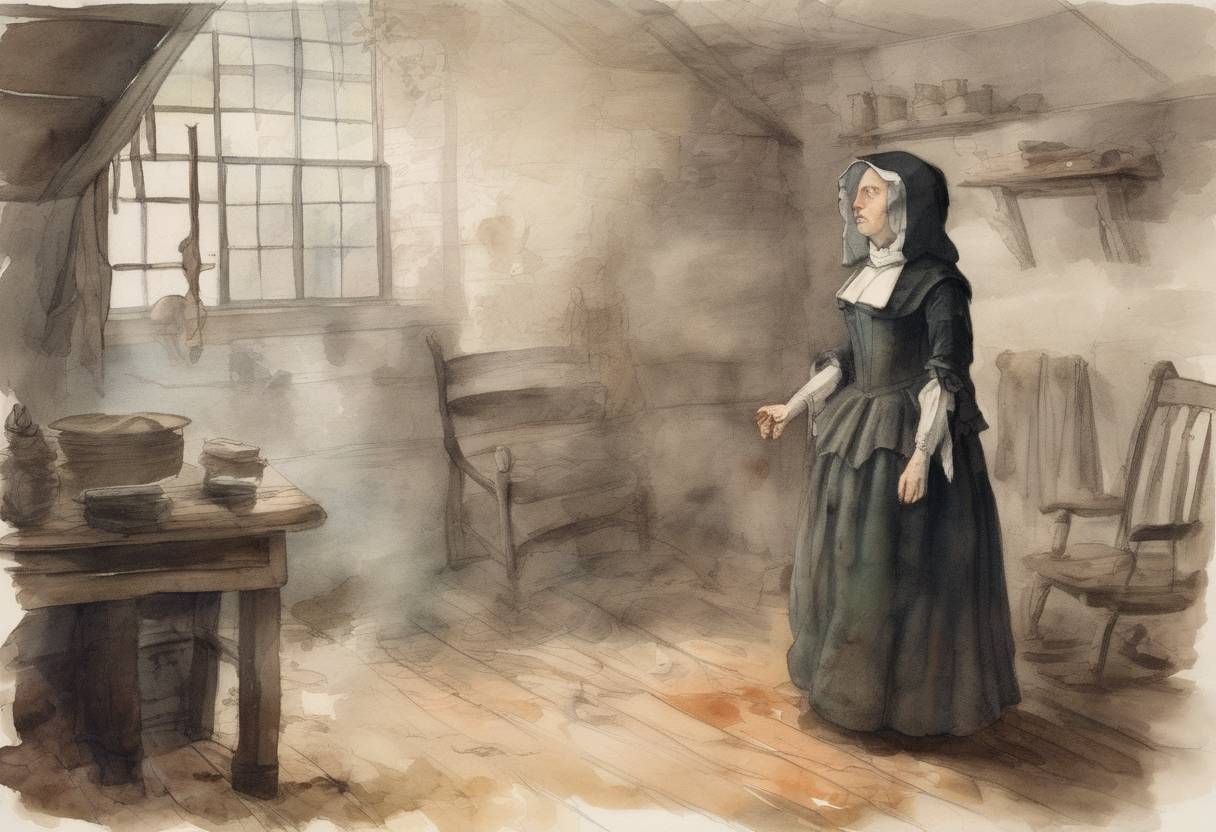
On June 10, 1692, Bridget Bishop became the first person executed for witchcraft during the infamous Salem witch trials. This event marked a grim chapter in colonial American history, characterized by mass hysteria and a fervent belief in the supernatural.
The Salem witch trials began in early 1692 in the Puritan settlement of Salem Village, Massachusetts. The trials were fueled by a combination of social tensions, religious fervor, and fear of the unknown. Accusations of witchcraft spread rapidly after a group of young girls in the village claimed to be possessed by the devil and accused several local women of witchcraft.
Bridget Bishop was a local woman known for her outspoken nature and unconventional lifestyle, which included frequenting taverns and wearing ostentatious clothing. She was previously accused of witchcraft in 1680 but was acquitted. Her reputation and previous accusations made her an easy target when the witchcraft hysteria erupted.
Bishop’s trial began on June 2, 1692. The court, led by Chief Magistrate William Stoughton, relied heavily on spectral evidence—testimony that the accused’s spirit or specter was seen committing witchcraft. Witnesses claimed that Bishop’s specter had harmed them, and physical evidence, such as a “poppet” (a doll used in witchcraft), was presented against her.
Despite her protests of innocence, the court found Bishop guilty. On June 10, 1692, she was hanged at Proctor’s Ledge, a site near Gallows Hill in Salem. Her execution set a precedent for the subsequent trials and executions that followed.
Bridget Bishop’s execution was the first of 20 during the Salem witch trials, which lasted until May 1693. The trials resulted in the execution of 19 people by hanging and one by pressing, as well as the imprisonment of many others.
The Salem witch trials are now seen as a cautionary tale about the dangers of mass hysteria, religious extremism, and the breakdown of due process. They have been extensively studied and serve as a reminder of the importance of justice and rationality in legal proceedings.
In 1711, the Massachusetts colony passed a bill restoring the rights and good names of those accused and granted financial restitution to their heirs. Bridget Bishop’s case, along with others, continues to be a subject of reflection and analysis in American history.
Source: en.wikipedia.org