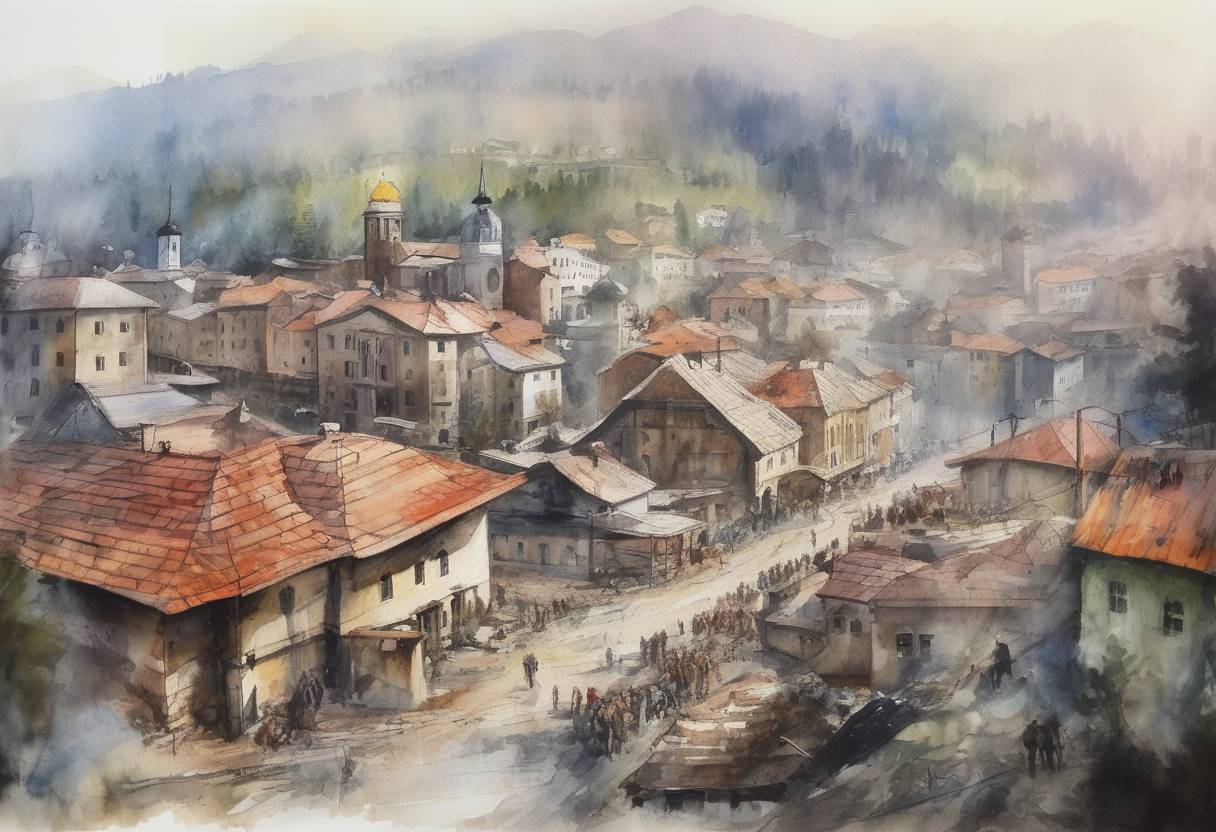
The Siege of Sarajevo: April 5, 1992
On April 5, 1992, the Bosnian Serbs began the siege of Sarajevo, marking a pivotal and tragic moment in the Bosnian War. This event initiated one of the longest sieges in modern warfare, lasting until February 29, 1996, and resulting in significant loss of life and widespread destruction.
Context Leading to the Siege
The siege of Sarajevo occurred against the backdrop of the disintegration of Yugoslavia, a multi-ethnic federation that began to unravel in the early 1990s. The Socialist Federal Republic of Yugoslavia was composed of six republics, including Bosnia and Herzegovina, which declared independence following a referendum held on February 29 and March 1, 1992. The referendum was boycotted by the Bosnian Serbs, who opposed independence and favored remaining in a Serb-dominated Yugoslavia.
Key Events
April 5, 1992: The siege officially began as Bosnian Serb forces encircled Sarajevo, the capital of Bosnia and Herzegovina. The city, with its diverse population of Bosniaks, Serbs, Croats, and others, became a focal point of ethnic tensions.
Military Tactics: The Bosnian Serb Army, led by General Ratko Mladić, used artillery, sniper fire, and blockades to isolate the city. The siege aimed to pressure the Bosnian government and assert control over the territory.
Humanitarian Crisis: Sarajevo’s residents faced severe shortages of food, water, and medical supplies. The siege resulted in the deaths of an estimated 13,000 people, including many civilians, and left thousands more wounded.
Aftermath and Consequences
International Response: The siege drew global attention and condemnation. The United Nations attempted to provide humanitarian aid and broker peace, but efforts were often hampered by the complex political and military situation.
Dayton Accords: The Bosnian War, including the siege of Sarajevo, eventually concluded with the signing of the Dayton Accords in December 1995. This peace agreement established a framework for governance and territorial division in Bosnia and Herzegovina.
Legacy: The siege left a lasting impact on Sarajevo and its inhabitants. The physical and psychological scars of the conflict remain evident, and the event is a poignant reminder of the devastating effects of ethnic conflict and war.
Broader Historical Significance
The siege of Sarajevo is emblematic of the broader ethnic and political conflicts that characterized the breakup of Yugoslavia. It highlighted the challenges of international intervention in civil conflicts and underscored the importance of addressing ethnic tensions and promoting reconciliation in post-conflict societies.
The events in Sarajevo continue to be studied as a case of urban warfare and humanitarian crisis, offering lessons for conflict resolution and peacebuilding efforts worldwide.