The Battle of Berlin: Soviet Offensive Begins on April 16, 1945
1945 · Berlin, Germany
The Battle of Berlin began as Soviet forces launched their final offensive of World War II in Europe.
March 30, 1945
Soviet forces captured the city of Danzig (now Gdańsk, Poland) during World War II, marking a significant advance on the Eastern Front.
Danzig, Germany (now Poland) | Soviet Union
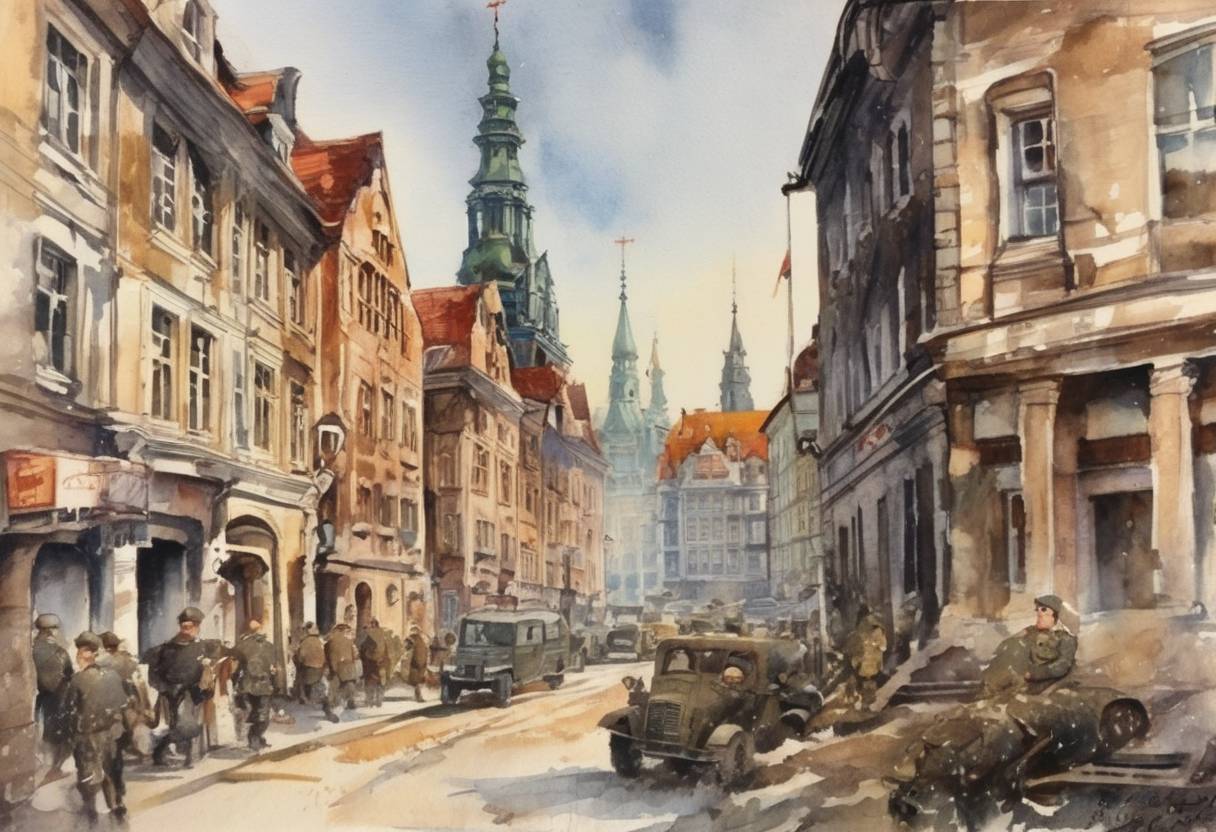
On March 30, 1945, Soviet forces captured the city of Danzig, a significant event during the final stages of World War II on the Eastern Front. This victory was part of the broader East Pomeranian Offensive, which aimed to secure the Baltic coast and eliminate German forces in the region.
Location and Importance: Danzig, now known as Gdańsk, Poland, was a strategically vital port city on the Baltic Sea. Its capture was crucial for the Soviet Union to cut off German supply lines and secure the northern flank of their advance into Germany.
Operation Vistula-Oder: The capture of Danzig was part of the larger Soviet offensive that began in January 1945, known as the Vistula-Oder Offensive. This operation saw rapid Soviet advances from the Vistula River to the Oder River, setting the stage for the final assault on Berlin.
Soviet Strategy: The Red Army, under the command of Marshal Konstantin Rokossovsky, launched the East Pomeranian Offensive in February 1945. The operation aimed to clear German forces from Pomerania and secure the Baltic coastline.
German Defense: The German forces, part of Army Group Vistula, were tasked with defending the region. However, they were significantly weakened by previous battles and the overwhelming strength of the Soviet forces.
Assault on the City: The battle for Danzig involved intense urban warfare, with Soviet troops engaging in street-by-street fighting. The city was heavily fortified, but the Soviet forces, employing superior numbers and firepower, gradually overcame the German defenses.
Strategic Victory: The fall of Danzig marked a critical Soviet victory, effectively cutting off German forces in East Prussia and securing the northern flank for the final push towards Berlin.
Humanitarian Impact: The capture of the city led to significant civilian displacement and destruction. The population of Danzig, predominantly German at the time, faced expulsion and resettlement as the city was integrated into Poland after the war.
Historical Consequences: The capture of Danzig was part of the broader Soviet strategy to encircle and capture Berlin, which would occur in May 1945, leading to the eventual surrender of Nazi Germany.
The capture of Danzig exemplified the relentless Soviet advance during the final months of World War II and underscored the shifting borders and demographic changes that would reshape Central and Eastern Europe in the post-war period.
Source: en.wikipedia.org