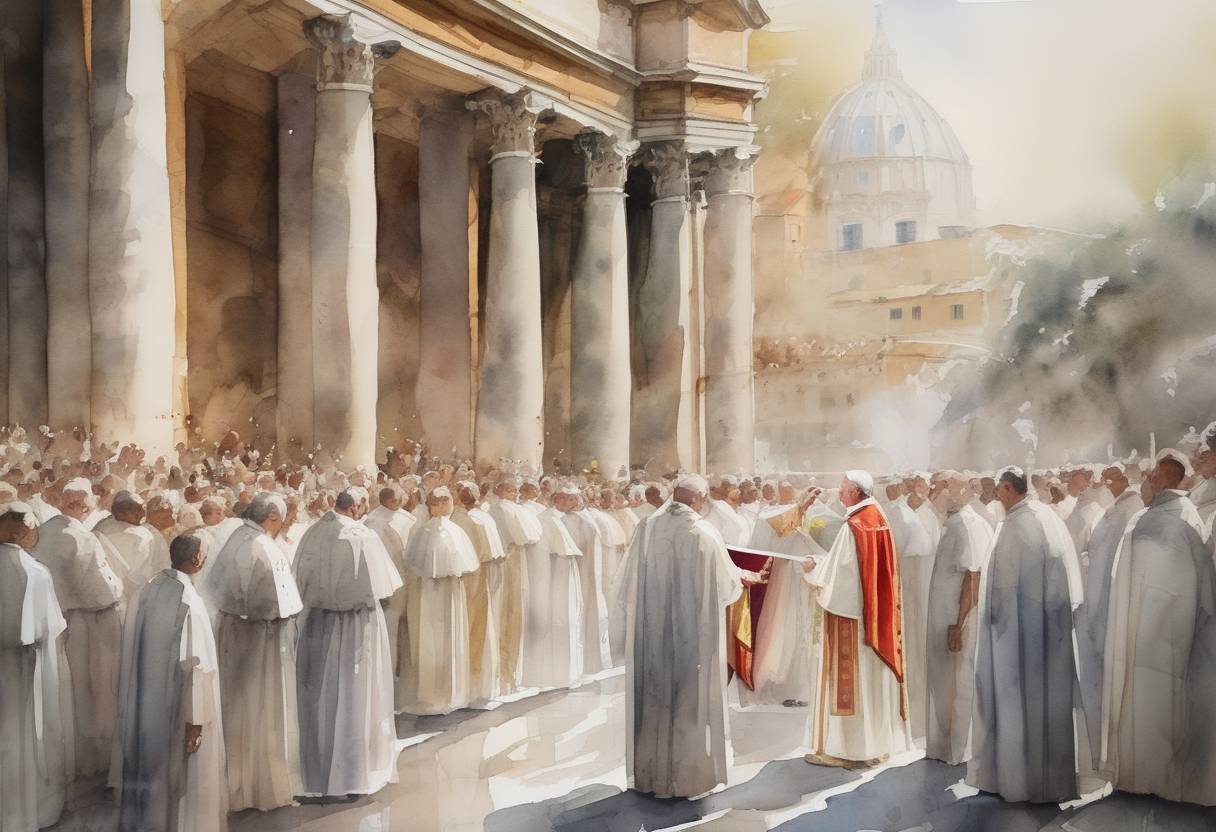
Pope Constantine’s Consecration as the 88th Pope
On March 25, 708, Pope Constantine was consecrated as the 88th pope of the Roman Catholic Church. His papacy, which lasted until his death in 715, was marked by significant interactions with both the Byzantine Empire and the Lombards, reflecting the complex political and religious landscape of the time.
Background and Context
Early Life: Pope Constantine was born in Syria, a region that was part of the Byzantine Empire. His background is indicative of the diverse origins of many popes during this period, reflecting the wide reach of the Church.
Predecessor: He succeeded Pope Sisinnius, who had a very brief papacy of only about 20 days. The quick succession highlights the turbulent times and the challenges faced by the Church in maintaining stable leadership.
Key Events During His Papacy
Relations with the Byzantine Empire: One of the most notable aspects of Pope Constantine’s papacy was his diplomatic mission to Constantinople in 710-711. He was invited by Emperor Justinian II, marking a rare instance of a pope traveling to the Byzantine capital. This journey underscored the importance of maintaining a relationship with the Eastern Church and the Byzantine political authority.
Iconoclasm: Although the major iconoclastic controversy would erupt later in the 8th century, Pope Constantine’s interactions with the Byzantine Empire laid groundwork for the Church’s stance on the veneration of icons. His papacy occurred during a time when tensions over religious images were beginning to surface.
Lombard Relations: Pope Constantine also dealt with the Lombards, a Germanic people who had settled in Italy. His efforts were focused on maintaining peace and protecting the territories of the Papal States from Lombard encroachments.
Aftermath and Significance
Legacy: Pope Constantine’s papacy is often noted for its diplomatic achievements and efforts to bridge the gap between the Eastern and Western branches of Christianity. His successful negotiation with the Byzantine Empire helped to stabilize relations during a period of potential conflict.
Historical Impact: The interactions and policies during Constantine’s papacy set precedents for future popes in dealing with both secular and religious authorities. His efforts in diplomacy and church governance were significant in maintaining the Church’s influence during a time of political fragmentation in Europe.
Pope Constantine’s tenure as pope is a reflection of the broader challenges faced by the Church in the early medieval period, navigating complex political landscapes while striving to maintain religious unity and authority.