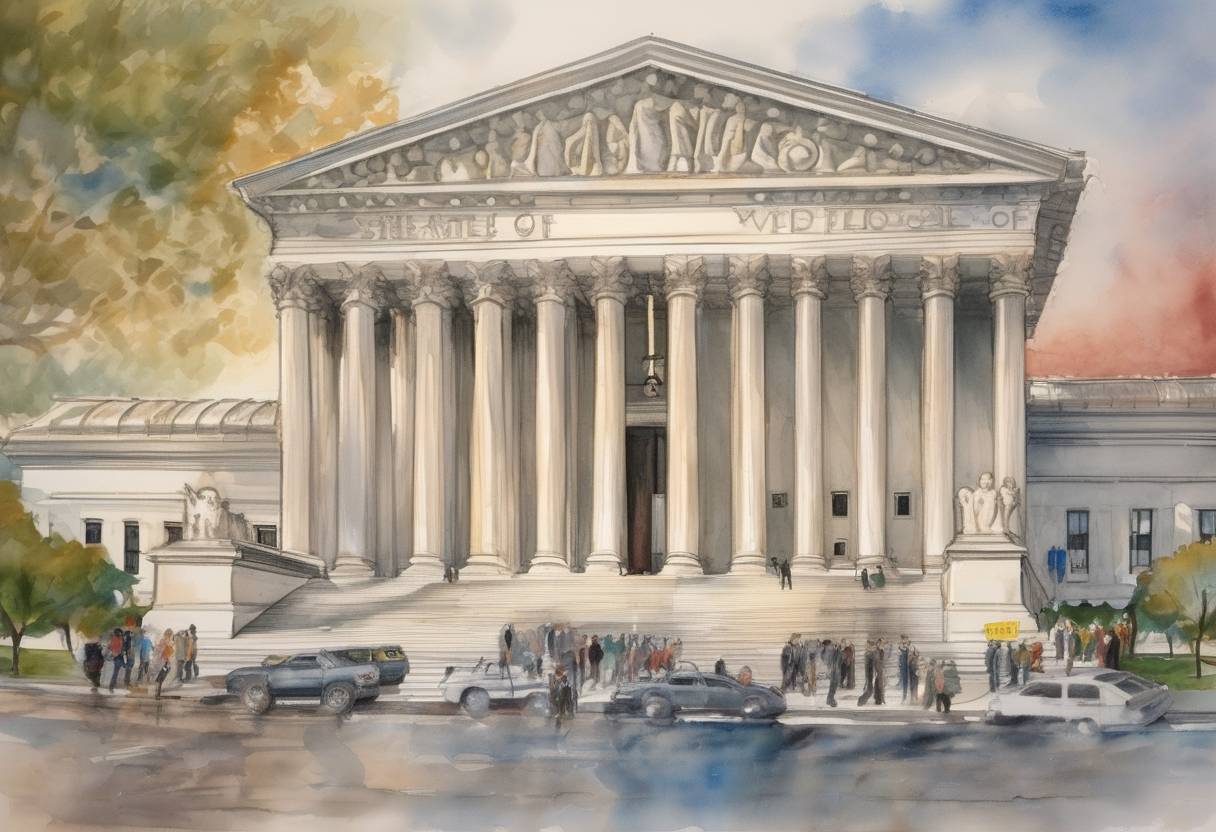
Clinton v. City of New York: The Line-Item Veto Case
On May 26, 1998, the United States Supreme Court delivered a landmark decision in the case of Clinton v. City of New York, ruling that the line-item veto, as granted by the Line Item Veto Act of 1996, was unconstitutional. This decision had significant implications for the balance of power between the legislative and executive branches of the U.S. government.
Background
The Line Item Veto Act of 1996 was enacted to allow the President of the United States to veto specific provisions, or “line items,” in appropriations bills without having to veto the entire bill. This power was intended to help control federal spending and reduce budget deficits by allowing the President to remove unnecessary expenditures.
President Bill Clinton was the first to exercise this power, using it to cancel certain budgetary allocations. However, this action was challenged in court by various parties, including the City of New York and a group of Idaho potato farmers, who argued that the cancellations adversely affected them.
The Case
The Supreme Court case consolidated two separate challenges to the line-item veto:
- City of New York v. Clinton: This involved the cancellation of a provision that would have allowed New York City to retain certain taxes.
- Snake River Potato Growers, Inc. v. Rubin: This involved the cancellation of a provision that would have provided tax benefits to potato farmers.
The plaintiffs argued that the line-item veto violated the Presentment Clause of the U.S. Constitution, which outlines the legislative process and requires that any bill passed by Congress must be either approved or vetoed in its entirety by the President.
The Decision
In a 6-3 decision, the Supreme Court ruled that the line-item veto was unconstitutional. Justice John Paul Stevens delivered the opinion of the Court, stating that the Line Item Veto Act violated the Presentment Clause because it effectively allowed the President to amend or repeal parts of duly enacted statutes, a power that the Constitution does not grant to the executive branch.
The Court emphasized that the Constitution requires a specific process for enacting laws, involving both houses of Congress and the President. By allowing the President to unilaterally alter laws, the line-item veto disrupted this balance and encroached upon the legislative powers of Congress.
Aftermath and Significance
The ruling in Clinton v. City of New York reaffirmed the principle of separation of powers, emphasizing the distinct roles of the legislative and executive branches. It underscored the importance of adhering to the constitutional process for lawmaking and reinforced the checks and balances designed to prevent any one branch of government from gaining excessive power.
The decision effectively nullified the Line Item Veto Act, and no subsequent attempts to grant the President similar powers have been successful. The ruling remains a pivotal example of the judiciary’s role in interpreting the Constitution and maintaining the framework of American governance.