The USS Princeton Disaster: February 28, 1844
1844 · Alexandria, United States
A gun on the USS Princeton explodes during a demonstration, killing six people, including two United States Cabinet members.
July 17, 1944
The Port Chicago disaster occurred when a munitions explosion killed 320 people at the Port Chicago Naval Magazine in California.
Port Chicago, United States | United States Navy
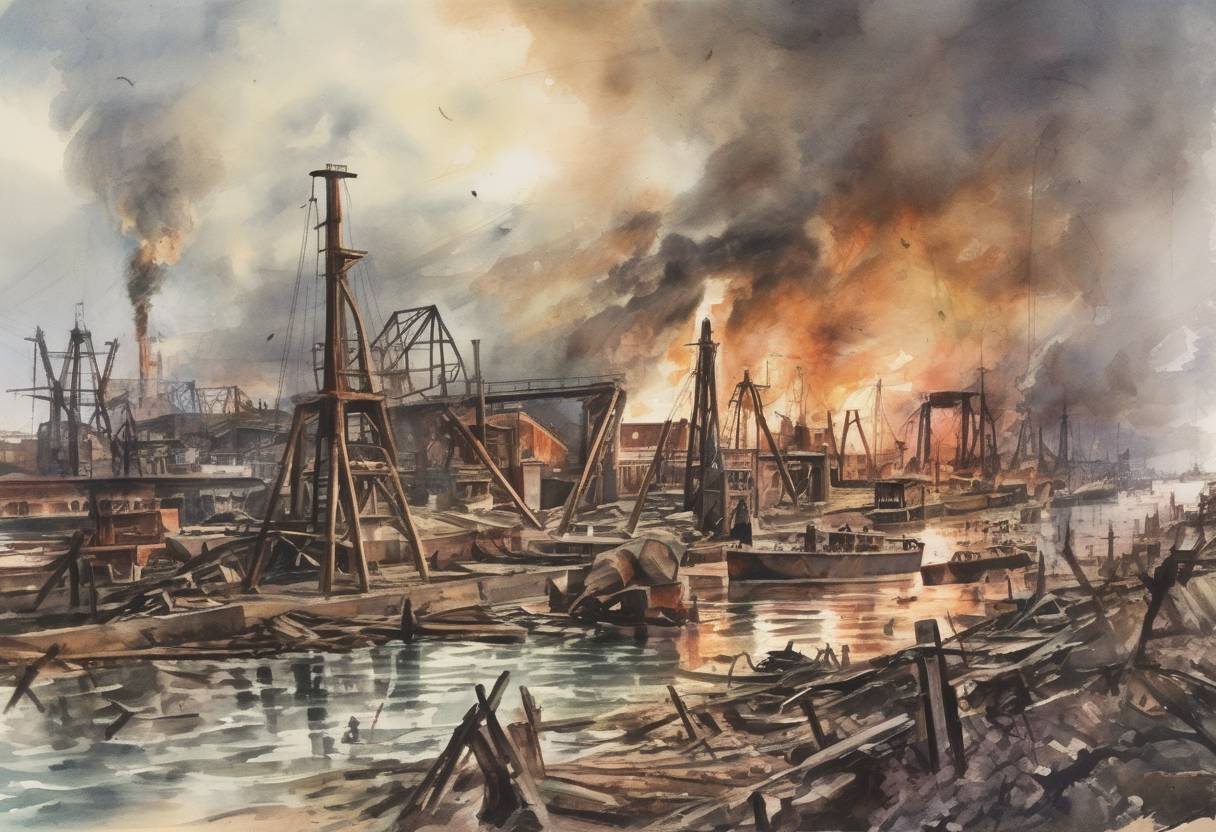
On July 17, 1944, a catastrophic explosion occurred at the Port Chicago Naval Magazine in California, resulting in the deaths of 320 individuals, including 202 African American sailors. This tragic event remains one of the deadliest home-front disasters of World War II and had significant implications for the U.S. Navy and the civil rights movement.
Port Chicago, located about 30 miles northeast of San Francisco, was a major munitions loading facility during World War II. The facility was responsible for loading ammunition onto ships bound for the Pacific Theater. The workforce primarily consisted of African American sailors, who were often assigned to these dangerous tasks under the supervision of white officers.
On the night of July 17, 1944, two ships, the SS E.A. Bryan and the SS Quinault Victory, were being loaded with munitions. At approximately 10:18 PM, a massive explosion occurred, obliterating the ships and causing widespread devastation.
The disaster had several immediate and long-term consequences:
The Port Chicago disaster is a poignant reminder of the racial inequalities that existed within the U.S. military during World War II. It played a crucial role in the broader struggle for civil rights and equality, influencing future policies and reforms. The event is commemorated at the Port Chicago Naval Magazine National Memorial, which serves as a tribute to those who lost their lives and as a reminder of the ongoing fight for justice and equality.
Source: en.wikipedia.org