William J. Schroeder: First Artificial Heart Patient to Leave the Hospital
1985 · Louisville, United States
William J. Schroeder became the first artificial heart patient to leave the hospital.
December 6, 1967
Adrian Kantrowitz performed the first human heart transplant in the United States.
Brooklyn, United States | Maimonides Medical Center
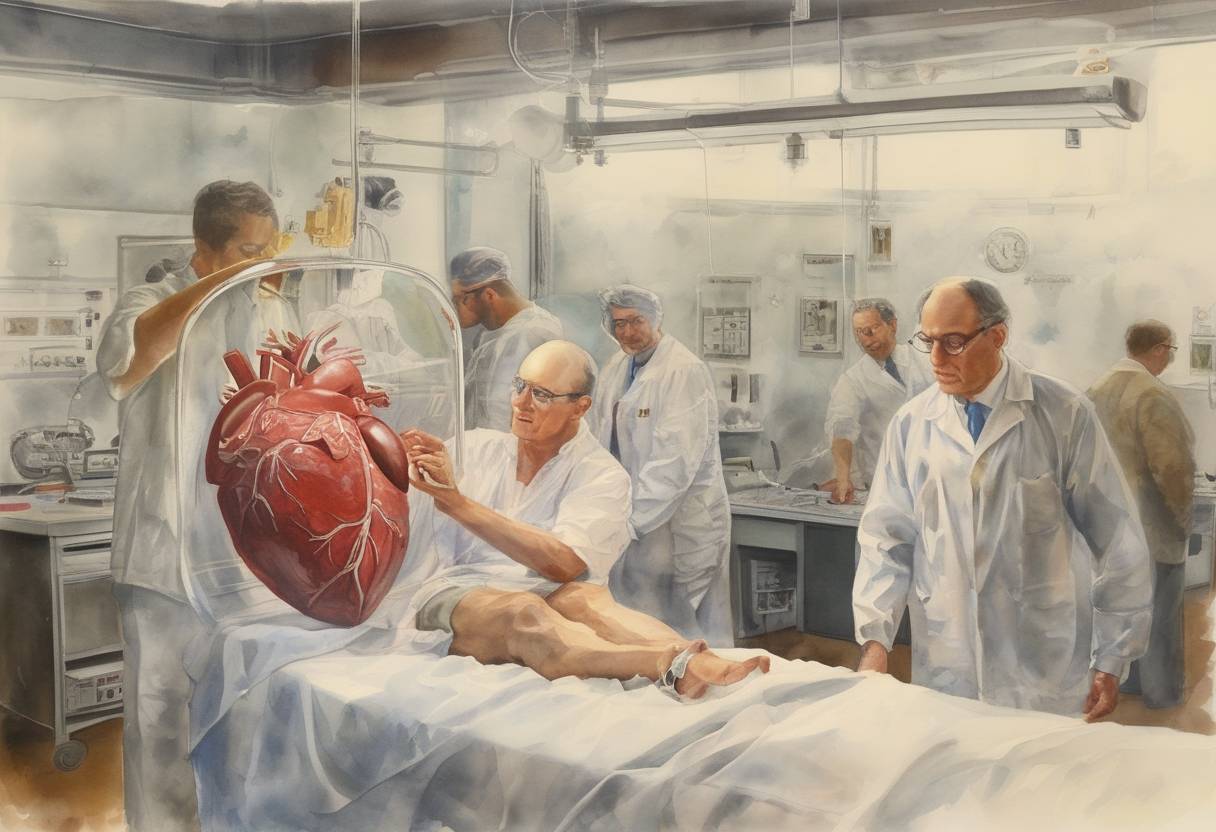
On December 6, 1967, Dr. Adrian Kantrowitz performed the first human heart transplant in the United States at Maimonides Medical Center in Brooklyn, New York. This groundbreaking procedure marked a significant milestone in medical history, occurring just three days after the world’s first human heart transplant by Dr. Christiaan Barnard in South Africa.
Adrian Kantrowitz: A pioneering cardiac surgeon, Kantrowitz was known for his innovative work in the field of heart surgery. Prior to the transplant, he had developed several medical devices, including an early version of the intra-aortic balloon pump and a mechanical heart assist device.
The Era of Medical Innovation: The 1960s were a period of rapid advancements in medical technology and surgical techniques. The development of immunosuppressive drugs and improved surgical methods made organ transplantation a viable option for treating end-stage organ failure.
The Patient: The recipient was an infant suffering from a fatal heart defect. The donor was another infant who had been declared brain-dead. The decision to proceed with the transplant was made under urgent circumstances, given the critical condition of the recipient.
The Surgery: The operation was conducted under intense media scrutiny and ethical debate. Despite the technical success of the surgery, the recipient unfortunately did not survive beyond a few hours post-transplant.
Ethical and Medical Challenges: The procedure highlighted the ethical complexities surrounding organ transplantation, particularly concerning donor criteria and the definition of death.
Advancements in Transplant Medicine: Although the immediate outcome was not successful, Kantrowitz’s work contributed to the evolving field of transplant medicine. It paved the way for future advancements and improvements in surgical techniques and post-operative care.
Legacy: Dr. Kantrowitz’s efforts underscored the importance of innovation and perseverance in medical research. His contributions to cardiac surgery and transplantation continue to influence the field today.
Public Perception: The early heart transplants of the 1960s captured the public’s imagination and sparked widespread interest in the possibilities of modern medicine.
Medical Progress: These pioneering efforts laid the groundwork for the development of more effective immunosuppressive therapies and improved surgical outcomes, leading to the routine nature of heart transplants in the decades that followed.
In summary, the first human heart transplant in the United States, performed by Dr. Adrian Kantrowitz, was a landmark event in medical history. Despite the challenges and initial setbacks, it represented a crucial step forward in the quest to save lives through organ transplantation.
Source: en.wikipedia.org