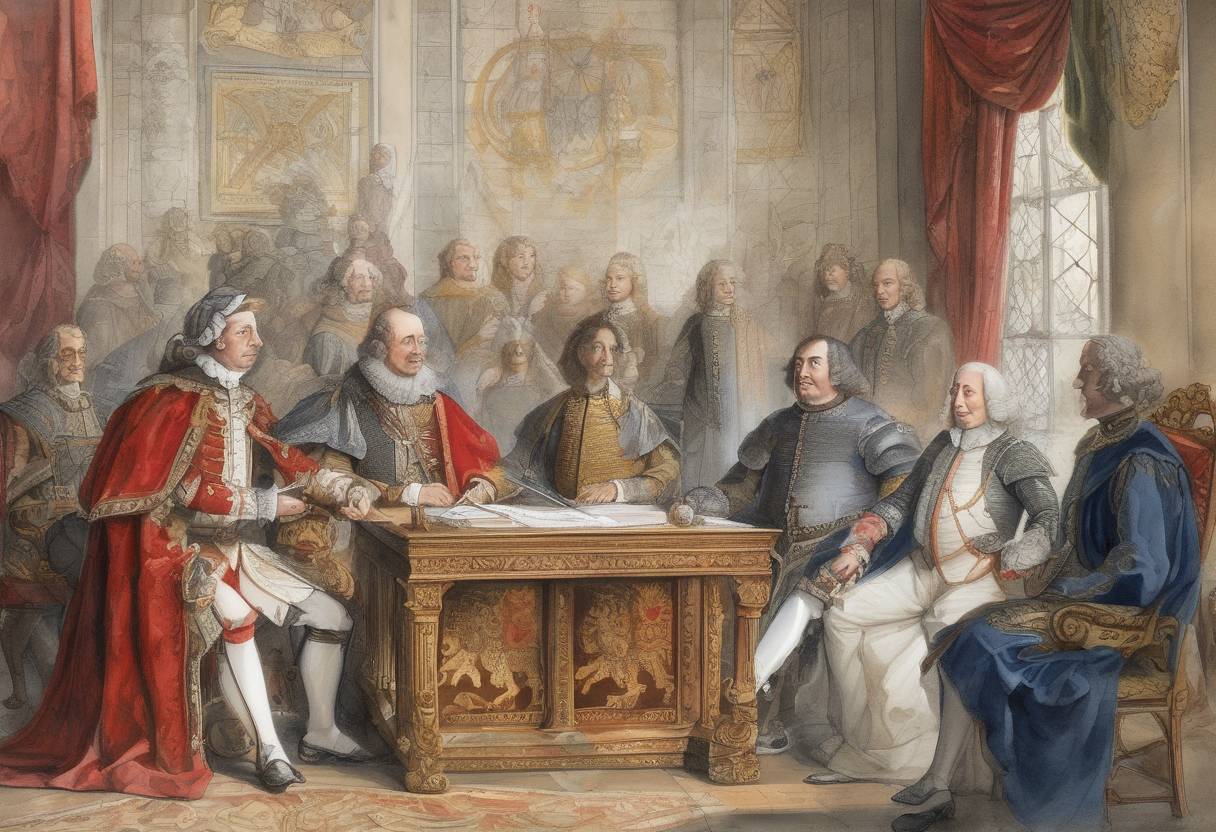
The Treaty of Windsor: A Lasting Alliance
On May 9, 1386, the Treaty of Windsor was signed between the Kingdom of Portugal and the Kingdom of England, marking the beginning of the oldest active diplomatic alliance in the world. This treaty established a pact of mutual support and friendship that has endured for over six centuries.
Historical Context
The late 14th century was a period of significant political and military upheaval in Europe. The Hundred Years’ War between England and France was ongoing, and the Iberian Peninsula was experiencing its own conflicts, including the Portuguese Crisis of 1383–1385. This crisis arose after the death of King Ferdinand I of Portugal, leading to a struggle for the Portuguese throne.
The Treaty of Windsor was preceded by the Battle of Aljubarrota in 1385, where the Portuguese, led by King John I and aided by English archers, decisively defeated the Castilian forces. This victory solidified John I’s position as King of Portugal and set the stage for a formal alliance with England.
Key Provisions of the Treaty
The Treaty of Windsor was a comprehensive agreement that included several key provisions:
Mutual Defense and Support: Both nations pledged to support each other in times of war, ensuring military aid and cooperation against common enemies.
Commercial Privileges: The treaty granted merchants from both countries favorable trading rights, facilitating economic exchange and strengthening economic ties.
Political Alliance: It established a framework for political cooperation and mutual recognition of sovereignty, reinforcing the legitimacy of each nation’s ruling dynasty.
Significance and Legacy
The Treaty of Windsor has had a profound and lasting impact on the relationship between Portugal and England (later the United Kingdom). It laid the foundation for a series of subsequent treaties and alliances, including the marriage of King John I of Portugal to Philippa of Lancaster, daughter of John of Gaunt, Duke of Lancaster, which further cemented the alliance.
Throughout history, the alliance has been invoked during critical moments, such as during the Napoleonic Wars and both World Wars, where the two nations stood as allies. The enduring nature of the treaty is a testament to its foundational principles of mutual respect and cooperation.
Conclusion
The Treaty of Windsor remains a remarkable example of diplomatic longevity and international friendship. Its signing on May 9, 1386, marked the beginning of a partnership that has weathered the test of time, illustrating the enduring power of diplomacy and shared interests in shaping international relations.