John F. Kennedy Elected as the 35th President of the United States
1960 · Washington, D.C., United States
John F. Kennedy was elected as the 35th President of the United States, defeating Vice President Richard Nixon.
December 26, 1972
Harry S. Truman, the 33rd President of the United States, passed away in Kansas City, Missouri.
Kansas City, United States | United States government
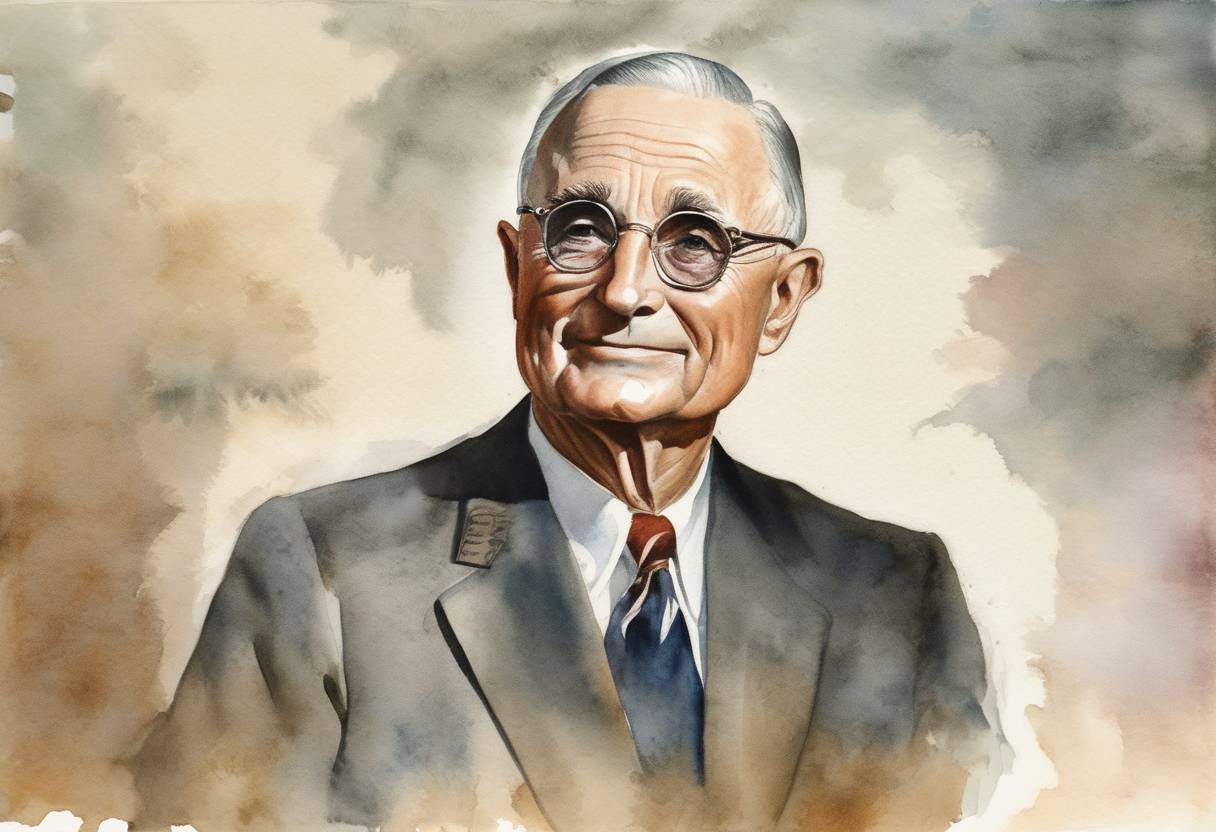
On December 26, 1972, Harry S. Truman, the 33rd President of the United States, passed away at the age of 88 in Kansas City, Missouri. Truman’s death marked the end of a significant chapter in American history, as he was a pivotal figure during a transformative period in the mid-20th century.
Harry S. Truman was born on May 8, 1884, in Lamar, Missouri. He grew up in Independence, Missouri, and worked in various jobs before entering politics. Truman served in World War I and later became a judge in Jackson County, Missouri. His political career advanced when he was elected to the U.S. Senate in 1934.
Truman became Vice President under Franklin D. Roosevelt in 1945 and assumed the presidency upon Roosevelt’s death on April 12, 1945. His presidency was marked by several key events and decisions:
After leaving office in 1953, Truman returned to Independence, Missouri, where he lived a relatively quiet life. He remained active in public affairs, writing memoirs and supporting the construction of the Truman Presidential Library.
Truman was hospitalized in Kansas City in late 1972 due to pneumonia and other health complications. He passed away on December 26, 1972. His funeral was held at the Truman Library, and he was buried in the courtyard of the library.
Truman’s legacy is complex and multifaceted. He is remembered for his decisive leadership during a critical period in world history, his efforts to promote civil rights, and his role in shaping post-war international relations. His presidency laid the groundwork for the United States’ role as a global superpower in the latter half of the 20th century.
Source: www.trumanlibrary.gov