The Fort McMurray Wildfire: May 5, 2016
2016 · Fort McMurray, Canada
A wildfire in Fort McMurray, Alberta, Canada, forced the evacuation of over 80,000 residents and became one of the costliest disasters in Canadian history.
December 6, 1917
The Halifax Explosion occurred in Nova Scotia, Canada, when a French cargo ship loaded with explosives collided with a Norwegian vessel, resulting in a massive explosion that killed approximately 2,000 people and injured thousands more.
Halifax, Canada | French Navy
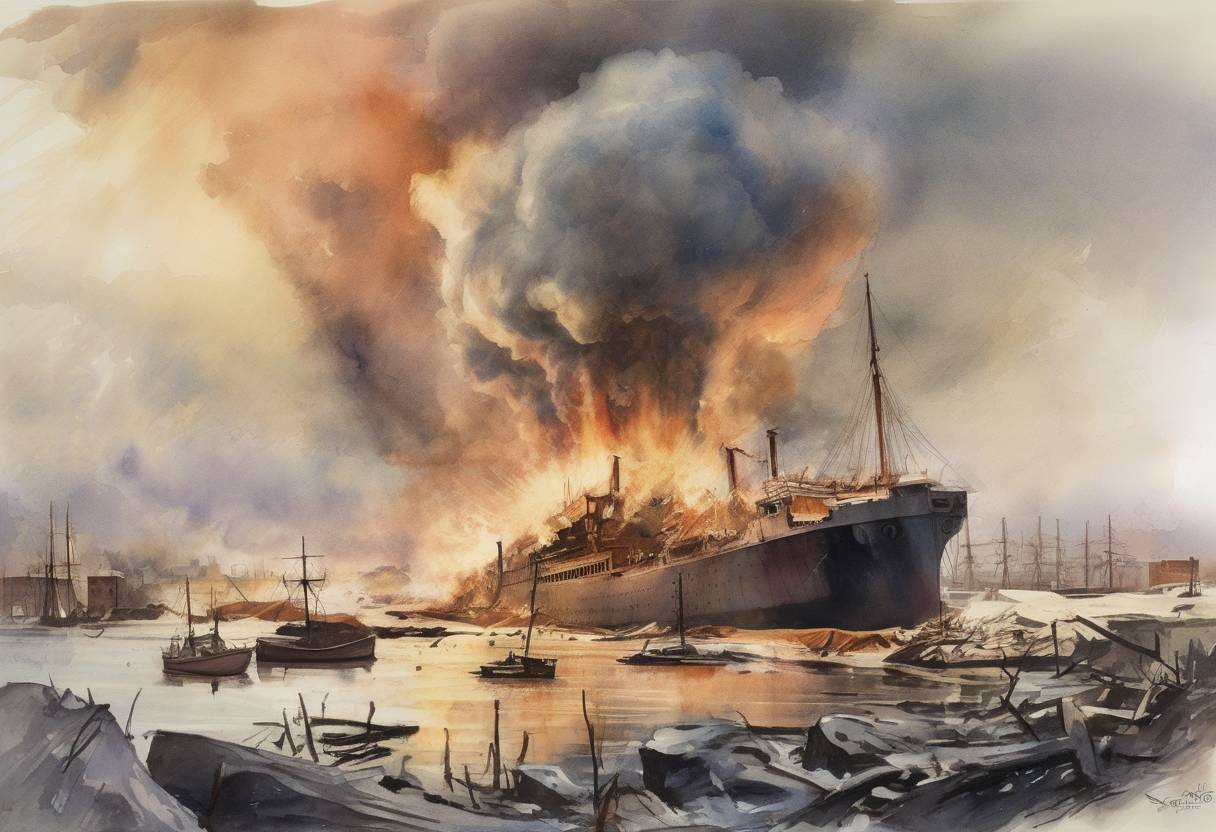
The Halifax Explosion stands as one of the most catastrophic non-nuclear explosions in history, occurring on December 6, 1917, in Halifax, Nova Scotia, Canada. This tragic event resulted from a collision between two ships in the Halifax Harbour: the French cargo ship SS Mont-Blanc and the Norwegian vessel SS Imo.
During World War I, Halifax was a bustling port city, serving as a key staging point for transatlantic convoys. The Mont-Blanc was carrying a highly volatile cargo, including benzol, picric acid, TNT, and guncotton, intended for the war effort in Europe. The Imo, on the other hand, was en route to New York to pick up relief supplies for Belgium.
On the morning of December 6, 1917, the Mont-Blanc entered the narrow strait known as “The Narrows” leading into the Halifax Harbour. Due to a series of navigational errors and miscommunications, the Mont-Blanc collided with the Imo at approximately 8:45 AM. The impact caused a fire on the Mont-Blanc, which quickly grew out of control.
At 9:04 AM, the Mont-Blanc exploded with a force equivalent to approximately 2.9 kilotons of TNT. The blast obliterated the ship and caused widespread devastation in the surrounding area. The explosion generated a powerful shockwave, a massive fireball, and a tsunami that swept through the harbor.
The immediate aftermath saw a massive rescue and relief effort, with aid pouring in from across Canada and the United States. The disaster prompted improvements in emergency response and led to changes in shipping regulations to prevent similar incidents.
The Halifax Explosion had profound effects on the city and its residents, reshaping the urban landscape and community. It also highlighted the dangers of transporting munitions through populated areas, influencing future safety protocols. The event remains a significant part of Canadian history, commemorated annually in Halifax.
The Halifax Explosion serves as a somber reminder of the potential consequences of industrial and wartime activities, underscoring the importance of safety and communication in preventing such tragedies.
Source: en.wikipedia.org