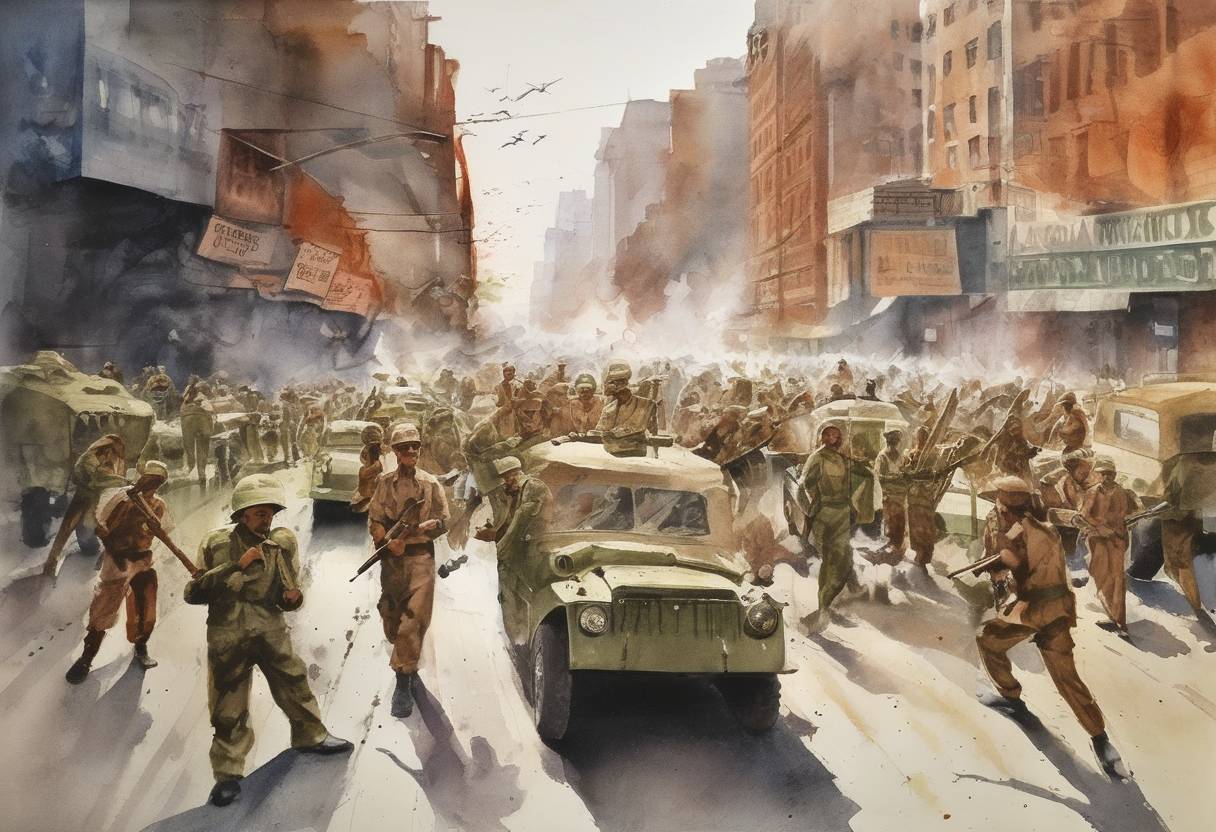
The Indo-Pakistani War of 1965 Ceasefire: September 22, 1965
The Indo-Pakistani War of 1965 was a significant military conflict between India and Pakistan, primarily over the disputed region of Kashmir. The war began in April 1965 and escalated in August, leading to a full-scale military engagement by September. The conflict was marked by fierce battles, including significant tank engagements in the Punjab region, and air strikes by both nations.
Context and Background
- Kashmir Dispute: The root cause of the war was the long-standing territorial dispute over Kashmir, a region claimed by both India and Pakistan since the partition of British India in 1947.
- Rann of Kutch: Prior to the full-scale war, skirmishes in the Rann of Kutch in April 1965 had already heightened tensions between the two countries.
- Operation Gibraltar: Pakistan initiated Operation Gibraltar in August 1965, aiming to infiltrate forces into Jammu and Kashmir to incite insurgency against Indian rule.
Key Events Leading to the Ceasefire
- Escalation: The conflict intensified with both nations launching major offensives. India crossed the international border in Punjab, while Pakistan attempted to capture the strategic town of Akhnoor in Jammu.
- International Involvement: The war drew international attention, with global powers urging both nations to cease hostilities. The United States and the Soviet Union, among others, were concerned about the potential for broader regional instability.
The Ceasefire
- UN Mediation: The United Nations, particularly through the efforts of then-Secretary-General U Thant, played a crucial role in mediating peace talks. The UN Security Council passed several resolutions calling for an immediate ceasefire.
- Acceptance: On September 22, 1965, both India and Pakistan accepted the UN-mandated ceasefire. The ceasefire came into effect on September 23, 1965, effectively ending active hostilities.
Aftermath and Consequences
- Tashkent Agreement: The ceasefire led to the Tashkent Agreement, brokered by the Soviet Union in January 1966. Both countries agreed to withdraw to pre-war positions and restore diplomatic relations.
- Military and Political Impact: The war highlighted the military capabilities and limitations of both nations. It also underscored the need for a peaceful resolution to the Kashmir dispute, which remains unresolved.
- Legacy: The 1965 war is remembered for its intense battles and the resilience shown by both nations. It set the stage for future conflicts and negotiations over Kashmir.
The Indo-Pakistani War of 1965 and its ceasefire had lasting implications for South Asian geopolitics, influencing subsequent military and diplomatic interactions between India and Pakistan.