Jacques Cartier’s Exploration of Prince Edward Island
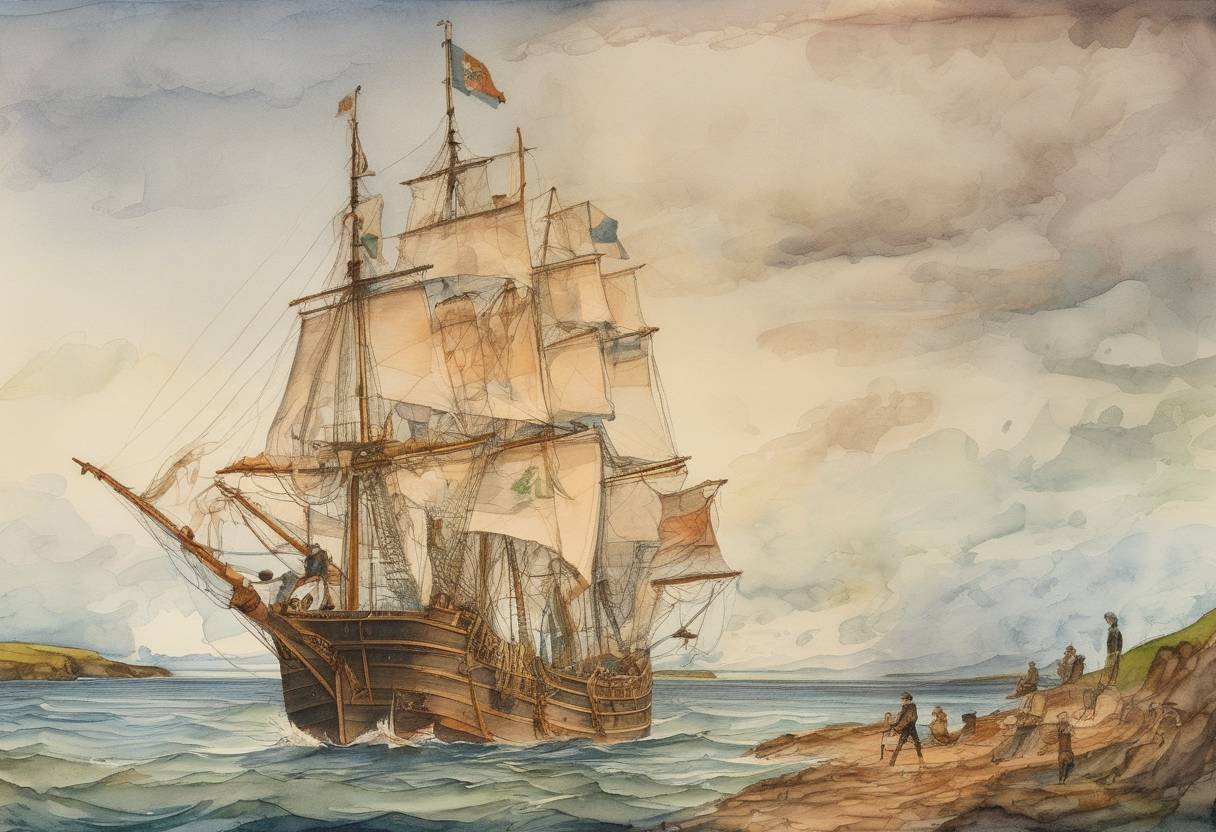
On June 29, 1534, the French explorer Jacques Cartier became the first European to reach what is now known as Prince Edward Island. This event marked a significant moment in the age of exploration and the European discovery of North America.
Background
Jacques Cartier, born in 1491 in Saint-Malo, Brittany, was a skilled navigator and mariner. Commissioned by King Francis I of France, Cartier’s mission was to explore the northern lands of the New World in search of riches and a possible passage to Asia. This voyage was part of France’s broader efforts to expand its influence and establish a foothold in the Americas.
The 1534 Voyage
Cartier set sail from Saint-Malo on April 20, 1534, with two ships and a crew of 61 men. His journey took him across the Atlantic Ocean, where he navigated the Gulf of St. Lawrence. During this expedition, Cartier explored parts of what are now Newfoundland and the Magdalen Islands.
Discovery of Prince Edward Island
On June 29, 1534, Cartier and his crew landed on Prince Edward Island, making him the first known European to set foot on the island. Cartier’s exploration of the island was brief, but he noted its lush vegetation and potential for settlement. He named the island “Île Saint-Jean,” which would later become known as Prince Edward Island.
Significance and Aftermath
Cartier’s discovery of Prince Edward Island was part of his larger exploration of the Gulf of St. Lawrence, which laid the groundwork for future French claims in North America. His voyages helped establish France’s interest in the region, eventually leading to the colonization efforts in what would become Canada.
Cartier’s expeditions also contributed to the mapping and understanding of the North American coastline, providing valuable information for future explorers and settlers. His interactions with Indigenous peoples, although limited during this initial voyage, marked the beginning of European-Indigenous relations in the area.
In summary, Jacques Cartier’s landing on Prince Edward Island on June 29, 1534, was a pivotal moment in the history of European exploration, setting the stage for further exploration and eventual colonization of the Canadian territories by France.