Thomas Edison and the Electric Arc Light System Test - August 30, 1879
1879 · Menlo Park, United States
Thomas Edison tests the first practical electric arc light system at the village of Menlo Park, New Jersey.
January 27, 1880
Thomas Edison receives the patent for the electric incandescent lamp.
Menlo Park, United States | U.S. Patent Office
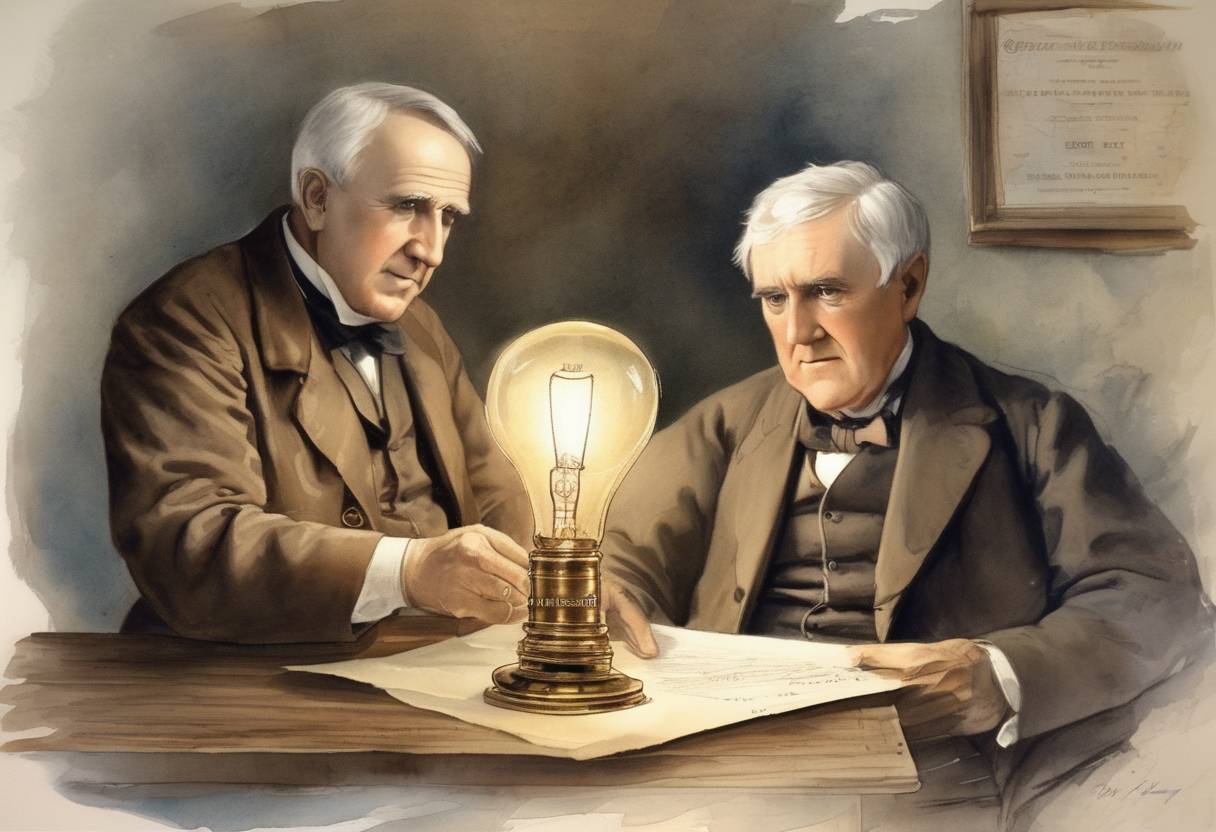
On January 27, 1880, Thomas Alva Edison was granted U.S. Patent No. 223,898 for the electric incandescent lamp, a pivotal moment in the history of technology and modern society. This patent marked a significant advancement in the development of electric lighting, which would eventually transform industries and daily life around the world.
Before Edison’s invention, various forms of lighting were used, including gas lamps and arc lamps. However, these methods were either inefficient, costly, or impractical for widespread domestic use. The quest for a practical and affordable electric light had been ongoing, with several inventors, including Sir Humphry Davy and Joseph Swan, making contributions to the field.
Edison’s work on the incandescent lamp began in earnest in the late 1870s. He and his team at the Menlo Park laboratory in New Jersey experimented with thousands of different materials to find a suitable filament that would glow brightly without burning out quickly. After extensive testing, they discovered that a carbonized bamboo filament could last for over 1,200 hours, making it a viable option for commercial use.
The patent Edison received on January 27, 1880, was for an “Improvement in Electric Lamps.” It described a high-resistance filament made of carbonized bamboo, housed in a vacuum-sealed glass bulb. This design was crucial because it minimized the oxidation of the filament, allowing it to last longer and shine brighter than previous attempts.
Edison’s incandescent lamp revolutionized the way people lived and worked. It enabled the widespread adoption of electric lighting in homes, streets, and businesses, significantly improving safety, productivity, and quality of life. The success of the incandescent lamp also spurred the growth of the electrical industry, leading to the establishment of power stations and the expansion of electrical infrastructure.
Following the patent, Edison continued to improve his designs and worked on developing the necessary infrastructure for electric lighting. In 1882, he opened the first commercial power station in New York City, which provided electricity to a small area of Manhattan. This marked the beginning of the electrification of urban centers.
Edison’s work laid the foundation for modern electrical engineering and had a lasting impact on technological innovation. His contributions to electric lighting remain a testament to his ingenuity and perseverance in the face of numerous challenges.
The granting of the patent for the electric incandescent lamp to Thomas Edison on January 27, 1880, was a landmark event in the history of technology. It not only showcased Edison’s inventive prowess but also set the stage for the electrification of the world, fundamentally altering how people live and interact with their environment.
Source: www.britannica.com