Barack Obama's Second Inauguration - January 20, 2013
2013 · Washington, D.C., United States
Barack Obama was inaugurated for his second term as President of the United States.
November 6, 2012
Barack Obama was re-elected as President of the United States, defeating Republican challenger Mitt Romney. Obama's victory secured him a second term in office, with a focus on continuing his administration's policies on healthcare and economic recovery.
Washington, D.C., United States | United States Government
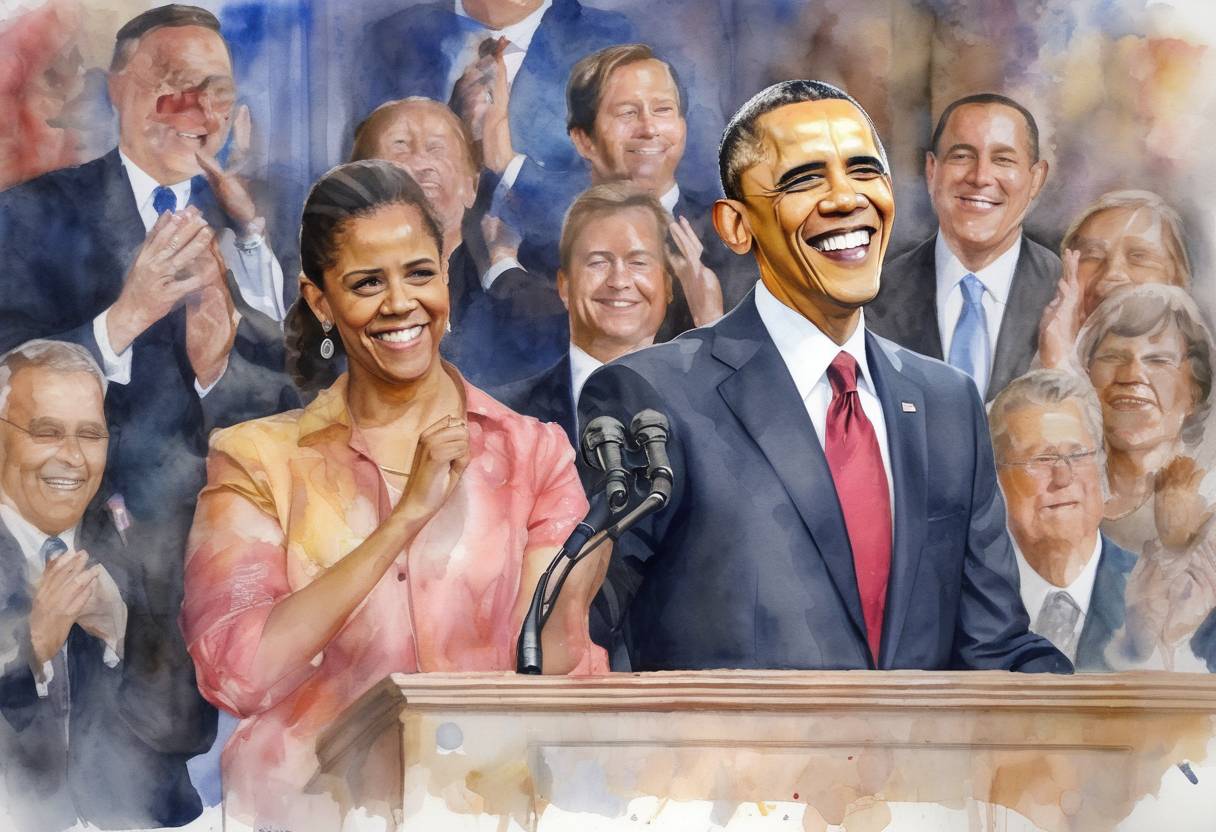
On November 6, 2012, Barack Obama was re-elected as the President of the United States, defeating his Republican challenger, Mitt Romney. This victory secured Obama a second term in office, allowing him to continue pursuing the policies and initiatives he had begun during his first term.
First Term Achievements: During his first term, Obama had focused on several key areas, including healthcare reform, economic recovery following the 2008 financial crisis, and ending military involvement in Iraq.
The Affordable Care Act: One of Obama’s signature achievements was the Affordable Care Act (ACA), commonly known as “Obamacare,” which aimed to expand healthcare coverage to millions of uninsured Americans.
Economic Challenges: The U.S. economy was a central issue in the 2012 election. While there had been some recovery from the Great Recession, unemployment rates were still a concern, and economic growth was a critical topic for voters.
Candidates: Barack Obama, the Democratic incumbent, faced Mitt Romney, a former governor of Massachusetts and a successful businessman, as the Republican candidate.
Campaign Focus: Obama’s campaign emphasized the progress made in economic recovery and healthcare reform, while Romney focused on economic issues, criticizing Obama’s handling of the economy and promising to repeal the ACA.
Debates and Public Opinion: The presidential debates were pivotal, with both candidates presenting their visions for America’s future. Public opinion was divided, but Obama maintained a slight edge in key swing states.
Electoral College: Obama won the election with 332 electoral votes to Romney’s 206, securing victories in crucial battleground states such as Ohio, Florida, and Virginia.
Popular Vote: Obama received approximately 51% of the popular vote, while Romney garnered about 47%.
Policy Continuation: Obama’s re-election allowed him to continue implementing and defending the ACA, as well as pursuing policies aimed at economic recovery and job creation.
Political Landscape: The election highlighted the deep political divisions in the United States, with debates over healthcare, taxes, and government spending continuing to dominate the national discourse.
Legacy: Obama’s second term would see further developments in healthcare, foreign policy, and social issues, shaping his legacy as a transformative figure in American politics.
In summary, Barack Obama’s re-election in 2012 was a pivotal moment in U.S. history, reflecting the nation’s priorities and setting the stage for continued policy debates and developments in the years that followed.
Source: www.bbc.com