Assassination of James Stewart, 1st Earl of Moray
1570 · Linlithgow, Scotland
The assassination of James Stewart, 1st Earl of Moray, the Regent of Scotland, occurs, marking the first recorded assassination by firearm.
February 20, 1472
Orkney and Shetland are pawned by Norway to Scotland in lieu of a dowry for Margaret of Denmark.
Kirkwall, Scotland | Kingdom of Scotland
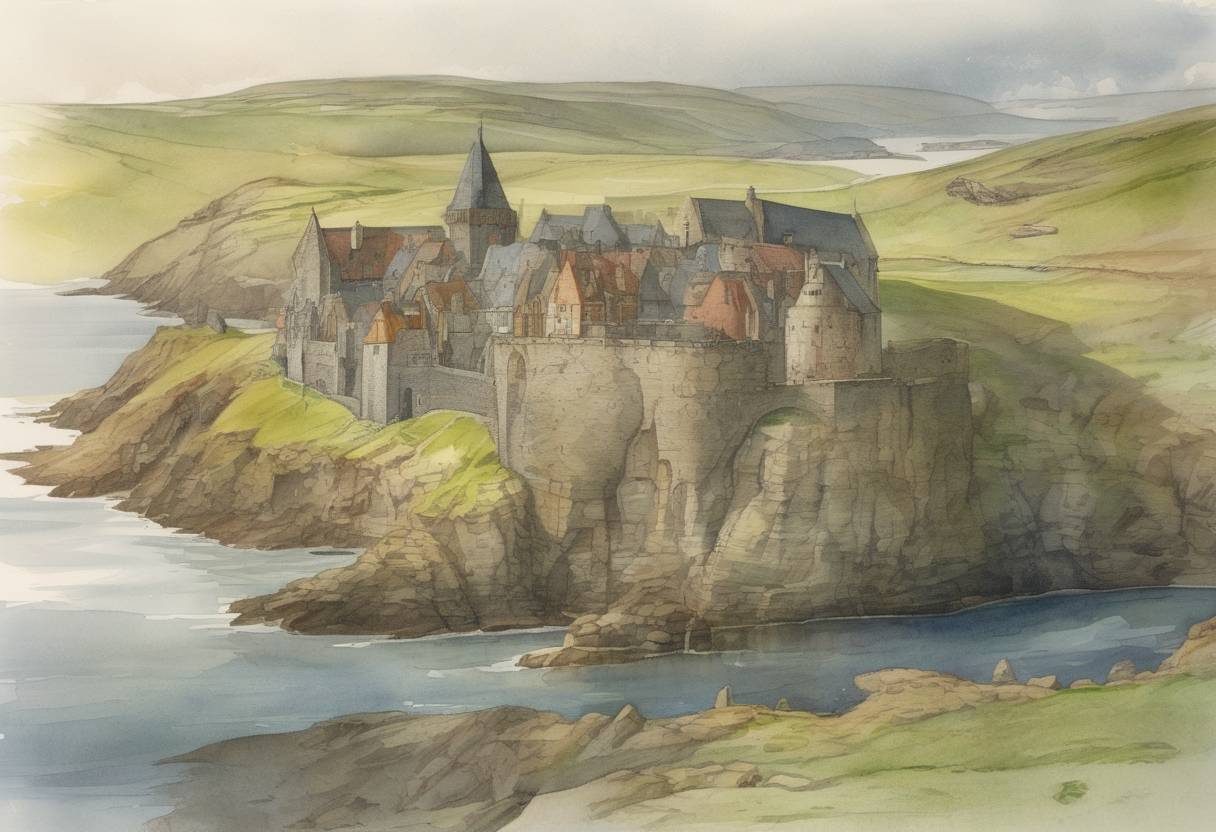
On February 20, 1472, a significant event in the history of Scotland and Norway unfolded when the Orkney and Shetland Islands were officially pawned by Norway to Scotland. This transaction was part of a marriage agreement between the two kingdoms, involving the union of James III of Scotland and Margaret of Denmark.
The arrangement was rooted in the political and dynastic strategies of the time. The marriage between James III and Margaret of Denmark was orchestrated to strengthen alliances between Scotland and the Scandinavian kingdoms, particularly Denmark and Norway. Margaret was the daughter of King Christian I of Denmark, who also ruled over Norway and Sweden.
As part of the marriage contract, a dowry was promised by King Christian I. However, due to financial constraints, he was unable to provide the full dowry in cash. To compensate, Christian I offered the Orkney and Shetland Islands as collateral. The agreement stipulated that these territories would be pawned to Scotland until the dowry was paid in full.
On February 20, 1472, the formal transfer of the islands was completed. This date marks the official point at which the islands came under Scottish control, although they were technically still considered a pawn rather than a permanent cession.
In conclusion, the pawning of Orkney and Shetland on February 20, 1472, was a pivotal moment in the history of Scotland and Norway, reflecting the complex interplay of diplomacy, finance, and dynastic politics in the late Middle Ages.
Source: en.wikipedia.org