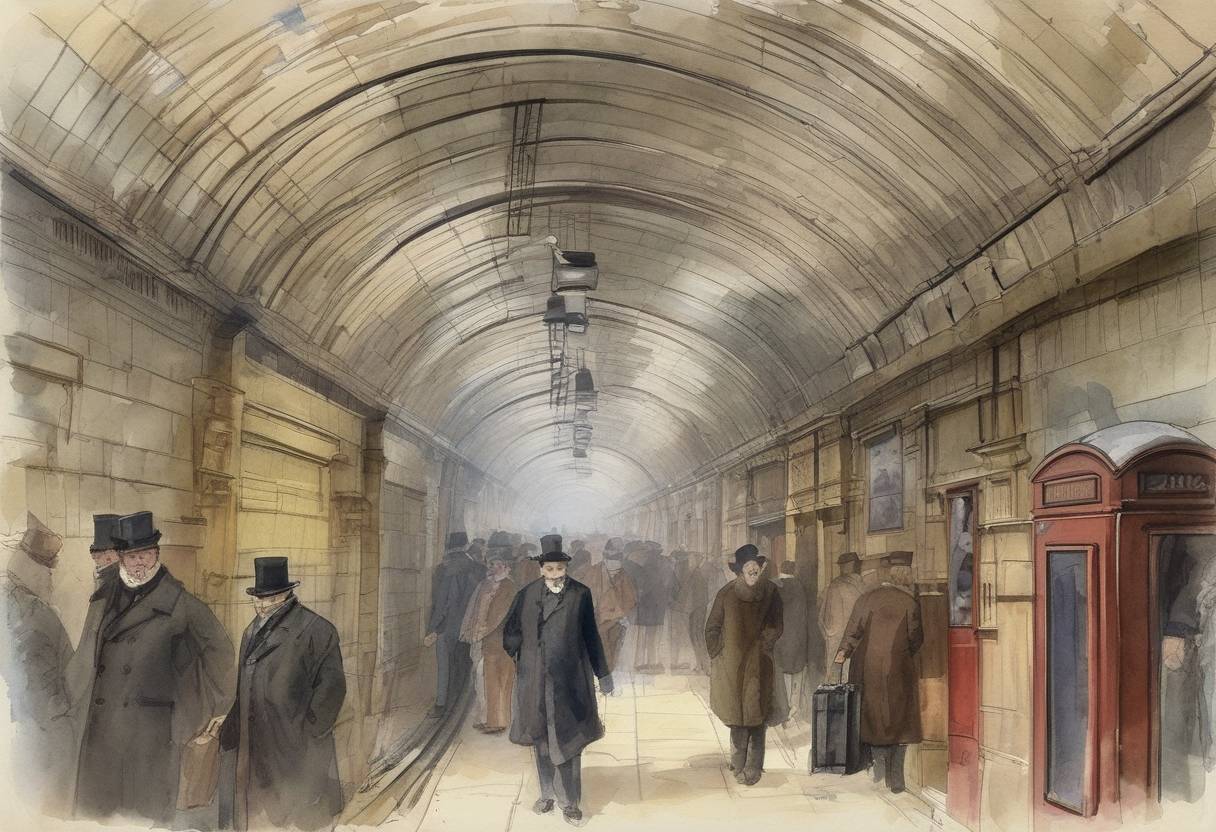
The Opening of the London Underground: January 10, 1863
On January 10, 1863, the world’s first underground railway, the London Underground, opened its initial section between Paddington and Farringdon Street. This groundbreaking development marked a significant milestone in urban transportation and set the stage for the evolution of modern metro systems worldwide.
Historical Context
The mid-19th century was a period of rapid industrialization and urbanization in London. The city’s population was growing exponentially, leading to congested streets and a pressing need for efficient public transportation. The idea of an underground railway was proposed as a solution to alleviate surface traffic and improve connectivity across the city.
Key Events Leading to the Opening
- 1854: The Metropolitan Railway was incorporated by an Act of Parliament, allowing the construction of an underground railway.
- 1859: Construction began, employing the “cut-and-cover” method, which involved digging trenches along the streets, laying tracks, and then covering them over.
- 1863: After years of engineering challenges and financial hurdles, the first section of the railway was completed.
The Opening Day
The inaugural journey on January 10, 1863, was a momentous occasion. The line stretched approximately 3.75 miles (6 km) and included seven stations: Paddington, Edgware Road, Baker Street, Portland Road (now Great Portland Street), Gower Street (now Euston Square), King’s Cross, and Farringdon Street.
- Rolling Stock: The trains were initially powered by steam locomotives, which presented challenges such as smoke and ventilation issues in the tunnels.
- Public Reception: The opening was met with great enthusiasm. On the first day, around 30,000 passengers used the service, highlighting the public’s eagerness for this new mode of transportation.
Aftermath and Significance
The success of the Metropolitan Railway spurred further development of the London Underground network. It demonstrated the viability of underground railways in urban environments, leading to the expansion of the system and the eventual electrification of the lines in the early 20th century.
- Impact on Urban Transport: The London Underground became a model for other cities worldwide, inspiring the development of metro systems in places like New York, Paris, and Tokyo.
- Cultural Influence: The Underground has become an iconic symbol of London, influencing art, literature, and popular culture.
Conclusion
The opening of the London Underground on January 10, 1863, was a pioneering achievement in public transportation. It not only transformed the way people moved around London but also laid the foundation for the development of urban transit systems globally. The Underground continues to be an integral part of London’s infrastructure, serving millions of passengers each year and maintaining its status as a historical and engineering marvel.