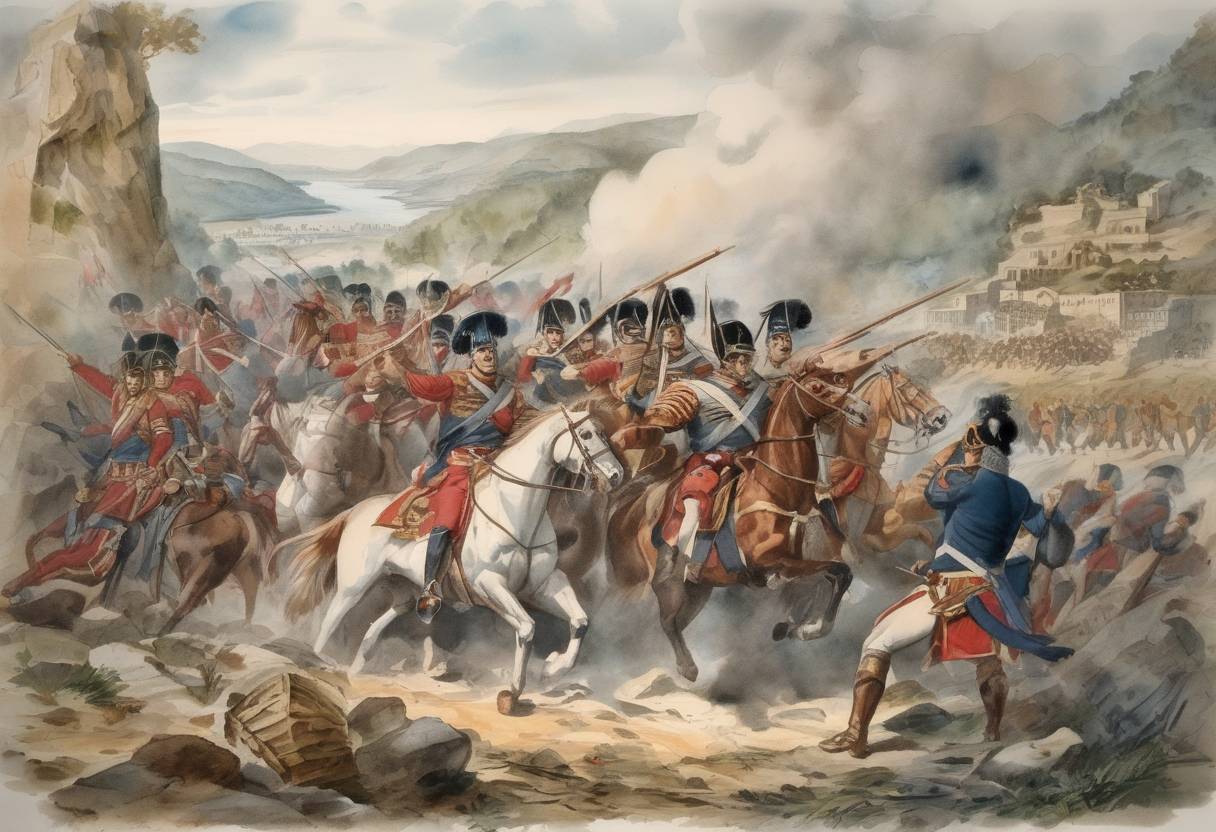
The Battle of Gravia Inn: A Pivotal Moment in the Greek War of Independence
Context
The Greek War of Independence, which began in 1821, was a pivotal struggle by Greek revolutionaries to gain independence from the Ottoman Empire. The conflict was marked by numerous battles and skirmishes, with both sides experiencing victories and setbacks. One of the early and significant engagements in this war was the Battle of Gravia Inn, which took place on May 8, 1821.
Key Events Leading Up to the Battle
In the early months of 1821, the Greek revolutionary movement gained momentum, with uprisings occurring in various regions of Greece. The Ottomans, determined to suppress the rebellion, mobilized their forces to confront the insurgents. The Greek forces, although less equipped and trained compared to the Ottoman army, were driven by a strong desire for independence and were led by several capable leaders.
The Battle of Gravia Inn
The Battle of Gravia Inn occurred in Central Greece, near the village of Gravia. The Greek forces were led by Odysseas Androutsos, a prominent figure in the Greek War of Independence. Androutsos, along with approximately 120 Greek fighters, took a defensive position in an inn, which was strategically located to control the passage through the region.
On May 8, 1821, an Ottoman force of around 8,000 troops, commanded by Omer Vrioni, advanced towards the inn. Despite being heavily outnumbered, the Greek defenders utilized the inn’s fortified position to their advantage. Androutsos and his men successfully repelled multiple Ottoman assaults throughout the day, inflicting significant casualties on the attackers.
Outcome and Aftermath
The Battle of Gravia Inn ended with a decisive Greek victory. The Ottomans, unable to breach the Greek defenses and suffering heavy losses, were forced to retreat. This victory was a significant morale booster for the Greek revolutionaries and demonstrated their ability to stand against the larger and better-equipped Ottoman forces.
The success at Gravia Inn also had strategic implications. It delayed the Ottoman advance into Central Greece, allowing the Greek forces to regroup and strengthen their positions. The battle became a symbol of resistance and determination for the Greek cause, inspiring further support for the independence movement.
Broader Historical Significance
The Battle of Gravia Inn is remembered as a testament to the courage and resilience of the Greek fighters during the early stages of their struggle for independence. It highlighted the effectiveness of guerrilla tactics and the importance of strategic positioning in warfare. The victory contributed to the eventual success of the Greek War of Independence, which culminated in the establishment of an independent Greek state in 1830.
In summary, the Battle of Gravia Inn was a crucial early victory for the Greek revolutionaries, showcasing their resolve and setting the stage for further successes in their quest for independence from the Ottoman Empire.