Consecration of the Old St. Peter's Basilica
326 · Rome, Roman Empire
The old St. Peter's Basilica is consecrated by Pope Sylvester I in Rome.
August 29, 0708
The traditional date of the dedication of the church of San Michele in Monte Sant'Angelo, Italy, which later became an important pilgrimage site.
Monte Sant'Angelo, Italy | Catholic Church
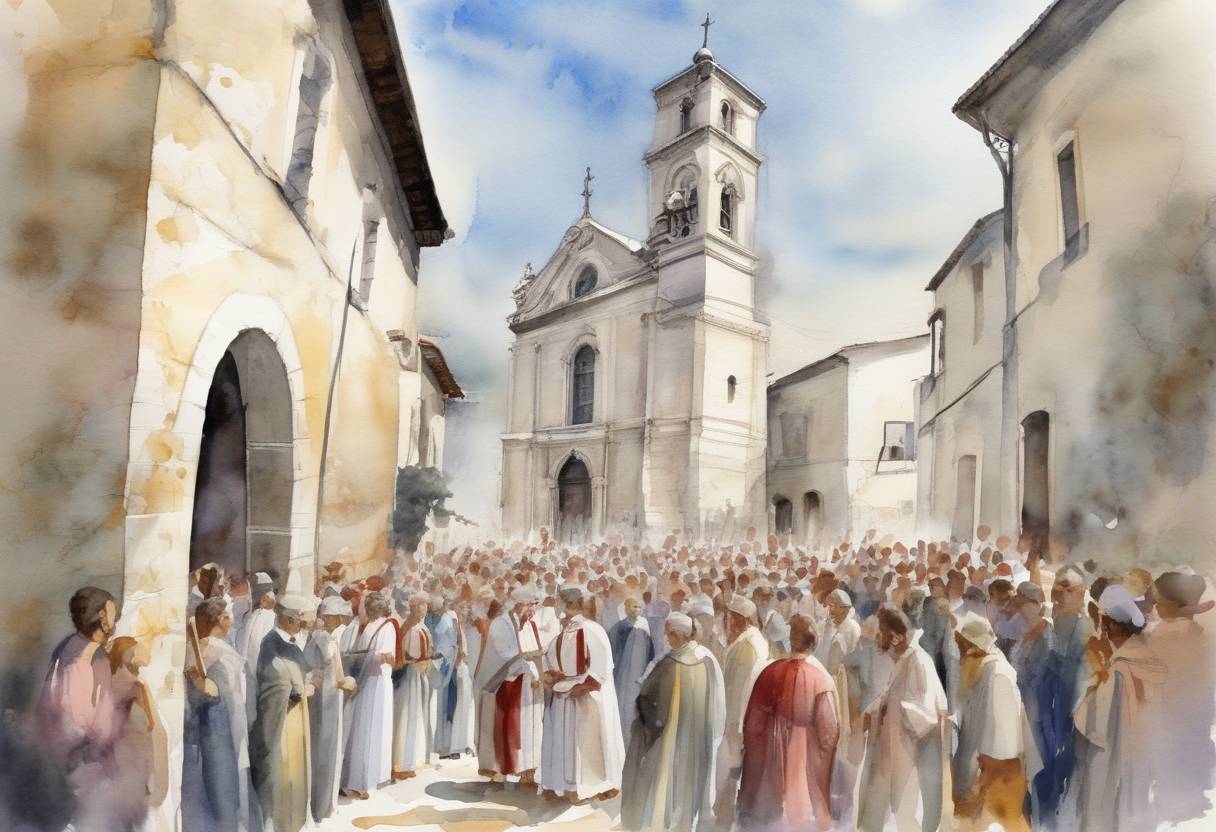
The Church of San Michele in Monte Sant’Angelo, located in the Gargano region of southern Italy, is one of the most significant early Christian pilgrimage sites in Europe. Its dedication is traditionally dated to August 29, 708. The site is associated with the Archangel Michael, who is said to have appeared there in a series of apparitions during the late 5th century.
Apparitions of St. Michael: According to legend, the Archangel Michael appeared to the local bishop, Saint Laurence of Siponto, in 490, 492, and 493. These apparitions were said to have occurred in a cave on Mount Gargano, which later became the sanctuary’s location.
Construction of the Sanctuary: Following these apparitions, the site gained religious significance, and a sanctuary was constructed to honor the Archangel Michael. The cave itself became the central feature of the sanctuary, with a church built around it.
Papal Recognition: The sanctuary’s importance was recognized by the papacy, which helped to establish its status as a major pilgrimage destination. The dedication in 708 marked the formal recognition of the site’s religious significance.
The dedication of the church on August 29, 708, was a pivotal moment in its history. It solidified the sanctuary’s role as a major center of Christian worship and pilgrimage. The ceremony likely involved a formal consecration of the church by ecclesiastical authorities, accompanied by religious rites and celebrations.
Pilgrimage Site: Over the centuries, the Sanctuary of Monte Sant’Angelo became one of the most important pilgrimage sites in medieval Europe. It attracted pilgrims from across the continent, including notable figures such as Saint Francis of Assisi and Emperor Otto III.
Cultural Influence: The sanctuary influenced the development of other Michaelic sites across Europe, contributing to the widespread veneration of the Archangel Michael.
Architectural Evolution: The site has undergone numerous architectural changes and expansions over the centuries, reflecting various artistic and cultural influences.
The dedication of the Church of San Michele in Monte Sant’Angelo highlights the role of religious sites in medieval society as centers of spiritual life, cultural exchange, and economic activity. It underscores the importance of pilgrimage in medieval Christianity and the enduring legacy of religious traditions associated with sacred sites.
Today, the sanctuary remains a significant religious and historical site, attracting visitors and pilgrims who seek to connect with its rich spiritual heritage.
Source: en.wikipedia.org