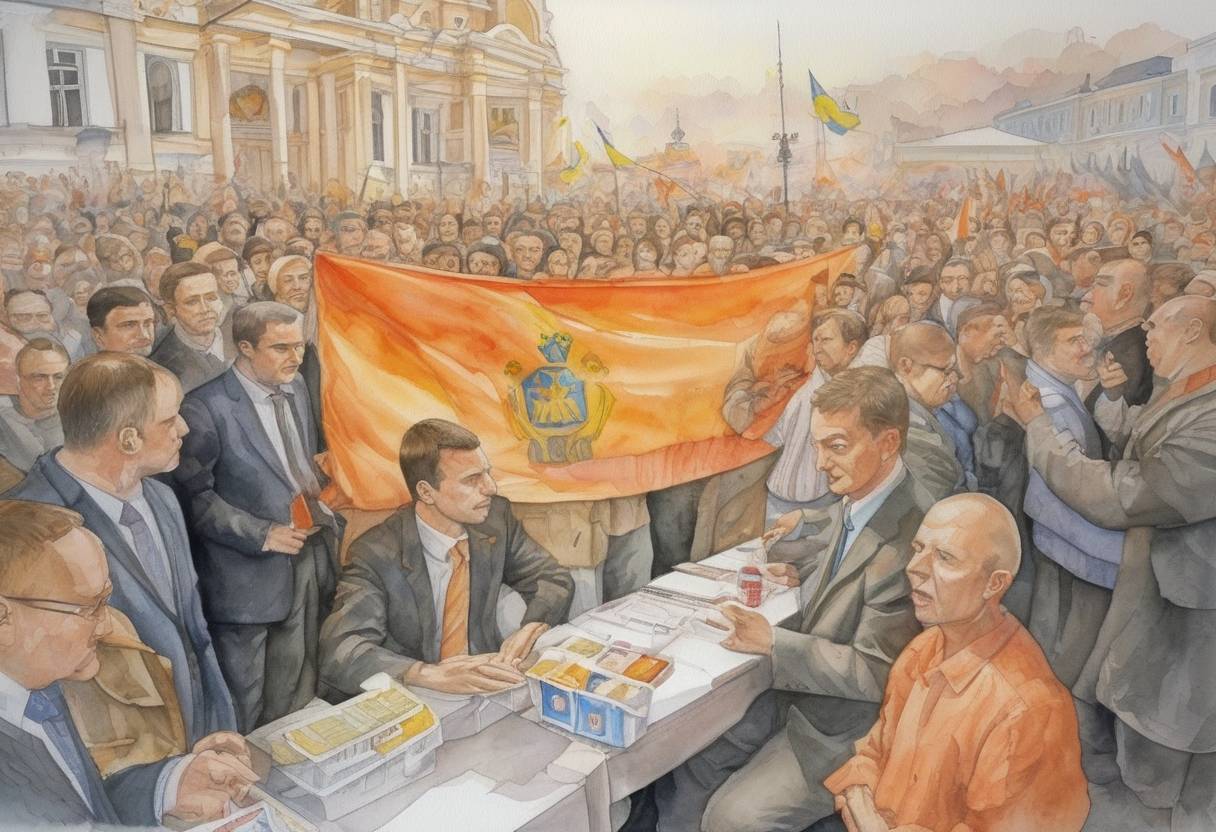
The Second Round of the Ukrainian Presidential Election and the Orange Revolution
Background
On November 21, 2004, Ukraine held the second round of its presidential election, a pivotal moment that would lead to the Orange Revolution. The election was primarily contested between two candidates: Viktor Yanukovych, the incumbent Prime Minister, and Viktor Yushchenko, a pro-Western reformist. The political climate in Ukraine at the time was tense, with the country divided between those favoring closer ties with Russia and those advocating for integration with Western Europe.
Key Events Leading Up to the Election
- First Round of Elections: The first round of the presidential election took place on October 31, 2004. Neither candidate secured the required majority, leading to a runoff.
- Campaign Tensions: The campaign period was marked by significant tension and controversy. Yushchenko suffered a mysterious illness, later confirmed to be dioxin poisoning, which disfigured his face and raised suspicions of foul play.
- Media Bias and Intimidation: There were widespread reports of media bias in favor of Yanukovych, as well as instances of voter intimidation and manipulation.
The Second Round and Allegations of Fraud
On November 21, 2004, the second round of voting took place. The official results declared Viktor Yanukovych the winner, but the election was marred by allegations of widespread electoral fraud. Observers and opposition supporters reported numerous irregularities, including:
- Ballot Stuffing: There were accusations of ballot stuffing and manipulation of voter lists.
- Intimidation: Reports emerged of voter intimidation and coercion, particularly in eastern regions where Yanukovych had strong support.
- Media Manipulation: State-controlled media was accused of biased reporting and propaganda in favor of Yanukovych.
The Orange Revolution
The announcement of Yanukovych’s victory sparked massive protests across Ukraine, particularly in the capital, Kyiv. These protests, known as the Orange Revolution, were characterized by:
- Peaceful Demonstrations: Hundreds of thousands of Ukrainians took to the streets, wearing orange, the color of Yushchenko’s campaign, to demand a fair election.
- International Attention: The protests garnered significant international attention, with many Western countries expressing concern over the electoral process.
- Political Stalemate: The situation led to a political stalemate, with the Ukrainian Supreme Court eventually intervening.
Aftermath and Consequences
- Supreme Court Ruling: On December 3, 2004, the Ukrainian Supreme Court annulled the results of the second round, citing widespread electoral fraud, and ordered a re-run of the election.
- Re-run Election: The re-run took place on December 26, 2004, resulting in a victory for Viktor Yushchenko, who was inaugurated as President in January 2005.
- Impact on Ukrainian Politics: The Orange Revolution had a lasting impact on Ukrainian politics, symbolizing a shift towards democratic reform and greater alignment with Western Europe.
The events of November 21, 2004, and the subsequent Orange Revolution marked a significant turning point in Ukraine’s post-Soviet history, highlighting the country’s struggle for democracy and sovereignty.