The Laying of the Cornerstone for the Statue of Liberty
1884 · New York City, United States
The cornerstone for the Statue of Liberty was laid on Bedloe's Island (now Liberty Island) in New York Harbor.
July 7, 1930
Construction of the Hoover Dam begins on the Colorado River.
Boulder City, United States | U.S. Bureau of Reclamation
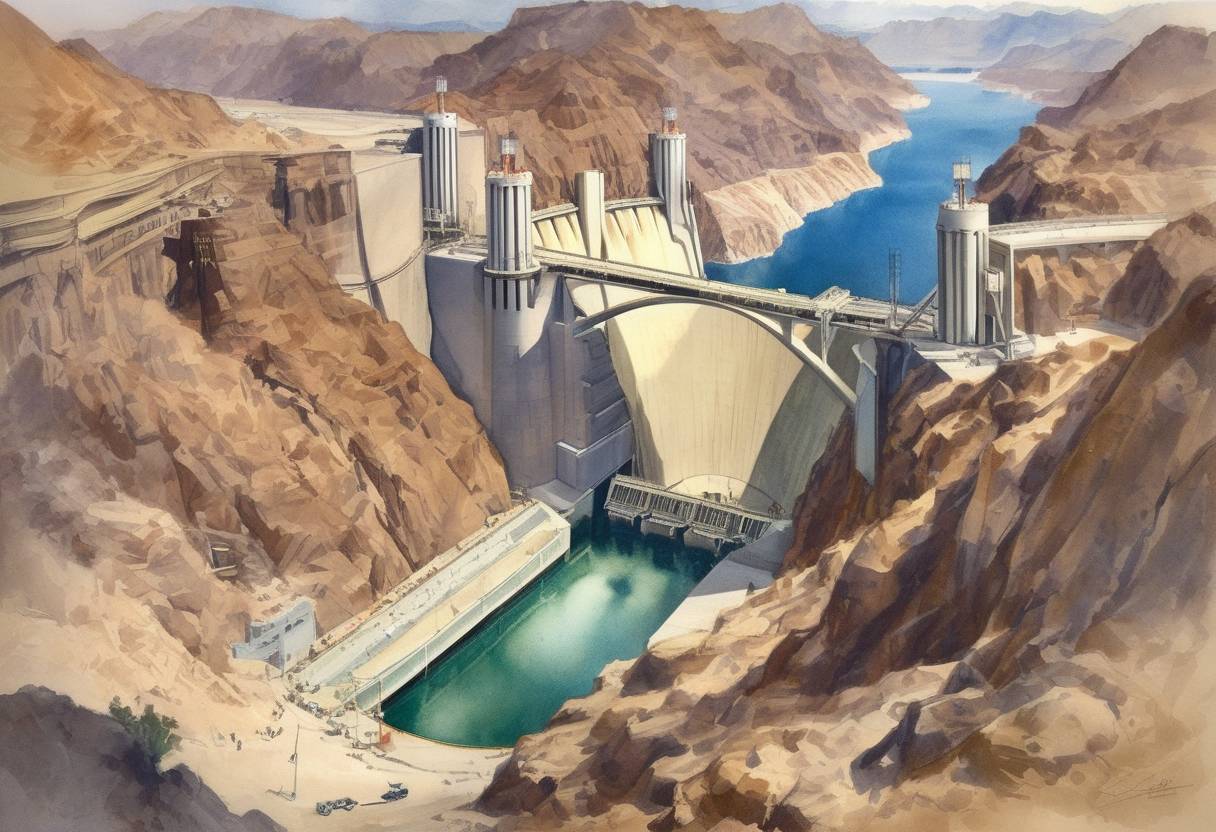
The Hoover Dam, originally known as Boulder Dam, is one of the most significant engineering feats in American history. The idea for the dam emerged in the early 20th century as a solution to the frequent flooding of the Colorado River and to provide a reliable water supply and hydroelectric power to the rapidly growing Southwest region of the United States.
On July 7, 1930, construction officially began on the Hoover Dam. The site chosen was Black Canyon, located on the border between Nevada and Arizona. The project was a massive undertaking, requiring the diversion of the Colorado River and the construction of a temporary town, Boulder City, to house workers.
The construction faced numerous challenges, including extreme heat, difficult terrain, and the Great Depression’s economic pressures. Despite these obstacles, the project progressed rapidly due to the urgency of providing jobs and infrastructure.
The Hoover Dam continues to be a critical infrastructure component in the American Southwest, providing water, electricity, and flood control. It remains a popular tourist destination and a testament to early 20th-century engineering prowess.
The construction of the Hoover Dam marked a turning point in U.S. infrastructure development, showcasing the federal government’s role in large-scale public works projects. It also highlighted the potential for human ingenuity to harness natural resources for societal benefit, setting a precedent for future projects across the country.
The Hoover Dam’s legacy is not only in its physical structure but also in its contribution to the economic and social development of the American West.
Source: en.wikipedia.org