Treaty of Córdoba: Establishing Mexican Independence
1821 · Córdoba, Mexico
The Treaty of Córdoba, which established Mexican independence from Spain, was signed by the last viceroy of New Spain, Juan O'Donojú and Agustín de Iturbide.
August 24, 1821
The Treaty of Córdoba is signed, ratifying the Plan of Iguala and confirming Mexico's independence from Spain.
Córdoba, Mexico | Mexican independence movement
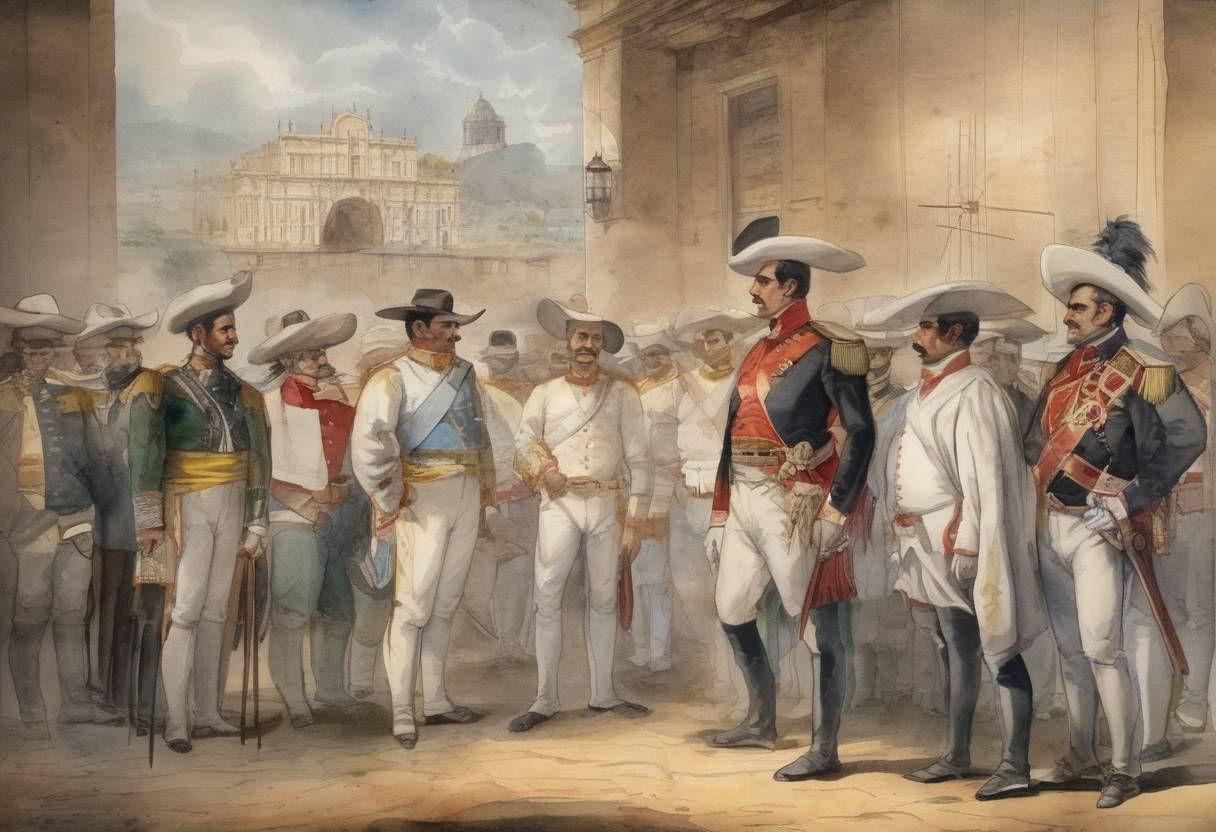
On August 24, 1821, the Treaty of Córdoba was signed, marking a pivotal moment in the history of Mexico as it confirmed the nation’s independence from Spanish rule. This treaty was the culmination of a lengthy struggle for independence that had begun over a decade earlier.
The Mexican War of Independence began in 1810, initiated by figures such as Miguel Hidalgo and José María Morelos. The movement was driven by a combination of social, economic, and political factors, including discontent with Spanish colonial rule, the influence of Enlightenment ideas, and the impact of other independence movements in the Americas.
Before the Treaty of Córdoba, the Plan of Iguala was a crucial document that laid the groundwork for Mexican independence. Proclaimed on February 24, 1821, by Agustín de Iturbide and Vicente Guerrero, the plan outlined three guarantees:
The Plan of Iguala also proposed the establishment of a constitutional monarchy, inviting a European prince to rule Mexico.
The Treaty of Córdoba was signed in the town of Córdoba, Veracruz, by Agustín de Iturbide, representing the Mexican independence movement, and Juan O’Donojú, the last Spanish viceroy of New Spain. The treaty essentially ratified the principles of the Plan of Iguala, formally recognizing Mexico’s independence and establishing a framework for the transition of power.
The signing of the Treaty of Córdoba effectively ended Spanish colonial rule in Mexico. However, the initial vision of a constitutional monarchy was short-lived. Agustín de Iturbide declared himself Emperor of Mexico in 1822, but his reign was brief, and he was overthrown in 1823, leading to the establishment of a republic.
The Treaty of Córdoba is a landmark in Mexican history, symbolizing the successful conclusion of a long and arduous struggle for independence. It set the stage for the development of Mexico as a nation-state and influenced subsequent independence movements across Latin America.
In summary, the Treaty of Córdoba was a decisive step in Mexico’s journey to independence, reflecting the aspirations and complexities of a nation emerging from colonial rule.
Source: en.wikipedia.org