Mickey Mouse's Debut in "Steamboat Willie" - November 18, 1928
1928 · New York City, United States
Mickey Mouse made his first appearance in the animated short film 'Steamboat Willie', marking the official debut of the character.
May 15, 1928
The first appearance of Mickey Mouse in the cartoon 'Plane Crazy' was shown as a test screening to a theater audience.
Los Angeles, United States | Walt Disney Productions
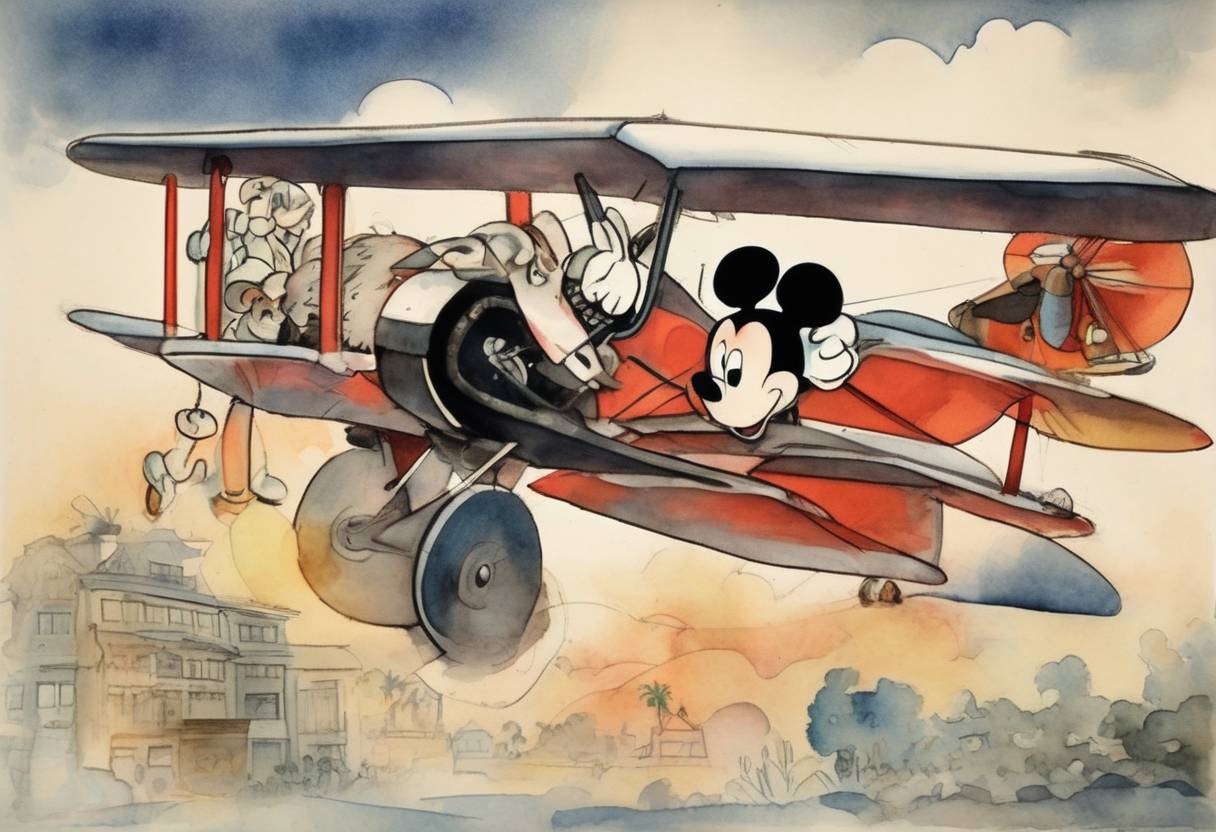
On May 15, 1928, the world witnessed the first appearance of Mickey Mouse in the cartoon “Plane Crazy,” albeit in a test screening format. This event marked a significant moment in animation history and the beginning of an iconic character’s journey.
Walt Disney and Ub Iwerks: The creation of Mickey Mouse was a collaborative effort between Walt Disney and his chief animator, Ub Iwerks. After losing the rights to their earlier character, Oswald the Lucky Rabbit, Disney and Iwerks sought to develop a new character that would serve as the foundation for their future endeavors.
Inspiration: The character of Mickey Mouse was inspired by a pet mouse that Walt Disney had during his early years. The idea was to create a character that was both relatable and entertaining, with a personality that could appeal to a wide audience.
Plot: “Plane Crazy” is a silent short film that features Mickey Mouse attempting to emulate Charles Lindbergh’s famous transatlantic flight. The cartoon showcases Mickey’s adventurous spirit as he builds his own airplane and takes Minnie Mouse on a wild ride.
Animation Style: The animation in “Plane Crazy” was groundbreaking for its time, showcasing Iwerks’ skill in creating fluid and expressive character movements. The short film was produced in black and white, typical of the era.
Audience Reaction: The test screening on May 15, 1928, was crucial for gauging audience reactions to the new character. Although the screening did not lead to immediate commercial success, it provided valuable feedback that would shape Mickey’s future.
Challenges: Despite the innovative animation, “Plane Crazy” initially struggled to find a distributor. This challenge underscored the competitive nature of the animation industry during the late 1920s.
Steamboat Willie: Following “Plane Crazy,” Disney and Iwerks created “Steamboat Willie,” which premiered later in 1928 and became the first Mickey Mouse cartoon to gain widespread acclaim. It was also one of the first cartoons to feature synchronized sound, setting a new standard in animation.
Legacy: Mickey Mouse quickly became a cultural icon, symbolizing the creativity and innovation of the Walt Disney Company. The character’s success laid the foundation for the expansion of Disney’s animation empire and the eventual creation of Disneyland and other ventures.
Cultural Impact: Mickey Mouse remains one of the most recognizable and enduring characters in popular culture, representing the timeless appeal of animation and storytelling.
The test screening of “Plane Crazy” on May 15, 1928, was a pivotal moment that set the stage for Mickey Mouse’s rise to fame and the transformation of the animation industry.
Source: en.wikipedia.org