Karl Benz and the Benz Patent-Motorwagen
1886 · Mannheim, Germany
Karl Benz patented the first successful gasoline-driven automobile, the Benz Patent-Motorwagen.
July 3, 1886
Karl Benz officially unveiled the Benz Patent-Motorwagen, the first purpose-built automobile.
Mannheim, Germany | Benz & Cie.
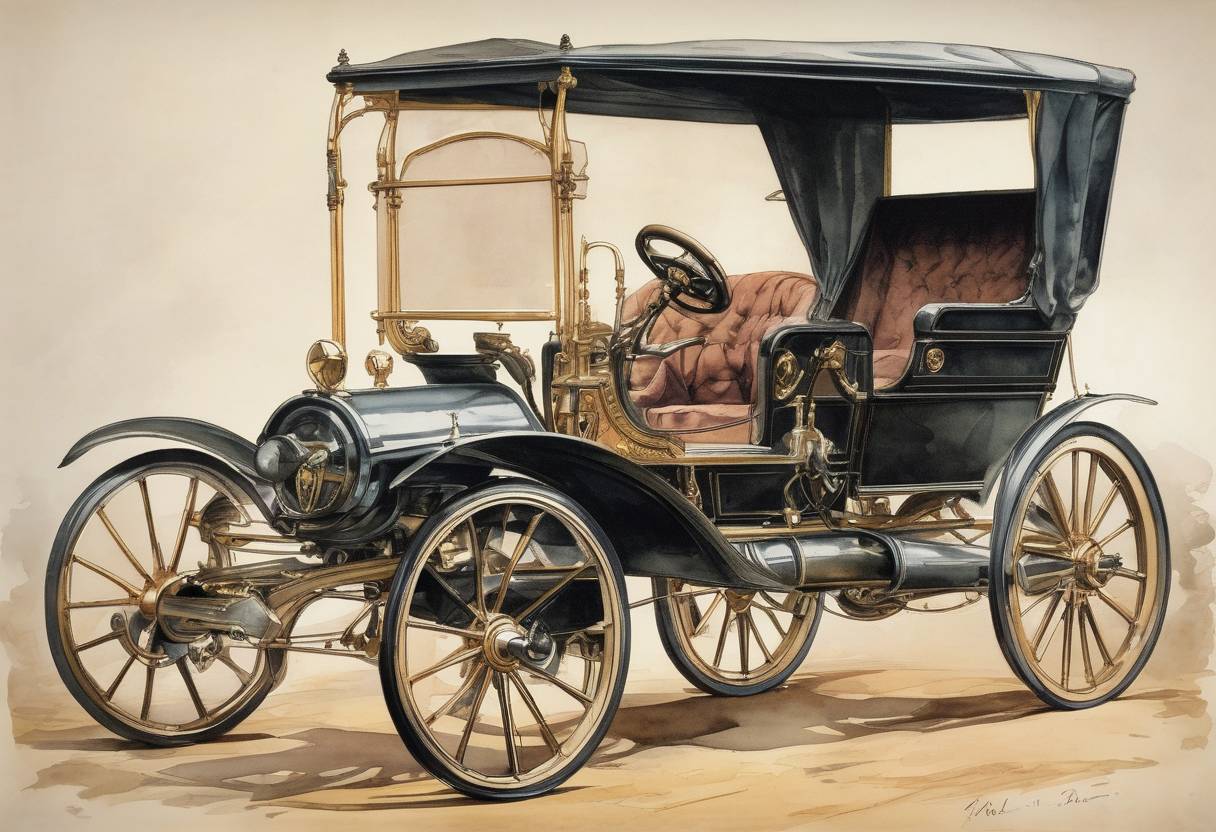
On July 3, 1886, Karl Benz officially unveiled the Benz Patent-Motorwagen, marking a pivotal moment in automotive history. This event is widely recognized as the birth of the modern automobile, as the Motorwagen was the first vehicle designed from the ground up to be powered by an internal combustion engine.
Karl Benz, a German engineer and inventor, had been working on the concept of a motorized vehicle since the early 1880s. His work was driven by the desire to create a practical and efficient mode of transportation that could replace horse-drawn carriages. Benz’s vision was to integrate a lightweight engine with a vehicle chassis, a novel idea at the time.
The Benz Patent-Motorwagen was a three-wheeled vehicle, featuring a rear-mounted single-cylinder four-stroke engine. It had a displacement of 954 cc and produced approximately 0.75 horsepower, allowing the vehicle to reach a top speed of around 16 km/h (10 mph). The Motorwagen was constructed using steel tubing and wooden panels, with wire-spoked wheels and solid rubber tires.
The unveiling of the Benz Patent-Motorwagen was a significant milestone in the history of transportation. It demonstrated the feasibility of motorized vehicles and laid the groundwork for the development of the automotive industry. Benz’s invention was granted a patent (DRP No. 37435) on January 29, 1886, which is often cited as the official birth date of the automobile.
The Benz Patent-Motorwagen’s introduction marked the beginning of a new era in personal and commercial transportation, influencing countless technological advancements and shaping the modern world.
Source: www.britannica.com