Apollo 17: The Final Mission of NASA's Apollo Program
1972 · Pacific Ocean, United States
Apollo 17, the final mission of NASA's Apollo program, returned to Earth after the last manned moon landing.
December 11, 1972
Apollo 17 becomes the sixth and final Apollo mission to land on the Moon, with astronauts Eugene Cernan and Harrison Schmitt conducting lunar surface activities.
Moon, United States | NASA
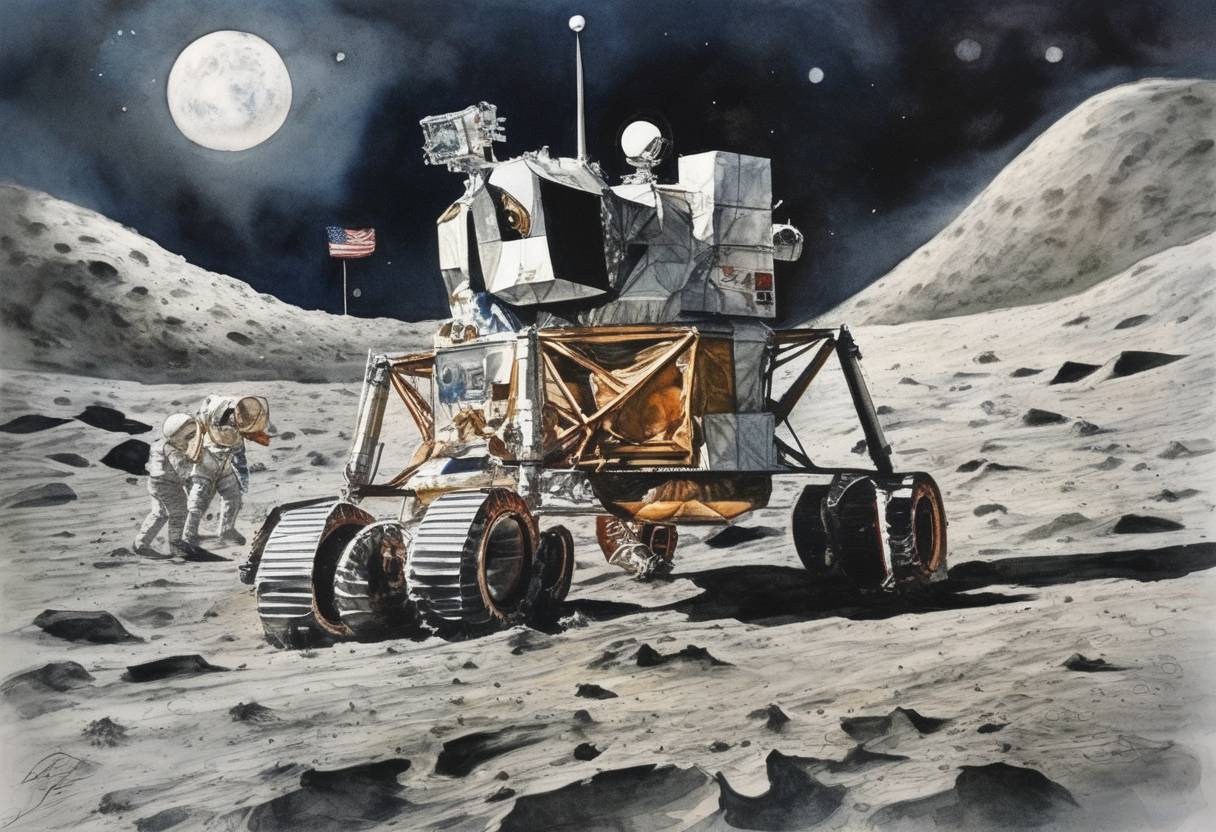
On December 11, 1972, Apollo 17 became the sixth and final mission of NASA’s Apollo program to land humans on the Moon. The mission was notable for several reasons, including its scientific achievements and the fact that it marked the end of an era in space exploration.
Eugene Cernan: The mission commander, Cernan was a veteran astronaut who had previously flown on Gemini 9A and Apollo 10. He holds the distinction of being the last human to walk on the Moon.
Harrison Schmitt: The lunar module pilot, Schmitt was a geologist and the only professional scientist to have walked on the Moon. His expertise significantly contributed to the mission’s scientific objectives.
Ronald Evans: The command module pilot, Evans remained in lunar orbit aboard the command module “America” while Cernan and Schmitt conducted surface activities.
Apollo 17’s primary objectives included:
Launch: Apollo 17 launched from Kennedy Space Center on December 7, 1972, at 12:33 a.m. EST. It was the first night launch of a U.S. human spaceflight.
Lunar Landing: The lunar module “Challenger” touched down on the Moon on December 11, 1972, at 2:55 p.m. EST. The landing site was in the Taurus-Littrow valley, chosen for its geological diversity.
Lunar Surface Activities: Cernan and Schmitt conducted three extravehicular activities (EVAs) totaling about 22 hours. They collected 243 pounds (110 kg) of lunar samples and deployed scientific instruments, including the Lunar Seismic Profiling Experiment and the Lunar Surface Gravimeter.
Return to Earth: After a successful mission, Apollo 17 returned to Earth, splashing down in the Pacific Ocean on December 19, 1972.
Apollo 17’s scientific contributions were significant. The mission’s geological findings provided insights into the Moon’s volcanic activity and impact history. The samples collected by Schmitt and Cernan helped scientists understand the Moon’s composition and the processes that shaped its surface.
Apollo 17 marked the end of the Apollo program, concluding an era of human exploration of the Moon. The mission demonstrated the capabilities of human space exploration and set the stage for future endeavors. Eugene Cernan’s final words on the lunar surface, reflecting on peace and humanity’s potential, underscored the mission’s broader significance.
The Apollo program’s legacy continues to inspire new generations of scientists, engineers, and explorers. Apollo 17’s achievements remain a testament to human ingenuity and the spirit of exploration, serving as a foundation for future lunar missions and beyond.
In summary, Apollo 17 was a landmark mission that not only achieved its scientific goals but also left a lasting impact on the history of space exploration.
Source: en.wikipedia.org