1898 · Paris, France
The Treaty of Paris was signed, officially ending the Spanish-American War. Spain relinquished its claims over Cuba and ceded Puerto Rico, Guam, and the Philippines to the United States.
September 3, 1783
The Treaty of Paris was signed, officially ending the American Revolutionary War and recognizing American independence from Britain.
Paris, France | United States and Great Britain
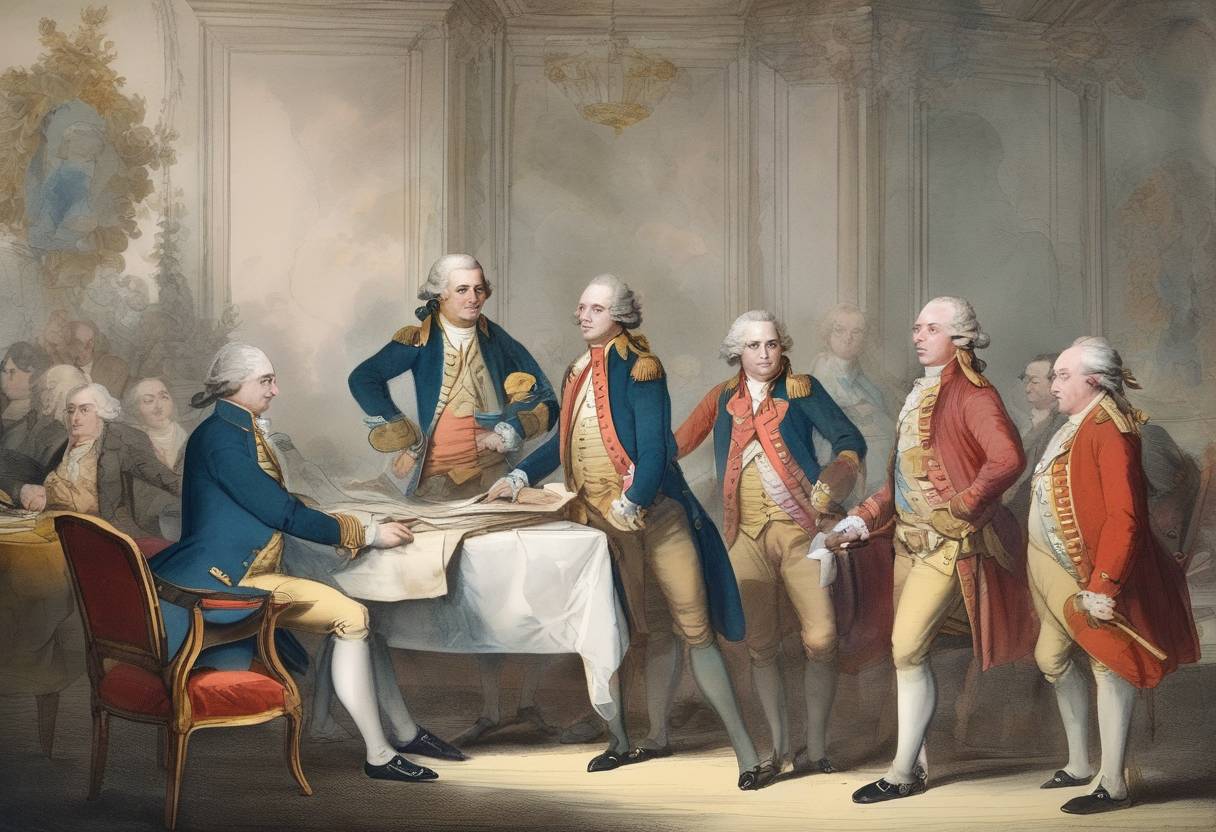
On September 3, 1783, the Treaty of Paris was signed, marking a pivotal moment in world history as it officially ended the American Revolutionary War and recognized the independence of the United States from Great Britain. This treaty was the culmination of years of conflict and negotiation, and it laid the groundwork for the future of the United States as a sovereign nation.
The American Revolutionary War, which began in 1775, was a struggle for independence by the thirteen American colonies against British rule. The conflict was fueled by issues such as taxation without representation, restrictions on colonial trade, and the desire for self-governance. The war saw significant battles, including the Battle of Saratoga and the Siege of Yorktown, the latter of which effectively ended major hostilities in 1781.
The negotiations for the Treaty of Paris involved several key figures:
The Treaty of Paris comprised several important terms:
The signing of the Treaty of Paris had profound implications:
The Treaty of Paris set the stage for the United States to develop its own government and identity, free from colonial rule. It remains a foundational document in American history, symbolizing the successful struggle for independence and the beginning of a new nation.
Source: en.wikipedia.org