The Battle of Ruspina: Julius Caesar vs. Titus Labienus
46 · Ruspina, Roman Republic (modern-day Tunisia)
Julius Caesar defeats Titus Labienus in the Battle of Ruspina during Caesar's Civil War.
September 28, 0048
The Battle of Zela took place, where Julius Caesar defeated Pharnaces II of Pontus in a swift and decisive victory, famously summarized by Caesar's phrase 'Veni, vidi, vici' ('I came, I saw, I conquered').
Zela, Pontus (modern-day Turkey) | Roman Republic
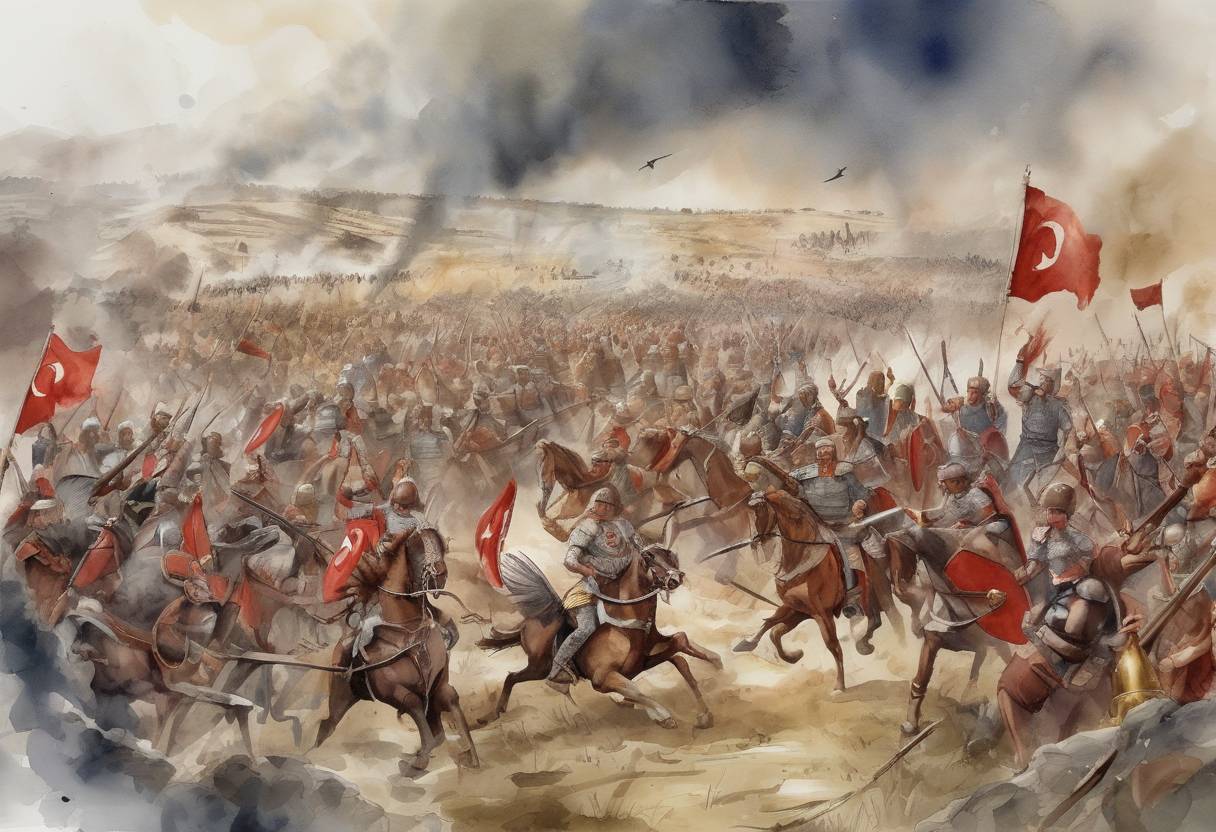
The Battle of Zela, fought on September 28, 48 BCE, stands as a significant military engagement during the latter years of the Roman Republic. This battle is famously associated with Julius Caesar’s succinct and triumphant phrase, “Veni, vidi, vici” (“I came, I saw, I conquered”), which encapsulates the swift and decisive nature of his victory over Pharnaces II of Pontus.
Pharnaces II of Pontus: The son of Mithridates VI, Pharnaces sought to reclaim his father’s former territories in the chaos following the Roman civil wars. He took advantage of the power vacuum created by the conflict between Julius Caesar and Pompey the Great.
Caesar’s Civil War: Following his victory over Pompey at the Battle of Pharsalus in 48 BCE, Caesar was consolidating his power across the Roman world. The threat posed by Pharnaces in Asia Minor demanded his attention.
Location: The battle took place near Zela, in present-day Turkey. This site was historically significant as it was near the location where Mithridates VI had previously defeated a Roman army.
Forces: Caesar’s forces were outnumbered, but his army was composed of experienced and battle-hardened veterans. Pharnaces, on the other hand, commanded a larger but less disciplined force.
Tactics and Outcome: Despite being outnumbered, Caesar’s strategic acumen and the discipline of his troops led to a rapid and overwhelming victory. The battle reportedly lasted only five days from the time Caesar arrived to the defeat of Pharnaces.
Pharnaces’ Fate: After his defeat, Pharnaces fled to the Bosporus, where he was eventually killed by a former governor of his.
Caesar’s Reputation: The victory at Zela further cemented Caesar’s reputation as a military genius and a decisive leader. His rapid success in the campaign was encapsulated in his famous dispatch to the Roman Senate: “Veni, vidi, vici.”
Impact on Rome: The victory allowed Caesar to stabilize the eastern provinces of the Roman Republic, ensuring that his focus could return to the political and military challenges in Rome.
The Battle of Zela is often remembered not only for its military significance but also for the way it exemplified Caesar’s ability to swiftly and effectively deal with threats. His concise report of the victory has endured through history as a testament to his leadership and the efficiency of his military campaigns.
Source: en.wikipedia.org