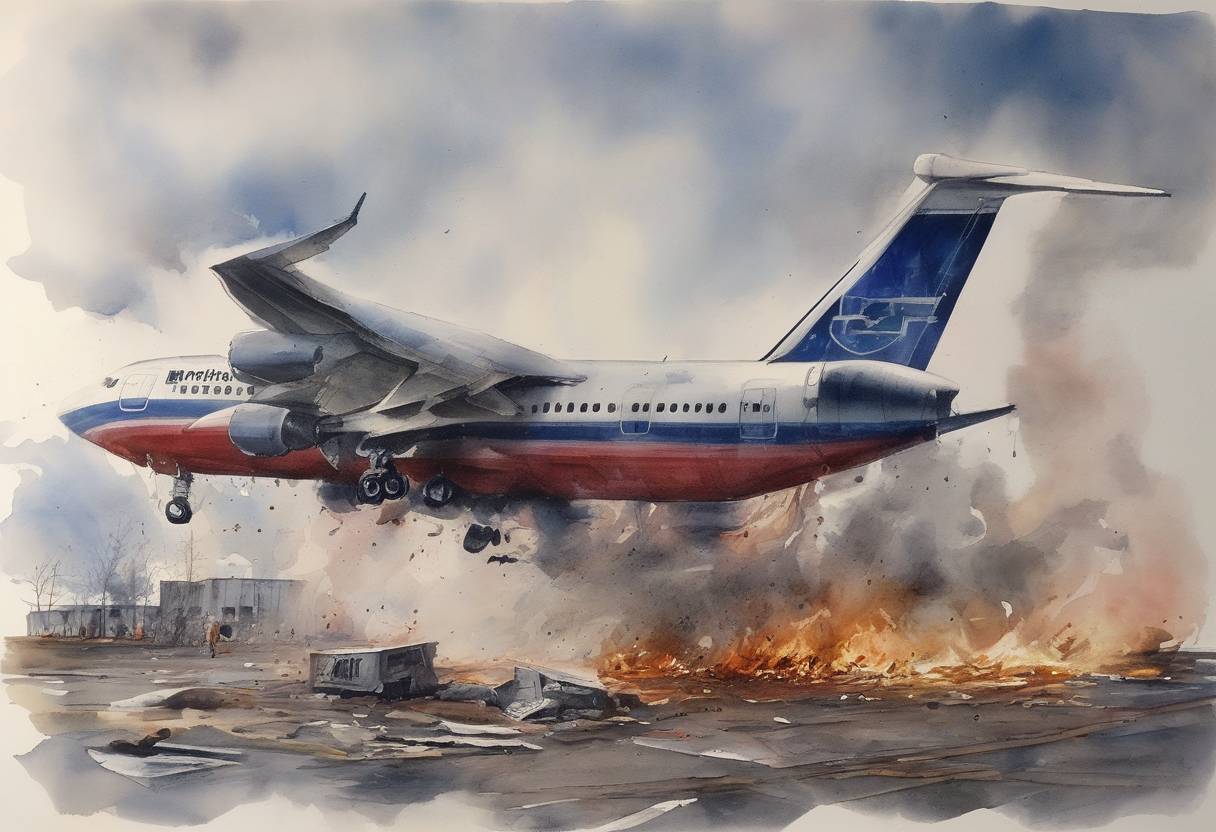
Northwest Airlines Flight 255 Crash - August 16, 1987
On August 16, 1987, Northwest Airlines Flight 255, a McDonnell Douglas MD-82, tragically crashed shortly after takeoff from Detroit Metropolitan Wayne County Airport in Romulus, Michigan. This disaster resulted in the deaths of 154 of the 155 people on board, making it one of the deadliest aviation accidents in U.S. history.
Background
- Aircraft: The aircraft involved was a McDonnell Douglas MD-82, a twin-engine, short- to medium-range commercial jet airliner.
- Flight Details: Flight 255 was a regularly scheduled passenger flight from Saginaw, Michigan, to Santa Ana, California, with stopovers in Detroit and Phoenix, Arizona.
The Crash
- Takeoff: The aircraft took off from Runway 3C at approximately 8:46 PM local time.
- Immediate Issues: Shortly after takeoff, the plane failed to gain sufficient altitude and began to roll from side to side.
- Impact: The aircraft struck a light pole in a rental car parking lot, then hit the roof of a nearby building, and finally crashed onto Middlebelt Road, disintegrating upon impact and causing a fire.
Casualties
- Onboard: Of the 155 people on board, 148 passengers and 6 crew members perished. The sole survivor was a 4-year-old girl named Cecelia Cichan.
- On the Ground: Two people on the ground were also killed as a result of the crash.
Investigation and Findings
- National Transportation Safety Board (NTSB) Investigation: The NTSB conducted a thorough investigation into the crash.
- Cause: The primary cause was determined to be the flight crew’s failure to configure the aircraft’s flaps and slats for takeoff. This was compounded by the absence of a takeoff warning system alert, which should have warned the crew of the improper configuration.
- Contributing Factors: Contributing factors included the flight crew’s failure to use the taxi checklist to ensure the aircraft was properly configured for takeoff.
Aftermath and Impact
- Regulatory Changes: The crash led to increased emphasis on the importance of checklist adherence and the implementation of more rigorous training for flight crews.
- Safety Improvements: The accident underscored the need for improved cockpit communication and procedural compliance, leading to advancements in cockpit resource management.
Broader Historical Significance
The crash of Northwest Airlines Flight 255 remains a somber reminder of the critical importance of procedural adherence and the human factors involved in aviation safety. It prompted significant changes in airline safety protocols and training, contributing to the ongoing efforts to enhance the safety of air travel worldwide.