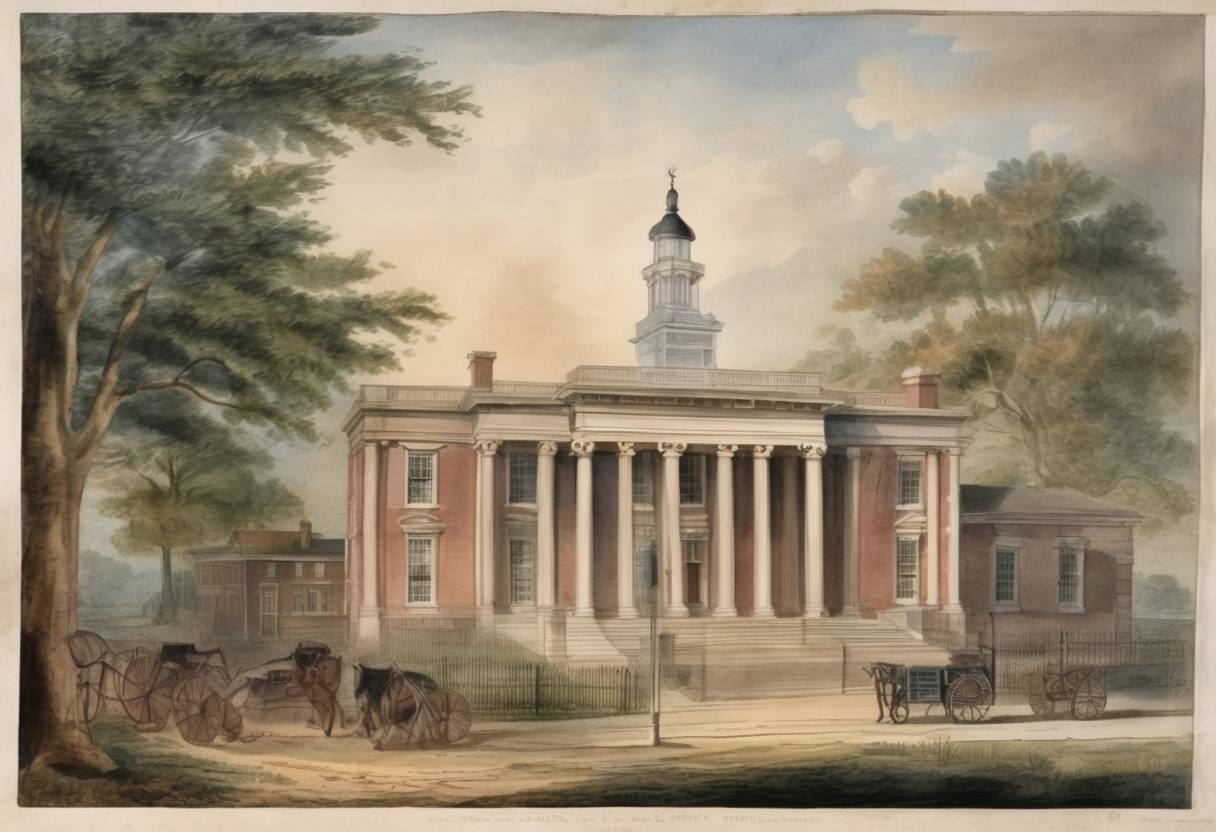
The Postal Service Act of 1792
On February 20, 1792, President George Washington signed the Postal Service Act into law, establishing the United States Post Office Department. This pivotal legislation laid the foundation for the modern postal system in the United States, marking a significant development in the nation’s communication infrastructure.
Context and Background
Before the Postal Service Act, postal services in the American colonies were rudimentary and largely inefficient. The Continental Congress had established a temporary postal system during the American Revolution, but a more structured and reliable service was needed to support the growing nation.
The need for a formal postal system was driven by several factors:
- Communication Needs: As the United States expanded, there was an increasing demand for efficient communication across vast distances.
- Economic Growth: A reliable postal service was essential for commerce and trade, facilitating the exchange of information and goods.
- Political Cohesion: A national postal system helped unify the states, promoting a sense of national identity and facilitating governance.
Key Provisions of the Act
The Postal Service Act of 1792 included several important provisions:
- Establishment of the Post Office Department: The act officially created the Post Office Department as a permanent part of the federal government.
- Appointment of the Postmaster General: The act authorized the appointment of a Postmaster General, who would oversee the operations of the postal service.
- Postal Routes: The legislation outlined the establishment of postal routes, ensuring that mail could be delivered efficiently across the country.
- Postal Rates: The act set standardized postal rates, making the service accessible to a broader segment of the population.
- Free Press: Importantly, the act included provisions for the free exchange of newspapers between publishers, promoting the dissemination of information and supporting a free press.
Impact and Significance
The establishment of the Post Office Department had far-reaching implications for the United States:
- Enhanced Communication: The postal service became a vital communication network, connecting people across the nation and fostering economic and social ties.
- Support for Democracy: By facilitating the spread of information, the postal service played a crucial role in supporting democratic processes and informed citizenry.
- Infrastructure Development: The creation of postal routes contributed to the development of transportation infrastructure, including roads and later railways.
Aftermath
The Post Office Department continued to evolve, adapting to technological advancements and the changing needs of the nation. It remained a cabinet-level department until 1971, when it was reorganized into the United States Postal Service, an independent agency.
The Postal Service Act of 1792 was a foundational moment in American history, underscoring the importance of communication in a democratic society and setting the stage for the development of a robust national infrastructure.