The Writing of “Defence of Fort M’Henry”
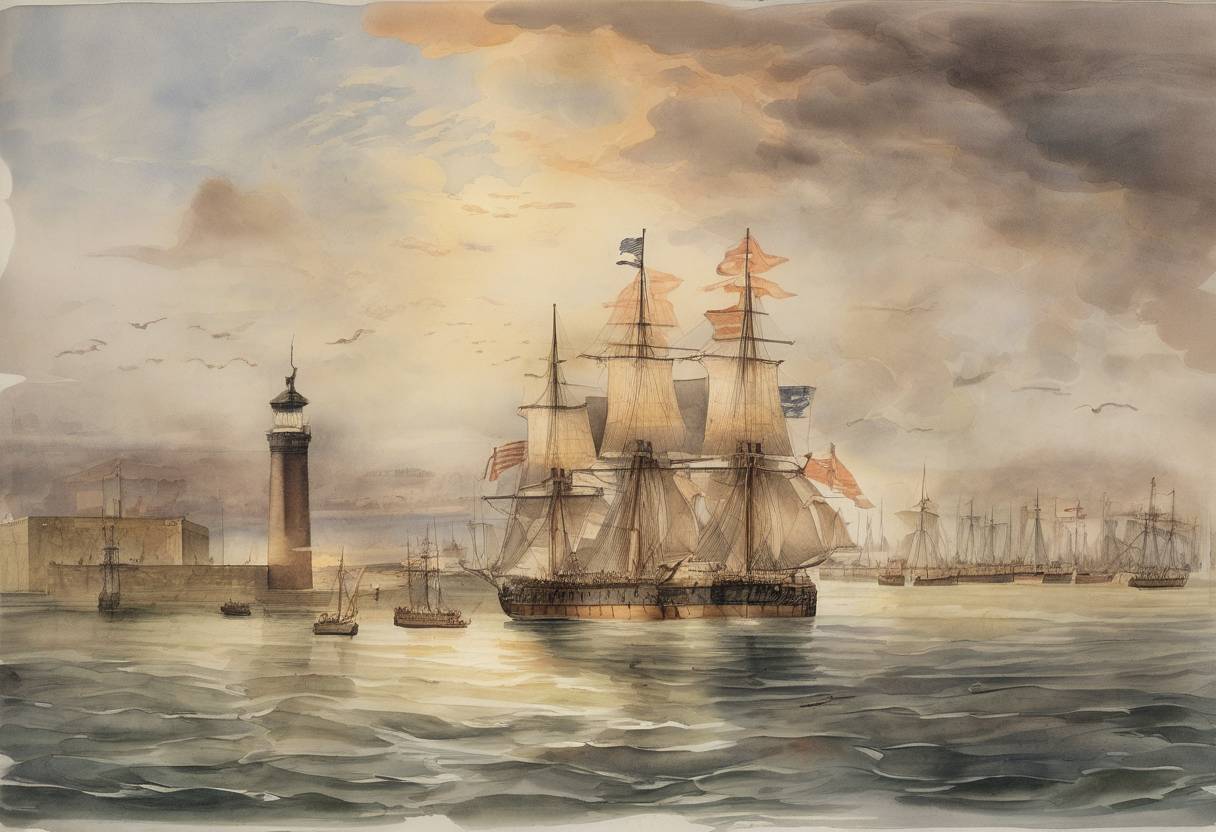
On September 13, 1814, during the War of 1812, Francis Scott Key penned the poem “Defence of Fort M’Henry,” which would later become the lyrics to “The Star-Spangled Banner,” the national anthem of the United States. This event took place amidst the backdrop of the British attack on Fort McHenry in Baltimore, Maryland.
Context and Background
The War of 1812, fought between the United States and the British Empire, was marked by several key conflicts. By 1814, the British had intensified their efforts, launching attacks along the American East Coast. In August 1814, British forces captured Washington, D.C., setting fire to several significant buildings, including the White House and the Capitol.
Following this, the British turned their attention to Baltimore, a vital port city. Fort McHenry, guarding the entrance to Baltimore’s harbor, became a focal point of defense against the British naval assault.
The Events of September 13, 1814
Francis Scott Key, a lawyer and amateur poet, found himself aboard a British ship on September 13, 1814. He had been negotiating the release of Dr. William Beanes, an American prisoner, and was detained temporarily by the British due to the impending attack on Fort McHenry.
As the British fleet bombarded the fort throughout the night of September 13-14, Key anxiously watched from the deck of the ship. The bombardment lasted for 25 hours, with the fate of the fort and the city hanging in the balance.
The Creation of the Poem
On the morning of September 14, Key was relieved to see the American flag, a large 30 by 42-foot banner, still flying over Fort McHenry, signaling the fort’s endurance and the failure of the British assault. Inspired by this sight, Key began composing a poem on the back of a letter he had in his pocket.
The poem, initially titled “Defence of Fort M’Henry,” was set to the tune of a popular British song, “To Anacreon in Heaven.” It was soon published in newspapers and gained widespread popularity.
Aftermath and Significance
The poem’s stirring words captured the resilience and spirit of the American people. In 1931, Congress officially designated “The Star-Spangled Banner” as the national anthem of the United States.
The events at Fort McHenry and Key’s subsequent poem have since become emblematic of American patriotism and perseverance. The flag that inspired Key’s words is now preserved at the Smithsonian Institution’s National Museum of American History.
Broader Historical Significance
The defense of Fort McHenry marked a turning point in the War of 1812, bolstering American morale and contributing to the eventual peace negotiations that led to the Treaty of Ghent, signed in December 1814. The anthem continues to be a symbol of national identity and unity, reflecting the enduring legacy of the events of September 13, 1814.