The Laying of the Cornerstone for the Statue of Liberty's Pedestal: September 29, 1885
1885 · New York City, United States
The cornerstone of the Statue of Liberty's pedestal was laid on Bedloe's Island in New York Harbor.
June 17, 1885
The Statue of Liberty arrives in New York Harbor from France.
New York City, United States | French Government
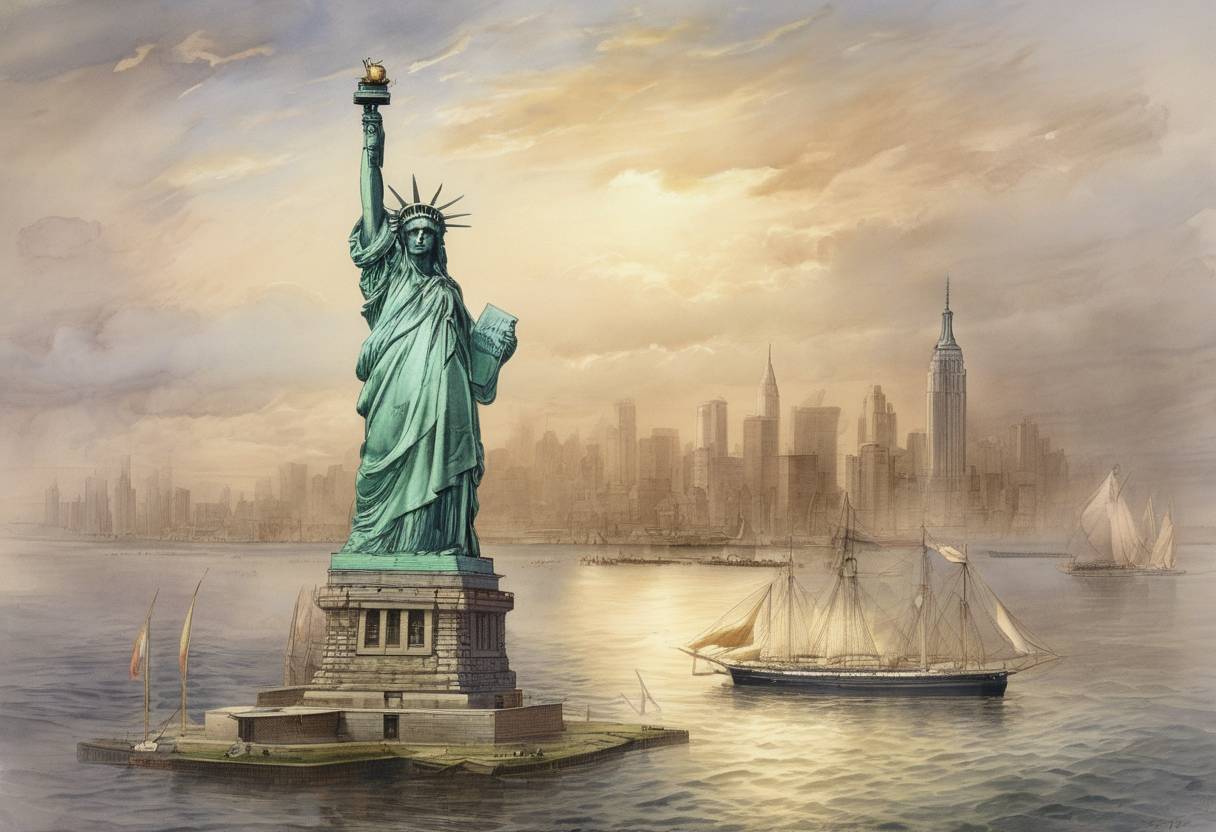
On June 17, 1885, the Statue of Liberty, a monumental gift from France to the United States, arrived in New York Harbor. This iconic symbol of freedom and democracy was designed by French sculptor Frédéric Auguste Bartholdi, with the internal structure engineered by Gustave Eiffel, who is also renowned for the Eiffel Tower.
Origins: The idea for the statue was proposed by Édouard René de Laboulaye, a French political thinker and abolitionist, in 1865. It was intended to commemorate the centennial of the American Declaration of Independence and to celebrate the enduring friendship between France and the United States.
Design and Construction: Bartholdi began designing the statue in the early 1870s. The statue, officially named “Liberty Enlightening the World,” was constructed in France. It was made of copper sheets, assembled over a framework of iron and steel.
Funding and Assembly: The project was funded by both French and American contributions. In France, public fees, entertainment, and a lottery helped raise funds, while in the U.S., fundraising efforts were led by Joseph Pulitzer through his newspaper, “The New York World.”
Transportation: The statue was disassembled into 350 individual pieces and packed into 214 crates for its transatlantic journey. It was transported aboard the French frigate “Isère.”
Arrival: Upon its arrival in New York Harbor, the statue was met with great fanfare. The pieces were stored on Bedloe’s Island, now known as Liberty Island, where the pedestal was still under construction.
Pedestal Construction: The pedestal, designed by American architect Richard Morris Hunt, was completed in April 1886. The assembly of the statue atop the pedestal took several months.
Dedication Ceremony: The Statue of Liberty was officially dedicated on October 28, 1886, in a ceremony presided over by President Grover Cleveland. The dedication included a parade and speeches, marking the statue as a beacon of hope and freedom.
Symbol of Freedom: The Statue of Liberty has since become an enduring symbol of freedom and democracy. It is often associated with the welcoming of immigrants arriving by sea to the United States.
Cultural Impact: Over the years, the statue has been a focal point for various social and political movements, symbolizing liberty and justice.
The arrival of the Statue of Liberty in New York Harbor on June 17, 1885, marked the beginning of its journey as a powerful symbol of freedom and friendship between nations. Its presence continues to inspire millions around the world, embodying the ideals of liberty and democracy.
Source: en.wikipedia.org