November 5, 1872

Susan B. Anthony voted illegally in the U.S. presidential election, leading to her arrest and trial.


Rochester, United States | Women's suffrage movement
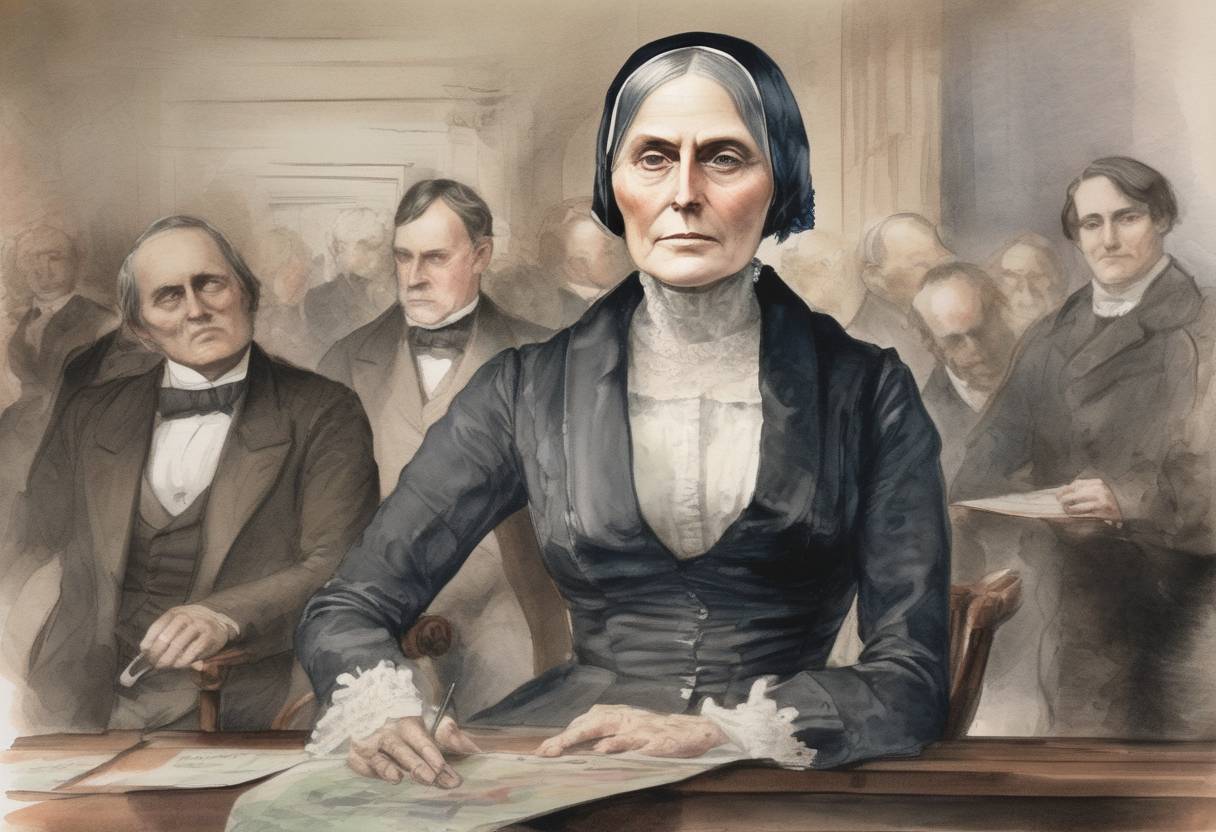
Watercolor painting based depiction of Susan B. Anthony voted illegally in the U.S. presidential election, leading to her arrest and trial. (1872)

Susan B. Anthony Votes Illegally in the 1872 U.S. Presidential Election

On November 5, 1872, Susan B. Anthony, a prominent leader in the women’s suffrage movement, cast a vote in the U.S. presidential election in Rochester, New York. This act of defiance against the prevailing laws of the time, which prohibited women from voting, led to her arrest and subsequent trial, marking a pivotal moment in the fight for women’s rights in the United States.

Context

During the 19th century, the women’s suffrage movement was gaining momentum, advocating for women’s right to vote and participate fully in the democratic process. Susan B. Anthony was a key figure in this movement, working alongside other suffragists like Elizabeth Cady Stanton to challenge the legal and societal norms that excluded women from voting.

The Event

  • Voting Incident: On November 5, 1872, Anthony and a group of women from Rochester went to the polls and successfully registered to vote. Anthony argued that the 14th Amendment, which granted citizenship and equal protection under the law, implicitly gave her the right to vote.
  • Arrest: A few weeks later, on November 18, Anthony was arrested by a U.S. Deputy Marshal for voting illegally. She was charged with knowingly casting an illegal vote.

The Trial

  • Trial Date: Susan B. Anthony’s trial took place in June 1873 in Canandaigua, New York.
  • Legal Proceedings: The trial was presided over by Judge Ward Hunt, who did not allow Anthony to testify on her own behalf. He directed the jury to deliver a guilty verdict.
  • Verdict and Fine: Anthony was found guilty and fined $100, which she refused to pay, stating, “I shall never pay a dollar of your unjust penalty.”

Aftermath and Significance

  • Impact on Suffrage Movement: Anthony’s trial drew national attention to the women’s suffrage movement and highlighted the legal inequalities faced by women. Her defiance and eloquent defense during the trial inspired many and galvanized support for the cause.
  • 19th Amendment: Although Anthony did not live to see it, her efforts were instrumental in the eventual passage of the 19th Amendment in 1920, which granted women the right to vote.

Broader Historical Significance

Susan B. Anthony’s act of civil disobedience and her subsequent trial underscored the broader struggle for women’s rights and equality in the United States. Her courage and determination continue to serve as a symbol of the fight for justice and equal rights for all citizens.